
Vandaag of morgen in huis

Kwaliteit gegarandeerd

Welkomstaanbiedingen ontgrendelen: GRATIS bezorging | Tot 80% korting | Gratis 30 dagen JoyPlus-proefperiode
Download de app
A ceramic frying pan can be a great choice for eggs, vegetables, fish and other dishes you want to cook with little oil. However, not all pans with a ceramic non-stick coating are the same. A pan may be suitable for induction but not for use in the oven. A product may be described as PFAS-free, while its product information doesn’t clearly state exactly which coating has been used.
Before buying a new pan or frying pan set, check the heat sources it works with, the coating and how to care for it. This can help you avoid disappointment after a few months of use.
Ceramic coatings are often presented as an alternative to traditional non-stick coatings. However, the term alone doesn’t tell you everything about the materials used. Look for a clear statement such as PFAS-free, free from PTFE and PFOA or a full description of the materials.
Coating claims come from the brand. According to the product information for models from Brabantia, Tefal, Redchef and SENSARTE, among others, the models mentioned are PFAS-free. Always check the current product page, and don’t mistake “ceramic” for a blanket guarantee about every possible substance.
A pan for gas, electric hobs and induction will usually need a suitable magnetic base. That doesn’t tell you anything about its maximum oven temperature. For example, a plastic or Bakelite handle may not be suitable for oven use.
So check each of the following separately:
A dishwasher-safe frying pan is convenient, but repeated washing at high temperatures with dishwasher detergent can affect the lifespan of a ceramic coating. Many brands recommend hand-washing, even if the pan is technically dishwasher-safe.
Let the pan cool before cleaning it. Use a soft sponge and avoid metal spatulas, scouring pads and sudden changes in temperature. These simple steps can help prevent scratches and warping.
A 24 cm frying pan is a practical middle size for meals for one to three people. A 20 cm pan is better for an omelette, an egg or a small portion. For larger families, 26 or 28 cm pans are more convenient, provided your hob and kitchen cupboard have enough space.
Don’t just look at the diameter at the top edge. The usable base may be smaller. For example, the Tefal Renewal 24 cm has a stated base diameter of 18 cm. On an induction hob, a pan works most efficiently when its base matches the cooking zone.
Aluminium usually heats up quickly. A thicker or forged aluminium base can help distribute heat more evenly, but weight and heating time vary from model to model. Stainless steel, such as 304 stainless steel, is durable and suitable for a range of heat sources, but it doesn’t automatically offer the same non-stick properties as a ceramic coating.
According to the product information, the PURECOOK 304 Triple-Ply pan has three layers of stainless steel with an aluminium core. It isn’t a ceramic non-stick pan, but it could be a good option if you’re mainly looking for a sturdy frying pan for all heat sources.
Check that the coating is explicitly described as ceramic and see what limitations the manufacturer lists. Also look for:
A product with a ceramic coating usually needs gentler handling than an uncoated stainless steel pan. Use wooden or silicone spatulas, and don’t leave the pan empty on the highest heat for a long time.
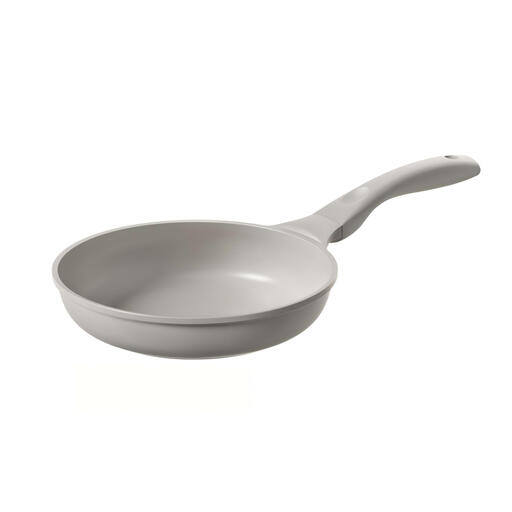
Why it suits this profile: A straightforward 24 cm pan for everyday dishes such as eggs, vegetables and stir-fries. According to the product information, it’s suitable for induction, gas and electric hobs.
The product information explicitly describes a ceramic coating that’s free from PTFE, PFOA and PFAS. Check the current specifications before ordering.
24 cm size, ceramic coating and an ergonomic Bakelite handle; described as dishwasher-safe.
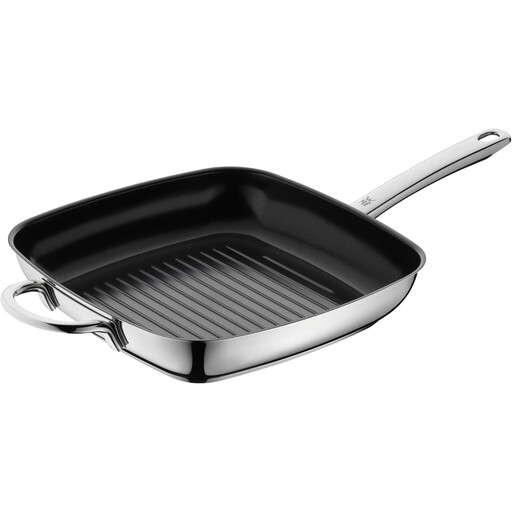
Why it suits this profile: A spacious grill pan for cooking meat, vegetables or other grilled dishes, with a sturdy stainless steel construction.
The product information clearly states that the pan must be hand-washed and is suitable for all heat sources, including induction. It isn’t dishwasher-safe.
28 × 28 cm, ceramic coating, wide pouring rim and oven-safe according to the product information.
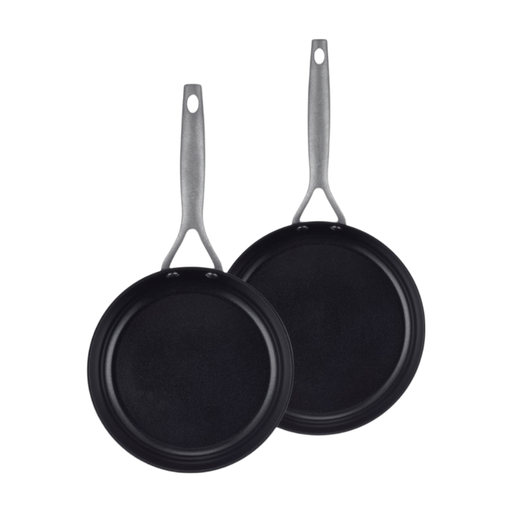
Why it suits this profile: A handy choice for families or home cooks preparing small and large portions at the same time, with a 20 cm and a 24 cm pan in one set.
The set is described as having a PFAS-free ceramic coating, working with all common heat sources and being oven-safe up to 200 °C. Hand-washing is still recommended.
Two sizes, made from 100% recycled forged aluminium according to the product information, suitable for induction and dishwasher-safe.
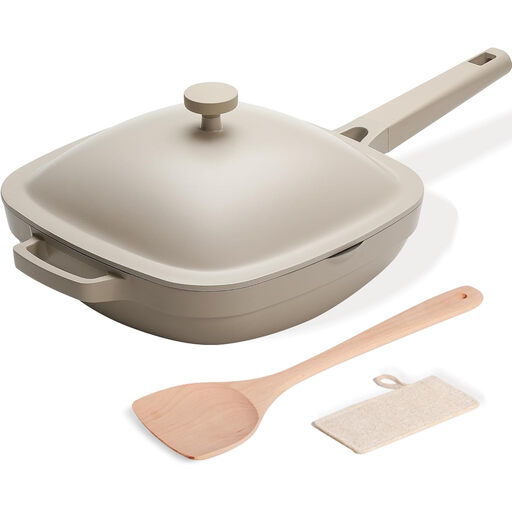
Why it suits this profile: Its deep shape and 3.8-quart capacity make it suitable for sautéing, stewing, stir-frying and meal prep for several people.
The product information lists a PFAS-free Ti-Ceramic coating and compatibility with all hobs. The pan isn’t suitable for the dishwasher or oven.
Deep pan with lid, two pouring spouts, wooden spatula and scrubber according to the product description.
A durable frying pan isn’t just about the material. Use a suitably sized cooking zone, heat the pan gradually and don’t let it overheat while empty. Hand-wash it if possible, even if it’s dishwasher-safe. Don’t stack pans directly on top of one another if this could scratch the base or coating.
Check the coating, handle and base from time to time. If parts start to come loose, the pan becomes warped or the handle is loose, it’s best not to use it. Always follow the manufacturer’s safety instructions.
We’ve put together a complete, up-to-date list of products that meet these strict selection criteria and comply with the applicable European safety regulations.
It depends on the model. Look for the wording “suitable for induction” or “all heat sources”. A ceramic coating alone doesn’t tell you whether the base is magnetic. Also check that the base diameter matches your induction zone.
Its lifespan depends on how you heat it, the utensils you use and how you clean it. Metal spatulas, high temperatures, abrasive cleaners and sudden temperature changes can wear down the coating more quickly. Hand-washing, moderate heat and wooden or silicone spatulas can help your pan last longer.
Not necessarily. PFAS-free is just one thing to consider. Compare the size, heat sources, oven suitability, handle, care requirements, warranty and price too. A small 20 cm pan suits a one-person kitchen, while a 24 or 28 cm model gives you more room to cook family meals.
