
Vandaag of morgen in huis

Kwaliteit gegarandeerd

Welkomstaanbiedingen ontgrendelen: GRATIS bezorging | Tot 80% korting | Gratis 30 dagen JoyPlus-proefperiode
Download de app
A ceramic frying pan can be a good choice for eggs, vegetables, fish and other everyday meals. However, not every pan with a ceramic coating is the same. A low price may seem appealing, but an unsuitable base, unclear coating information or the wrong size can quickly lead to frustration.
Look out for these common pitfalls:
If you’re looking for a PFAS-free frying pan, check the exact product information. Terms such as “non-toxic” or “healthy cooking” are not technical standards in themselves. Check whether the seller clearly states what the coating is free from.
For several models in the range, the product descriptions state that the ceramic coating is free from PFAS, PFOA or PTFE. This is information provided by the manufacturer, not a general claim about all ceramic pans. If in doubt, check the materials description, warnings and care instructions on the product page.
A ceramic coating also needs careful handling:
If you’re specifically looking for a fully ceramic pan, pay close attention to the difference between a pan made of ceramic and a metal pan with a ceramic coating. They aren’t necessarily the same product.
An induction frying pan needs a base that’s suitable for magnetic induction. The product information usually states whether a pan is suitable for induction, gas, electric, ceramic or halogen hobs.
A few examples:
Check the diameter of the cooking zone, too. A very large pan on a small induction zone may not heat evenly.
A 24 cm frying pan is suitable for omelettes, fried eggs, a small portion of vegetables or a meal for one or two people. A 28 cm frying pan offers more room for meat, stir-fries and several portions.
For sauces, slow-cooked dishes or one-pot meals, a deep pan may be a better choice. A ceramic sauté pan or a pan with a lid helps contain splashes and offers more capacity. If so, check:
A ceramic cooking pot or casserole isn’t automatically suitable as a frying pan. Ceramic casserole pots are generally designed for soup, porridge, rice or slow cooking, and have different features from a shallow frying pan.
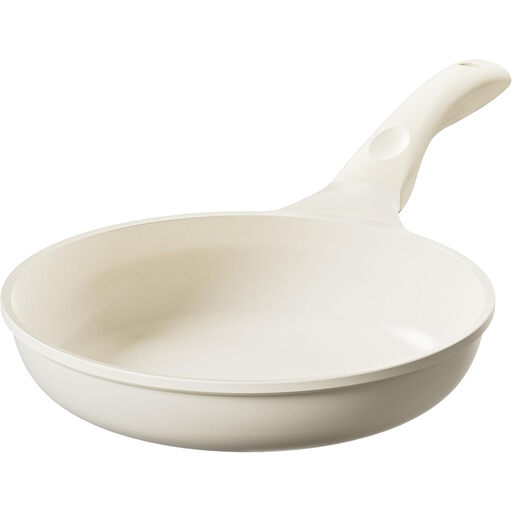
Why it suits this type of user: Its compact size is a good fit for smaller households and everyday cooking, such as eggs, omelettes and small portions of vegetables. According to the product description, the pan is suitable for induction, gas and electric hobs.
The compatible heat sources and size are clearly stated. The manufacturer describes the coating as free from PTFE, PFOA and PFAS; check the current product page for the full specifications.
24 cm diameter, ceramic coating and an ergonomic Bakelite handle. The pan is described as dishwasher-safe.
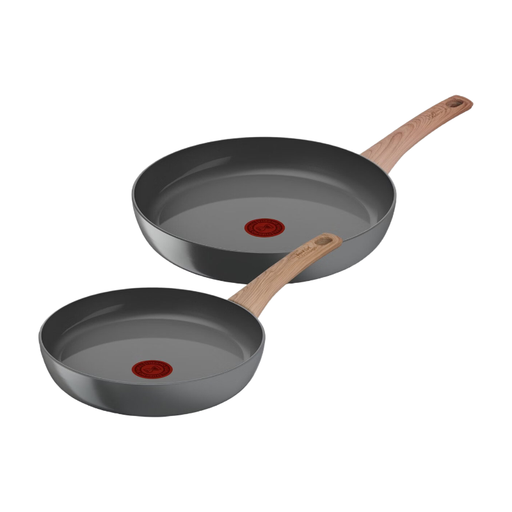
Why it suits this type of user: The set includes a 24 cm pan and a 28 cm pan. That gives you the flexibility to cook smaller and larger meals without having to buy two pans separately.
The set explicitly states that it has a PFAS-free ceramic coating and is suitable for induction and other heat sources. Hand-washing and using wooden or silicone utensils are recommended.
Two popular diameters, recycled aluminium according to the product information, and Thermo-Signal to indicate when the pan has reached temperature.
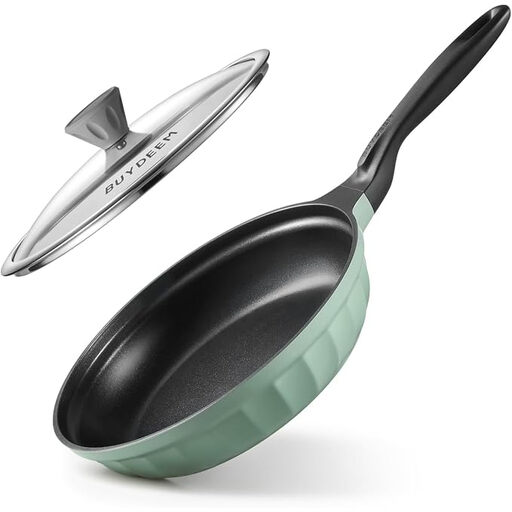
Why it suits this type of user: According to the product information, its 3.6-quart capacity is designed to serve around three to four portions. That makes it a good fit for families and meal prep.
The specifications list a 5.5 mm base, a stainless-steel underlayer and induction compatibility. Hand-washing is recommended to protect the coating.
Deep capacity, die-cast aluminium and, according to the product description, an ILAG ceramic coating free from PFAS, PFOS and PFOA.
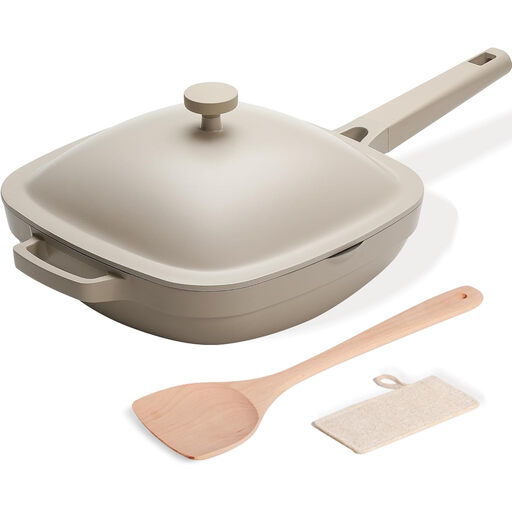
Why it suits this type of user: Its 3.8-quart capacity, deep shape and included lid make it suitable for simmering, stir-frying, stewing and meal prep.
The product information states that it’s compatible with all types of hob. It also clearly states that the pan is not dishwasher- or oven-safe.
3.8-quart capacity, a lid, two pouring spouts and an included wooden spatula, according to the product description.
We’ve put together a complete, up-to-date list of products that meet these strict selection criteria and the applicable European safety requirements.
That depends on the model. Look for “induction” or “induction compatible” in the product specifications. A ceramic coating alone doesn’t tell you whether a pan is suitable for induction; it also needs a suitable magnetic base.
Its lifespan depends on the temperature, utensils, cleaning and how often you use it. Cook on a low to medium heat, avoid leaving it empty on the hob for a long time, and wash it according to the instructions. If the coating becomes damaged or starts to peel, it’s best to replace the pan.
A lid is handy for simmering, making sauces and rice dishes, and keeping food warm. But it can trap extra moisture when you’re trying to fry food until crisp. Choose a frying pan with a lid if you want to use several cooking techniques with one pan.
