
Vandaag of morgen in huis

Kwaliteit gegarandeerd

Welkomstaanbiedingen ontgrendelen: GRATIS bezorging | Tot 80% korting | Gratis 30 dagen JoyPlus-proefperiode
Download de app
A ceramic frying pan can be a good choice for eggs, vegetables, fish and other everyday dishes when you want to use less oil. But a smooth coating alone doesn’t tell you whether a pan is right for you. Your choice also depends on your hob, the pan’s size, how to care for it and what claims such as “PFAS-free” and “durable” really mean.
A non-stick frying pan can make it easy to release food, but its coating is still vulnerable to scratches, overheating and sudden temperature changes. Even if the product information says a pan is dishwasher-safe, washing it by hand with a soft sponge may help it last longer.
So:
The terms PFAS-free frying pan, frying pan without PFAS or PFOA and ceramic coating are often mentioned together, but always check the specific product information. “PFOA-free” on its own doesn’t automatically mean that a product is free from all PFAS.
If a brand says that a coating is free from PFAS, PTFE or PFOA, we don’t present this as an independently verified fact. It’s a claim made in the brand’s product information. If you’re unsure, check the packaging, technical documentation or contact the brand’s customer service team.
A 20 cm frying pan is practical for one person, an omelette or a small portion. A 24 cm frying pan is a good everyday option for cooking for one to three people. A 28 cm frying pan gives you more room for several ingredients, but you’ll also need a suitably sized induction zone and enough storage space.
An oversized pan on a small hob zone may not heat evenly. A small pan is less convenient when you’re cooking for several people.
If you have an induction hob, look specifically for a ceramic frying pan for induction. Not every aluminium pan works on induction by itself; it usually needs a magnetic base. Many models are also suitable for gas, electric, ceramic and halogen hobs, but check each product’s details.
Pay attention to the diameter of the base, too. The rim of a pan may measure 28 cm, while the magnetic cooking surface is smaller.
Aluminium usually heats up quickly and is relatively lightweight. A steel or composite base can make a pan suitable for induction and help distribute heat more evenly. A durable frying pan made from recycled aluminium may appeal if you’re mindful of the materials used.
Check exactly what the claim means, though. “100% recycled aluminium” may refer to the aluminium in the pan, and not necessarily to every part, such as the handle or coating.
An oven-safe frying pan is useful for dishes that you sear on the hob before finishing in the oven. The maximum temperature may vary, and a plastic or Bakelite handle may limit how hot the pan can get. Check whether the handle is removable, too.
“Dishwasher-safe frying pan” means the product information says you can put the pan in the dishwasher. Manufacturers often still recommend hand-washing to help keep the ceramic coating in good condition for longer.
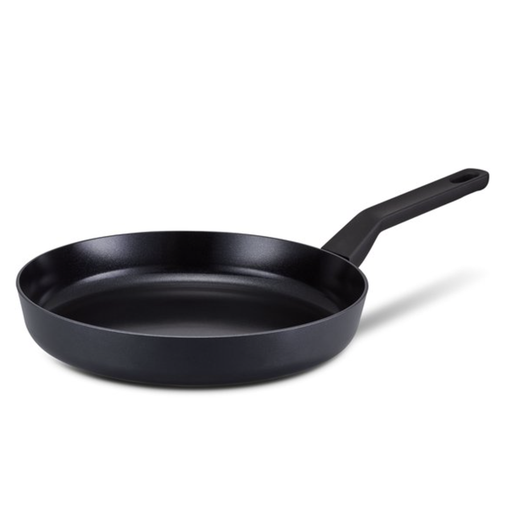
Why it suits this profile: Its compact size is ideal for people living alone, small portions and everyday breakfasts. According to the product information, this pan has a ceramic coating, is labelled PFAS-free and has a body made from 100% recycled aluminium.
The product details list compatibility with induction, gas, electric, ceramic and halogen hobs. Hand-washing is recommended to help preserve the coating for longer, despite the stated dishwasher-safe rating.
20 cm size, induction-compatible, ergonomic Bakelite handle and a double ceramic non-stick coating described as PFAS-free in the product information.
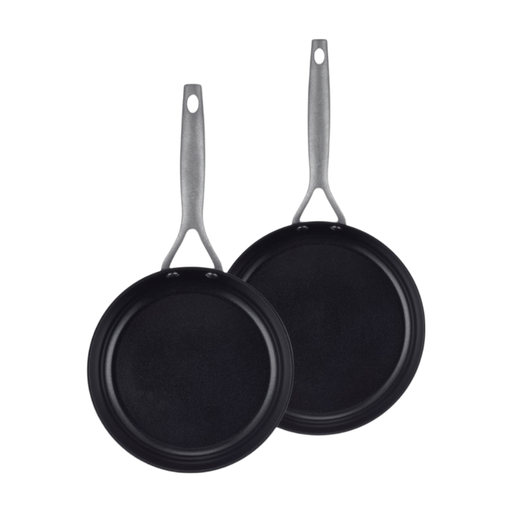
Why it suits this profile: The 20 and 24 cm pans give you flexibility for smaller and medium-sized portions. This set is a good fit for households that want different sizes without buying a large ceramic pan set straight away.
The product information lists RCS-certified recycled aluminium, two ceramic layers, induction compatibility and a maximum oven temperature of 200 °C. This makes the material and usage limits clearer.
Two sizes, a coating described as PFAS-free in the product information, oven-safe up to 200 °C and dishwasher-safe. Hand-washing is still recommended to help extend its lifespan.
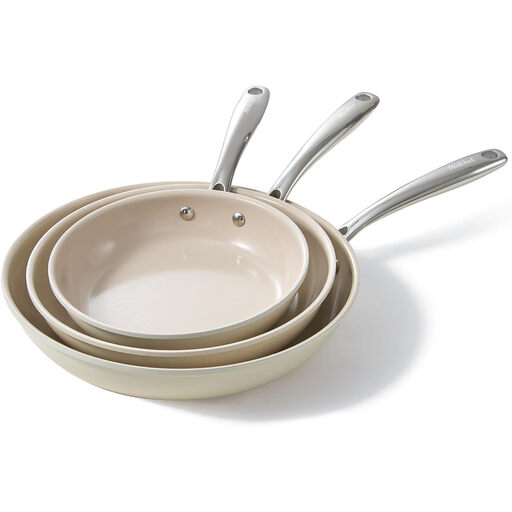
Why it suits this profile: With 20, 24 and 28 cm pans, the set is suitable for individual portions, family meals and larger dishes. The product information lists an aluminium body, ceramic coating and stainless steel handles.
Having three sizes makes it less likely that you’ll use a pan that’s too small or too large. Before using the pans frequently, check the oven limit and care instructions on the product page.
20, 24 and 28 cm pans in one set, suitable for induction, gas and electric hobs, with oven-safe handles and a ceramic non-stick coating according to the product information.
We’ve put together a complete, up-to-date list of products that meet these strict selection criteria and the applicable European safety regulations.
High temperatures, scratches and harsh cleaning can wear down a ceramic coating more quickly. After use, let the pan cool down first. Then wash it with warm water, a mild washing-up liquid and a soft sponge. Ideally, store pans with space between them or use a protective layer when stacking them.
Check the coating regularly. If it’s peeling or badly damaged, it’s better to replace the pan than to keep using it. Always follow the manufacturer’s instructions, especially for pans with a lid, removable handle or oven function.
It can be, but not every ceramic pan is automatically suitable for induction. Check that the product information explicitly mentions induction and that the base is suitable for the diameter of your hob zone.
How long it lasts depends on the temperature, utensils and cleaning method. Cooking over a medium heat, hand-washing and using soft utensils can help keep the coating in good condition for longer. There’s no fixed lifespan that applies to every pan.
A product with a coating that the manufacturer describes as PFAS- and PFOA-free may suit your material preferences. Always check the exact claim and product documentation. Use the pan according to the safety instructions, too, and avoid overheating.
