
Vandaag of morgen in huis

Kwaliteit gegarandeerd

Welkomstaanbiedingen ontgrendelen: GRATIS bezorging | Tot 80% korting | Gratis 30 dagen JoyPlus-proefperiode
Download de app
At first glance, choosing a ceramic frying pan seems simple. However, pans vary greatly in their coating, size, hob compatibility and maintenance requirements. A pan that works well on a gas hob might not be as practical on an induction hob. Similarly, an attractive label like “PFAS-free” may tell you little about the pan's lifespan, cleaning advice or maximum oven temperature.
The Joybuy Product Recommendation Officer filters the most important product information in a practical way. This allows you to compare ceramic frying pans based on verifiable features rather than marketing claims.
A ceramic non-stick pan can be a joy to cook with at first, but the coating requires proper care. Metal spatulas, scouring pads and heating an empty pan to a high temperature can damage the surface. Therefore, always check:
So, a dishwasher-safe symbol doesn't automatically mean it's the best way to clean the pan every day.
PFAS-free frying pans are a key search term for many households. However, it's important to look at the exact product description and which substances are mentioned. For example, different models may be labelled as PFAS-free, PTFE-free or PFOA-free. These are all separate claims.
Claims about the coating and its use come from the brand's or manufacturer's product information. For instance, according to its own product information, Redchef states its ceramic coating is free from PTFE, PFOA and PFAS. Brabantia states that several of its Onyx and Dusk models have a 100% PFAS-free ceramic coating. You should treat this as a manufacturer's product specification, not as a general guarantee for every ceramic pan.
A 24 cm frying pan is usually a good fit for smaller portions and meals for one or two people. A 28 cm frying pan offers a larger cooking surface for families, but it also requires more storage space and a suitable cooking zone. For induction hobs, it's important to measure not just the diameter of the rim, but also the diameter of the base.
A large pan on an induction zone that is too small may not heat evenly. Conversely, a small pan on a large zone can waste energy.
Ceramic coatings are often applied to aluminium, cast aluminium or stainless steel. Aluminium is known for its low weight and fast heat conduction. A stainless steel base can provide extra sturdiness, but it often makes the pan heavier.
Pay attention to the combination of:
You shouldn't judge a “durable frying pan” on its coating alone. Recycled aluminium, a replaceable handle, securely attached parts and careful maintenance can all be relevant factors. For example, Tefal states that its Renewal range has a body made from 100% recycled aluminium. Brabantia also mentions recycled aluminium for several models and an RCS mark for recycled material on its Dusk pan.
If you're looking for an induction frying pan or a frying pan for all heat sources, check that the product information explicitly states this. Suitable heat sources can include:
According to the product information, the Redchef Starlight 24 cm and 28 cm are suitable for induction, gas and electric hobs. For its Dusk and Onyx models, Brabantia states they are suitable for induction, gas, electric, ceramic and halogen, among others. Always refer to the specific product for exact compatibility.
For most ceramic pans, some basic practical rules apply:
Some pans are dishwasher-safe, such as several models from Brabantia and Redchef. For the Tefal Renewal, hand washing is recommended. The Brabantia Onyx wok is dishwasher-safe, but hand washing is also mentioned as a way to help extend the life of the coating.
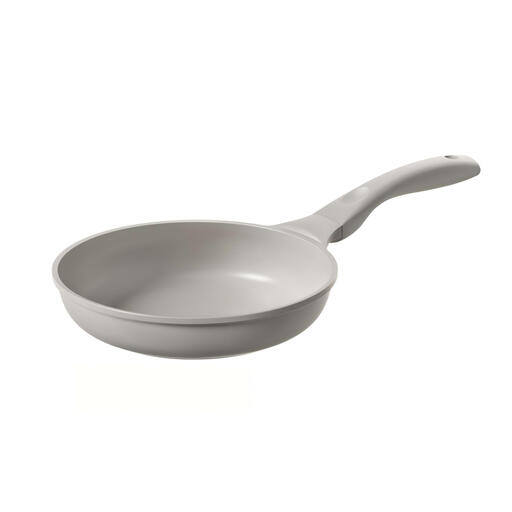
Why it's a good match: The size is suitable for eggs, omelettes and smaller portions. According to the product information, this pan works on induction, gas and electric hobs and is dishwasher-safe.
The specifications explicitly mention the compatible heat sources and warn against using metal utensils. This makes the main usage restrictions clear from the outset.
24 cm size, PFAS-free coating according to Redchef, and compatibility with multiple hobs.

Why it's a good match: This pan combines a PFAS-free ceramic coating (according to Brabantia) with recycled aluminium, a riveted stainless steel handle, and is oven-safe up to 200 °C.
The product information not only states that it's dishwasher-safe but also recommends hand washing. The maximum oven temperature of 200 °C is also clearly indicated.
Riveted steel handle, oven-safe up to 200 °C, and suitable for all listed heat sources.
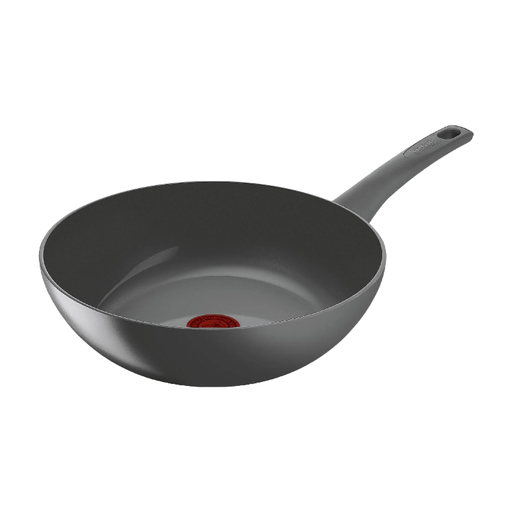
Why it's a good match: The 28 cm wok shape provides plenty of room for stir-fries and meals for several people. According to Tefal, the pan is suitable for induction, gas, electric, ceramic and halogen hobs.
The usage limits are specific: hand washing is recommended, the maximum food load is 2 kg, and the handle can get hot during prolonged cooking.
28 cm wok size, Thermo-Signal indicator, and a body made from 100% recycled aluminium, according to Tefal.
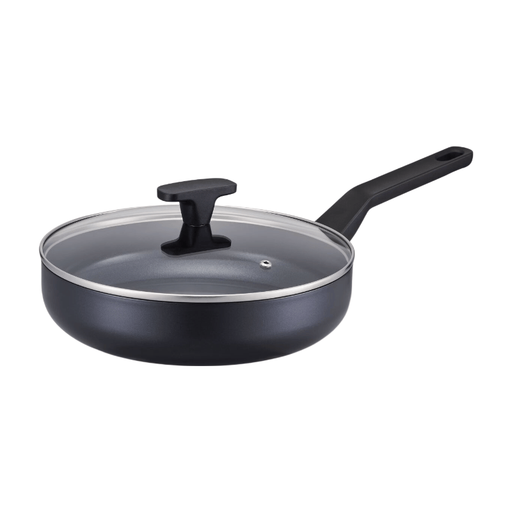
Why it's a good match: The higher sides and glass lid are practical for sauces, stews, vegetables and meals that need to simmer gently.
The product information specifies a maximum fill level of 80% and a maximum food weight of 2 kg. It also warns against sudden temperature changes with the glass lid.
26 cm sauté pan, glass lid, PFAS-free ceramic coating according to Brabantia, and induction compatibility.
We have compiled a complete, up-to-date list of products that fully meet these strict selection criteria and comply with current European safety regulations.
It varies from model to model. Check if “induction” is explicitly listed among the compatible heat sources. A pan generally needs a base that is suitable for magnetic induction. Centre the pan on the induction zone and pay attention to the stated base diameter.
The lifespan depends on the coating, the temperatures you use, and how you maintain it. Don't use metal utensils, avoid heating the pan when empty, and prevent thermal shock. According to several manufacturers, hand washing with a soft sponge can help preserve the coating for longer, even if the pan is dishwasher-safe.
Not necessarily. You should also check the size, heat source compatibility, oven-safe properties, cleaning advice and the handle. A 24 cm PFAS-free frying pan might be suitable for small portions, whereas a ceramic wok or sauté pan is more practical for larger meals.
