
Vandaag of morgen in huis

Kwaliteit gegarandeerd

Welkomstaanbiedingen ontgrendelen: GRATIS bezorging | Tot 80% korting | Gratis 30 dagen JoyPlus-proefperiode
Download de app
A ceramic frying pan may seem easy to choose at first glance. However, pans can vary considerably in their coating, base, size and care requirements. A pan that works on gas won’t necessarily work well on an induction hob. And a product with a non-stick coating isn’t automatically dishwasher-safe or suitable for the oven.
For households in the Netherlands, there are three pitfalls in particular to watch out for:
A ceramic non-stick pan usually doesn’t have a body made entirely from ceramic. It’s often made of aluminium with a ceramic coating. Aluminium heats up relatively quickly, while the coating provides a smooth cooking surface.
If you’re looking for a PFAS-free frying pan or a frying pan without PFAS, read the specifications carefully. Look for terms such as:
According to their own product information, models from brands including Redchef, Brabantia, Sanho and SENSARTE are marketed as PFAS-free. Always check the current product page and care instructions before buying. A label such as “non-stick” on its own doesn’t tell you which coating has been used.
A ceramic coating doesn’t mean you should cook without oil. A small amount of oil can help with frying, and using low to medium heat puts less strain on the coating.
For a ceramic frying pan for induction, you’ll need a suitable magnetic base. So check not only the diameter but also whether the pan is compatible with your hob. A pan described as suitable for all heat sources should clearly state whether it works with:
The base diameter should also match the cooking zone. A base that’s too small for a large induction zone will heat less evenly. With an oversized pan, heat may not reach the edges as effectively.
A 24 cm frying pan is practical for one to three people, eggs, omelettes and smaller portions. A 28 cm frying pan gives you more room for vegetables, meat or a meal for several people. For larger quantities, a deep ceramic sauté pan may be more useful than a shallow frying pan.
Also check the cleaning instructions:
A dishwasher-safe frying pan is therefore mainly a convenience, not a necessity. Manufacturers may recommend hand-washing to keep the coating in good condition for longer.
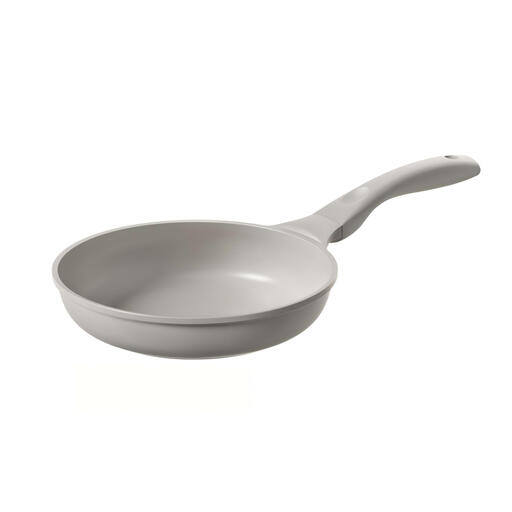
Why it suits this profile: The 24 cm size is easy to manage for everyday portions, eggs and omelettes. According to the product information, this pan is suitable for induction, gas and electric hobs.
The specifications list a PFAS-, PTFE- and PFOA-free ceramic coating and clearly state which heat sources the pan works with.
24 cm diameter, ergonomic handle and dishwasher-safe according to the product description.
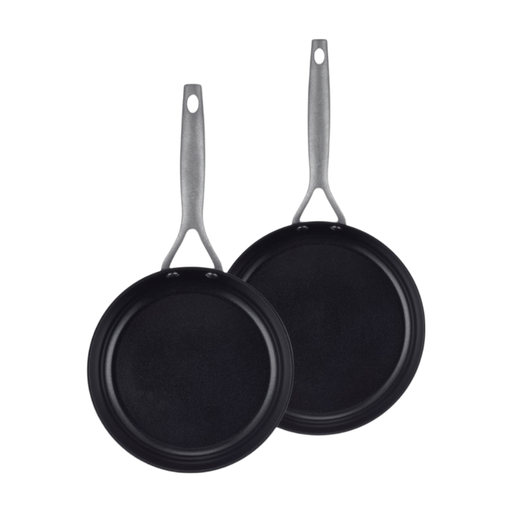
Why it suits this profile: With 20 and 24 cm pans, you can prepare small and medium portions at the same time or separately.
The product information lists PFAS-free ceramic coatings, all common heat sources and an oven limit of 200 °C.
Two sizes, recycled forged aluminium and dishwasher-safe; hand-washing is recommended for longer-lasting use.
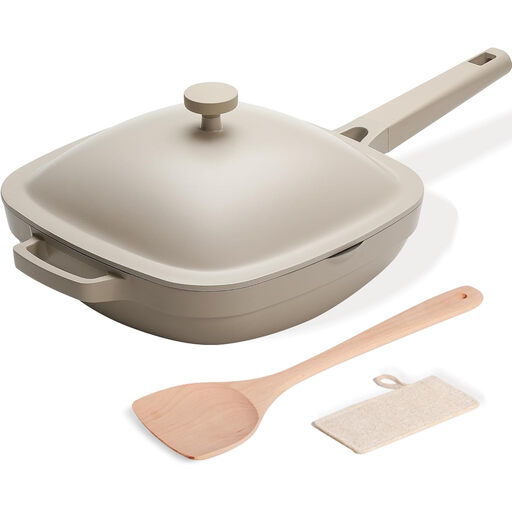
Why it suits this profile: The deep shape and lid make it suitable for sautéing, stewing, stir-frying and preparing meals for several people.
The product information states that it’s compatible with all hobs, but also that the pan isn’t suitable for the dishwasher or oven. This helps you avoid any surprises after buying.
3.8 QT capacity, lid, two pouring spouts and a wooden spatula included.

Why it suits this profile: This pan combines a compact size with compatibility for induction, gas, ceramic and electric hobs, and oven use up to 200 °C.
The product details list the permitted oven temperature and each relevant heat source separately.
PFAS-free ceramic coating, recycled aluminium, riveted stainless steel handle and dishwasher-safe.
We’ve put together a complete, up-to-date list of products that meet these strict selection criteria and the applicable European safety regulations.
It depends on the model. A pan only works on induction if its base is designed for it. Check the product information for “induction-compatible” or a similar description. An aluminium pan without a suitable metal induction base generally won’t work on an induction hob.
How long it lasts depends on the coating, cooking temperature and how you clean it. It’s best to use low to medium heat, avoid leaving the pan empty on the hob for a long time, and choose utensils made of wood, silicone or plastic. Using the dishwasher can be convenient, but hand-washing with a soft sponge is often recommended to help the coating last longer. Stop using the pan if the coating starts to peel or is badly damaged.
“Healthy frying pan” is primarily a search term, not a recognised product category. A PFAS-free pan may suit consumers who want to avoid PFAS, PTFE and PFOA, but always check the specific product claim and care instructions. Use the pan as directed and replace it if it’s visibly damaged.
