
Vandaag of morgen in huis

Kwaliteit gegarandeerd

Welkomstaanbiedingen ontgrendelen: GRATIS bezorging | Tot 80% korting | Gratis 30 dagen JoyPlus-proefperiode
Download de app
A ceramic frying pan can be a good choice for cooking eggs, vegetables, fish and pancakes, but not every pan labelled “ceramic” offers the same features. The right choice depends on the coating, base, size and care requirements.
If you focus only on the price or a promise such as “super non-stick”, you could find yourself with a pan that food sticks to or that has warped after just a few months. Keep an eye out for these common pitfalls.
A PFAS-free frying pan may have a ceramic coating made without intentionally added PFAS, but that doesn’t mean the coating is scratch-proof or resistant to overheating. Several brands recommend using wooden, plastic or silicone utensils in their product information. Metal utensils can damage the coating.
Even if a pan is described as dishwasher-safe, it may last longer if you wash it by hand. Always check the specific care instructions.
An induction-compatible ceramic frying pan needs a magnetic base. An aluminium pan without a suitable underlayer won’t work on induction, even if it’s suitable for gas or electric hobs.
Also check that the diameter of the base suits your induction zone. A 28 cm frying pan may have a smaller effective base than its top edge suggests.
A 28 cm frying pan gives you space to cook several portions, but it also takes up more storage space and can be heavy when full. For one or two people, a 24 cm frying pan is often easier to handle. A deep pan with a lid may be a better choice for sauces, stir-fries and one-pan meals.
Ceramic coatings are usually applied to aluminium or stainless steel. Aluminium heats up relatively quickly and is often lightweight. A multi-layer stainless steel construction may be sturdier, but is generally heavier.
Look out for the difference between:
Claims such as “non-toxic”, “healthy” or “free from harmful substances” should be treated as brand information, not a general guarantee. According to their own information, Redchef and SENSARTE say their stated coatings are free from PTFE, PFOA and PFAS, among other substances. Always check the latest product details before buying.
A thick or multi-layer base helps distribute heat more evenly. This reduces the risk of localised hotspots, but the hob setting still matters. It’s best to heat a ceramic pan gradually over a medium heat, and not to leave it empty on a high heat for a long time.
For induction, gas, electric and ceramic hobs, the product page should explicitly state that the pan is suitable. Don’t judge by the appearance of the base alone.
Choose a size that suits the portions you usually cook:
A ceramic sauté pan usually has higher sides than a standard frying pan. This makes it useful for simmering and stir-frying. A frying pan with a lid retains heat and moisture more effectively, but check whether the lid is included. An oven-safe frying pan also needs a suitable handle and a stated maximum temperature.
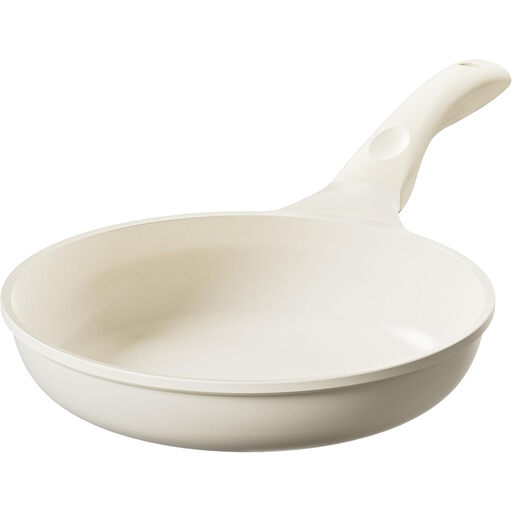
Why it suits this profile: The 24 cm size is ideal for everyday portions without the need for a large, heavy pan. According to the product information, this pan is suitable for induction, gas and electric hobs.
The product listing states that the ceramic coating is free from PTFE, PFOA and PFAS. Even so, avoid metal utensils and don’t overheat the pan when it’s empty.
24 cm, ergonomic Bakelite handle and described as dishwasher-safe in the product information.
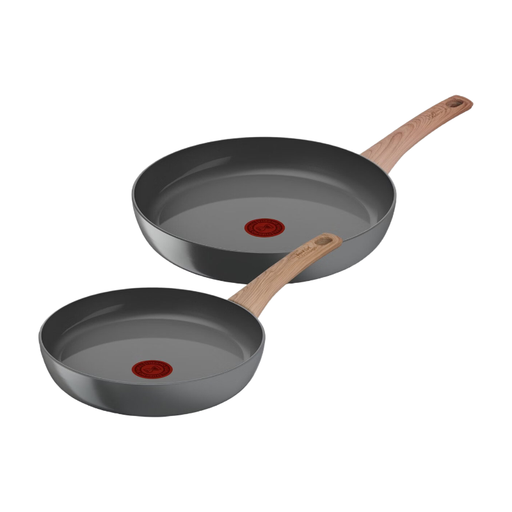
Why it suits this profile: The 24 cm and 28 cm pans offer flexibility for smaller and larger portions. According to Tefal’s product information, they’re made from recycled aluminium and have a PFAS-free ceramic coating.
Having two sizes means you don’t need to use an oversized pan for smaller meals. Hand-washing and using soft utensils are recommended to protect the ceramic coating.
Two popular sizes, suitable for all the listed heat sources, including induction, with a temperature indicator.
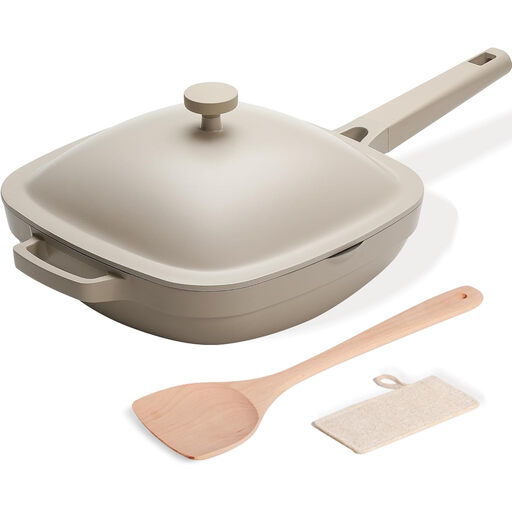
Why it suits this profile: Its deep shape and 3.8-quart capacity make it well suited to sautéing, braising, stir-frying and meal prep. The included lid helps retain moisture in dishes where it matters.
The product information states that it’s compatible with all hobs and has a PFAS-free Ti-ceramic coating. The pan isn’t dishwasher-safe or oven-safe, making its care requirements clear.
Deep 3.8-quart design, lid, two pouring spouts and a wooden spatula included.
We’ve put together a complete, up-to-date list of products that meet these strict selection criteria and the applicable European safety regulations.
An oven-safe frying pan should only be used in the oven within its stated temperature limit. A Bakelite or plastic handle isn’t automatically oven-safe.
It can be, but only if the product information states that it’s compatible with induction. The ceramic coating itself doesn’t determine this; the magnetic base is what matters.
How long it lasts depends on how you heat, use and clean it. Medium heat, hand-washing and soft utensils help keep the coating in good condition for longer. There’s no set lifespan that applies to every pan.
There’s no general answer to this. A ceramic coating may be PFAS-, PTFE- or PFOA-free according to the manufacturer, but always check the exact product claim. Use the pan as directed and replace it if the coating starts to come away or is badly damaged.
