
Vandaag of morgen in huis

Kwaliteit gegarandeerd

Welkomstaanbiedingen ontgrendelen: GRATIS bezorging | Tot 80% korting | Gratis 30 dagen JoyPlus-proefperiode
Download de app
Need a new frying pan? Choosing a ceramic frying pan is an easy decision. You're looking for a healthy, PFAS-free pan that's easy to clean and prevents food from sticking. However, the market is flooded with pans that promise the world. Unfortunately, this often leads to disappointment and a pan that needs replacing after just a few months.
As a Joybuy Product Recommendation Officer, I see where things go wrong every day. Let's expose the most common pitfalls so you can choose a pan you'll genuinely enjoy for years to come.
Pitfall 1: The "scratch-resistant" layer that scratches easily. Many pans are advertised as extremely scratch-resistant. In reality, this often means "scratch-resistant against wooden or silicone spatulas". The moment you accidentally poke it with a fork, there's a high chance of a permanent scratch. A damaged layer loses its non-stick properties and is no longer pleasant to use.
Pitfall 2: An "induction compatible" label without good performance. Almost every modern pan works on induction, but that says nothing about its quality. An induction frying pan with a base that's too thin or has an incomplete steel plate will heat unevenly. The result: part of your pancake is burnt while the rest is still raw. The base can even warp from the heat, causing the pan to wobble on your hob.
To look beyond the marketing claims, it's helpful to focus on a few concrete specifications. These determine the actual quality and lifespan of your pan.
The pan's construction is crucial, especially the base. A pan made of forged aluminium is often lightweight yet sturdy. More importantly, look for a thick, fully magnetic base. This ensures the pan absorbs heat from the induction hob quickly and, more importantly, distributes it evenly across the entire surface. This prevents hot spots and ensures predictable cooking results. A good base also makes it a pan for all heat sources, should you switch in the future.
The fact that a pan is PFAS-free is an important step towards a healthy frying pan. But not every ceramic non-stick coating is the same. Standard coatings are fragile. Look for pans with a reinforced coating. Manufacturers sometimes use terms like "reinforced with titanium" or "diamond particles". Although these are marketing terms, they often indicate a harder, more durable formulation that is more resistant to daily use and minor accidents. This makes it a more scratch-resistant frying pan in practice.
The handle determines the ease of use and versatility.
Based on these objective criteria, we have selected a number of pans that suit different user profiles.
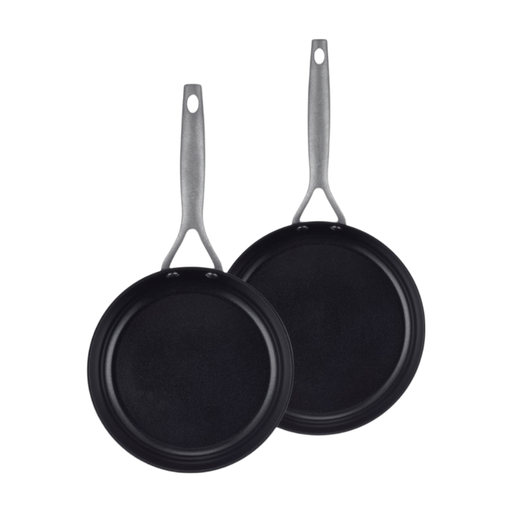
Why This Fits Their Persona: Perfect for those looking for a reliable foundation without paying top dollar. This frying pan set covers the most common sizes for daily meals, from a fried egg to a meal for two.
Unlike pans with a thin base, the forged aluminium construction ensures stable and even heat distribution, even on induction. The stainless steel handles are riveted for extra durability.
Two pans for an accessible price. A completely PFAS-free pan, made from 100% recycled aluminium and oven-safe up to 200°C.
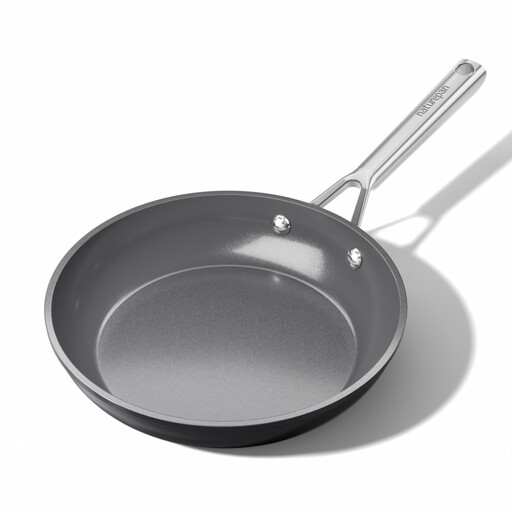
Why This Fits Their Persona: For the chef who prioritises durability and performance. Ideal for those who cook daily and want a pan that can take a beating and is versatile enough to go from the hob to the oven.
The 'scratch-resistant' claim is substantiated here by a coating reinforced with diamond and titanium, according to the manufacturer. This provides a noticeably more robust surface than standard ceramic layers.
A very scratch-resistant frying pan due to its reinforced coating. The pan is oven-safe up to a high temperature of 260°C, which allows for great culinary freedom.
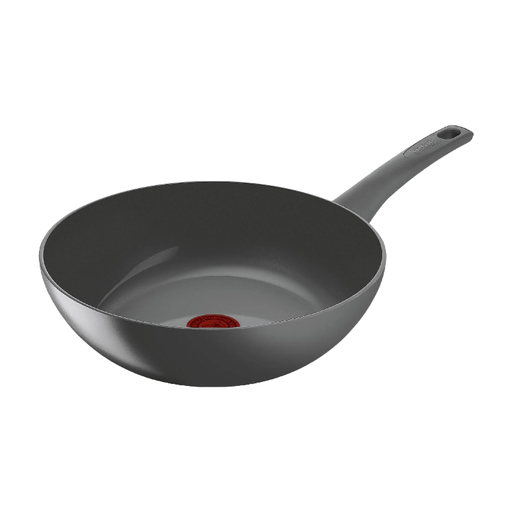
Why This Fits Their Persona: Specifically designed for stir-frying. The high, sloped sides and the shape of this wok pan make tossing ingredients easy, perfect for healthy and quick family meals.
This wok pan tackles the problem of uneven heat with a Thermo-Fusion base. According to Tefal, the Thermo-Signal dot lets you know exactly when the pan has reached the ideal cooking temperature.
Made from 100% recycled aluminium and equipped with the handy Thermo-Signal heat indicator. The pan is designed and produced in France.
We have compiled a complete, up-to-date list of products that meet these strict selection criteria and safety regulations.
The lifespan of a ceramic pan depends heavily on use and maintenance. With daily use and proper care (no metal utensils, no overheating, hand washing), a good-quality pan can last for several years. Lower quality pans or those used incorrectly can lose their non-stick coating within a year.
It is strongly discouraged. Although some reinforced coatings are more resistant to scratches than standard ones, using wooden, silicone, or plastic utensils is the only way to truly guarantee the lifespan of the ceramic non-stick coating. Any scratch, no matter how small, can reduce its non-stick properties.
This usually has two causes. First, using too high a heat. A ceramic pan heats up very efficiently and often only needs a medium setting on the hob. Excessive heat can damage the coating and cause food to stick. Second, although little fat is needed, a ceramic pan works best with a small amount of oil or butter. This aids the cooking process and protects the layer.
