
Vandaag of morgen in huis

Kwaliteit gegarandeerd

Welkomstaanbiedingen ontgrendelen: GRATIS bezorging | Tot 80% korting | Gratis 30 dagen JoyPlus-proefperiode
Download de app
A ceramic frying pan may seem simple to choose at first glance. However, pans vary considerably in their coating, base, size and care requirements. For example, a pan described as suitable for induction may have a base that is too small for your hob zone in practice. And a dishwasher-safe frying pan is not automatically the most durable choice for everyday use.
As a Joybuy Product Recommendation Officer, I mainly filter products based on verifiable features. So, before buying a ceramic non-stick frying pan, look out for these common pitfalls.
A frying pan for all hobs must work not only on gas and electric hobs, but also on induction, ceramic and halogen hobs. Check that this is explicitly stated in the product specifications. For induction, the magnetic base is also important. An aluminium pan will only work on induction if a suitable metal base has been added.
Also pay attention to the diameter of the hob zone. A 24 cm frying pan may have a smaller effective base. As a result, the pan may not heat up evenly or at the same speed throughout.
If you are looking for a PFAS-free frying pan, you will often see terms such as “non-toxic”, “healthy” or “natural”. These words alone do not tell you enough. Check the full material description and the specific claim being made.
According to the product specifications, the Redchef and Brabantia pans in this overview have a ceramic coating that is PFAS-free. Other models may only be described as PFOA-free, for example. That is not the same wording. So, do not treat a brand’s claim as a general guarantee; check exactly what is stated.
A ceramic coating may suit consumers who want to cook with little oil. However, that does not mean every dish will cook well without fat or that the coating will last indefinitely.
A smooth coating is useful for eggs, pancakes and fish, but care also affects the product’s lifespan. Metal utensils, abrasive sponges, overheating and running cold water over a hot pan can damage the coating.
Dishwasher suitability also requires some nuance. Some pans may be placed in the dishwasher, but manufacturers often still recommend hand washing to help keep the ceramic layer in good condition for longer.
A ceramic frying pan usually consists of a metal base, such as aluminium, with a ceramic non-stick coating. Aluminium heats up relatively quickly. A multi-layer construction, such as 304 stainless steel with an aluminium core, is designed to distribute heat evenly.
Check the following:
Where possible, avoid using metal spatulas with ceramic coatings. Even a scratch-resistant layer can wear down through incorrect use.
A frying pan with even heat distribution has a stable base and a material construction that spreads heat effectively. A thick or composite base can help reduce localised hot spots, but the hob and pan size still have an impact.
For induction, a suitable magnetic base is essential. For gas, a stable pan base is important. On a ceramic hob, you should also avoid using a rough underside that could cause scratches.
A 24 cm frying pan is a practical medium size for many households. Depending on the dish, you can use it to cook for one to three people. A 20 cm pan is useful for an omelette or a small portion. With a 28 cm pan, you have more room for vegetables, meat or a meal for several people.
As well as the diameter, consider the height of the sides. A deep ceramic pan is useful for stir-frying, slow cooking and sauces, while a shallow frying pan may be easier to use when turning food.
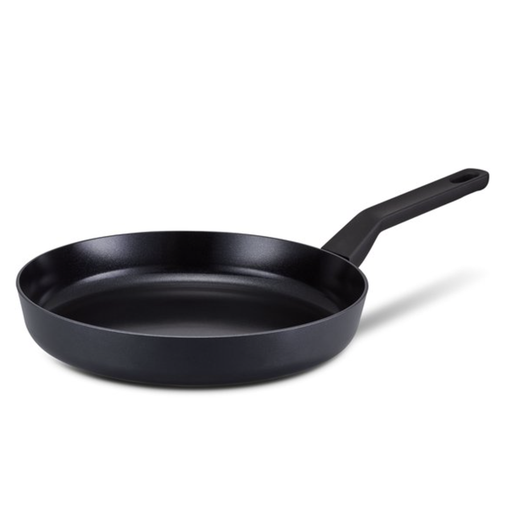
Why it suits this profile: The compact size is practical for small portions, eggs and omelettes. According to the product specifications, the pan has a ceramic, PFAS-free double non-stick coating and a heat-resistant Bakelite handle.
The specifications explicitly list the compatible heat sources, including induction, gas, electric, ceramic and halogen.
20 cm for smaller portions; 100% recycled aluminium; dishwasher-safe, although hand washing is recommended for longer-lasting performance.
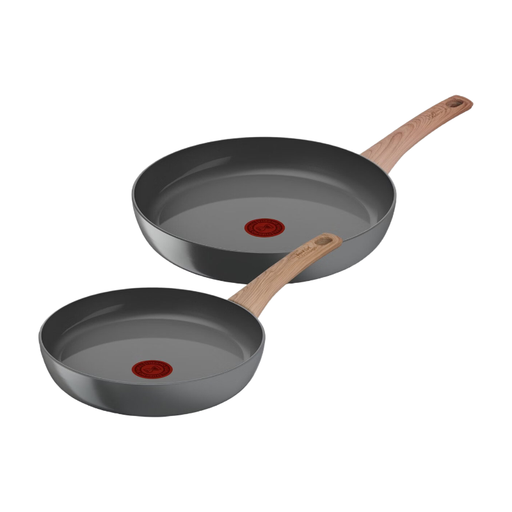
Why it suits this profile: The two sizes cover both everyday portions and larger meals. According to the product specifications, the set is made from recycled aluminium and has a PFAS-free ceramic coating.
The manufacturer lists all heat sources, including induction and halogen. Hand washing and wooden or silicone utensils are recommended.
24 and 28 cm in one frying pan set; Thermo-Signal indicator; suitable for all listed heat sources.
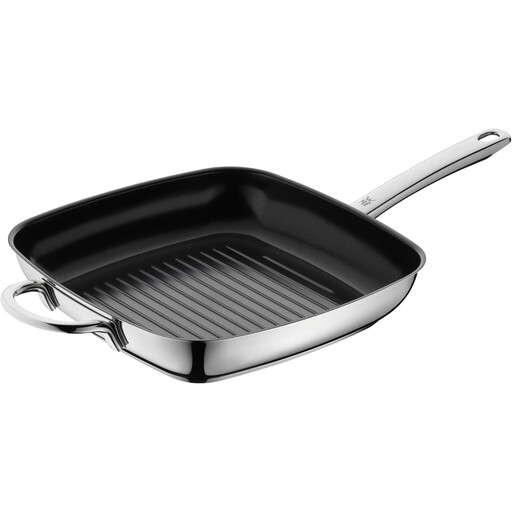
Why it suits this profile: The 28 cm square shape provides plenty of room for creating grill marks and cooking larger portions. The pan has a Cromargan 18/10 steel body, ceramic coating and TransTherm base.
The specifications state that the pan is suitable for all heat sources, including induction. The care instructions clearly state that it is not dishwasher-safe.
28 × 28 cm grilling surface; wide pouring rim; oven-safe according to the product specifications; suitable for induction.

Why it suits this profile: The combination of 20 and 24 cm is useful for small side dishes and meals for up to a few people. According to the product specifications, the pans are made from 100% recycled forged aluminium.
The product specifications mention an RCS marking for recycled material, a PFAS-free ceramic coating and compatibility with induction, gas, electric, ceramic and halogen hobs.
Two sizes; oven-safe up to 200 °C; dishwasher-safe; hand washing recommended for a longer service life.
We have put together a complete, up-to-date list of products that fully meet these strict selection criteria and the applicable European safety regulations.
These habits will help you reduce unnecessary wear:
The expected lifespan is not the same for every pan. How often you cook, the temperature, the utensils you use and the cleaning method all have an impact. A dishwasher-safe frying pan may be practical, but hand washing is often the gentler care option.
That depends on the base. Only choose a model that explicitly lists induction as a suitable heat source. If in doubt, also check the recommended base diameter to make sure it matches the induction zone.
There is no fixed service life. The coating may last longer when used at moderate temperatures with gentle utensils and hand washing. Overheating, metal spatulas and thermal shock can shorten its lifespan.
“Healthy frying pan” is mainly a search term rather than a universal product feature. Look at the specific coating information. For a PFAS-free frying pan, the manufacturer should clearly state this feature in the product specifications. The way you prepare food, such as the amount of oil and the temperature used, also remains important.
