
Vandaag of morgen in huis

Kwaliteit gegarandeerd

Welkomstaanbiedingen ontgrendelen: GRATIS bezorging | Tot 80% korting | Gratis 30 dagen JoyPlus-proefperiode
Download de app
Need a new frying pan? A ceramic frying pan is an easy choice if you're looking for a PFAS-free pan. But the market is flooded with pans that promise the world. Unfortunately, this often leads to disappointment: a pan that stops performing as advertised after just a few months.
As a Joybuy Product Recommendation Officer, I'm here to help you cut through the marketing jargon. Let's look at the three most common pitfalls and how to avoid them, so you can choose a pan you'll enjoy for years to come.
Pitfall 1: The non-stick coating that vanishes after three months Many pans feature a ceramic non-stick coating that works fantastically at first. An egg slides right out, no butter or oil needed. But after a few weeks of intensive use, you'll notice food starting to stick. This is often due to a thin, fragile coating that can't withstand daily use and cleaning.
Pitfall 2: The "induction-suitable" pan that warps A pan might carry the 'suitable for induction frying pan' label, but that doesn't guarantee good performance. A base that is too thin or poorly constructed can warp from the rapid, intense heat of an induction cooktop. The result: the pan wobbles on the cooktop and heat is distributed unevenly, causing your food to burn in one spot and remain raw in another.
Pitfall 3: The 'oven-safe pan' with a melting handle The versatility of a pan that can go from the stovetop straight into the oven is a major advantage. Many manufacturers advertise an oven-safe pan but fail to specify that this only applies to the pan itself, not to its plastic or Bakelite handle. A pan that can only go into the oven up to 160°C significantly limits your cooking options.
To sidestep the pitfalls above, there are a few specifications you should always check. These are the objective features that distinguish a short-term pan from a long-term investment.
A PFAS-free pan is the baseline, but not all ceramic coatings are created equal. Look for pans where the manufacturer states the coating has been reinforced.
For those who cook on induction, the base is everything. A good induction frying pan has a base that is:
Always check the maximum oven temperature for the entire pan, including the handle.
Based on these objective criteria, we have selected a number of pans that suit different user profiles.
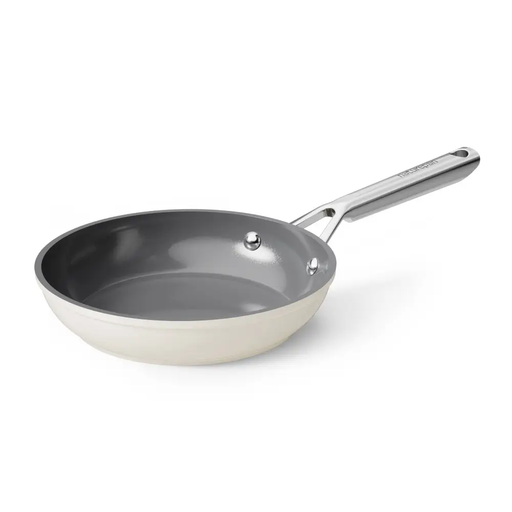
Why This Fits Their Persona: Ideal for daily meals for 2 to 3 people. The 24 cm diameter is a versatile size for everything from an omelet to a piece of fish. This pan is designed to be a reliable workhorse for the everyday kitchen.
The manufacturer states that the ceramic coating is reinforced with diamond and titanium particles, aimed at preventing rapid wear. The stainless steel handle and oven-safe rating up to 230°C bypass the pitfall of limited oven use.
Durable coating: The reinforced coating is designed for a longer lifespan.
High oven resistance: Suitable for versatile recipes that need to be finished in the oven.

Why This Fits Their Persona: A frying pan set is ideal for families. With a 20 cm pan for an egg and a 24 cm pan for vegetables or meat, you can prepare a meal efficiently. Brabantia is a well-known brand in Dutch households, which inspires confidence.
The forged aluminium construction is lightweight yet strong, which helps prevent warping on induction. The stainless steel handles are riveted for extra stability and make the pans oven-safe up to 200°C.
Complete set: Two commonly used sizes in one purchase.
Recycled material: Made from 100% recycled aluminium, a plus for the environmentally conscious consumer.
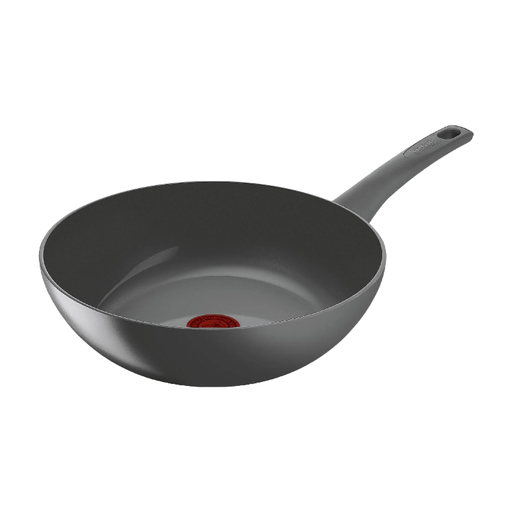
Why This Fits Their Persona: For those who love to stir-fry, a standard frying pan isn't ideal. This 28 cm ceramic wok has the high, sloped sides needed to efficiently toss ingredients without spilling.
Tefal addresses the problem of uneven heating with its Thermo-Fusion base, which the manufacturer claims ensures fast and uniform heat distribution on induction. The Thermo-Signal indicator helps prevent overheating, which benefits the coating's lifespan.
Specific design: The wok shape is optimized for stir-frying.
Thermo-Signal: The dot in the pan turns solid red when the ideal cooking temperature is reached, for better results.
We have compiled a complete, up-to-date list of products that fully meet these strict selection criteria and Dutch safety regulations.
The lifespan of the ceramic non-stick coating heavily depends on its maintenance. Preferably, wash the pan by hand with a soft sponge. Although many pans are marketed as 'dishwasher-safe', the harshness of dishwasher tablets can degrade the coating over time. Always use wooden or silicone utensils and avoid heating an empty pan on the highest setting.
The term healthy frying pan is often used because ceramic pans are PFAS-free. PFAS are chemical substances used in traditional non-stick coatings (like Teflon/PTFE) that can potentially release harmful fumes at very high temperatures. A ceramic pan is therefore a PFAS-free pan. Additionally, the effective non-stick layer allows you to cook with less oil or butter.
This is usually due to a mismatch between the pan and the cooktop. The base of the pan may not be completely flat (warped), preventing proper contact. It could also be that the diameter of the magnetic base is too small for the cooking zone, causing the cooktop not to recognize the pan. Therefore, always choose an induction frying pan with a sturdy, thick base that matches the diameter of your cooking zones.
