
Vandaag of morgen in huis

Kwaliteit gegarandeerd

Welkomstaanbiedingen ontgrendelen: GRATIS bezorging | Tot 80% korting | Gratis 30 dagen JoyPlus-proefperiode
Download de app
Choosing a new frying pan seems simple—until you find yourself navigating a maze of marketing terms and promises. With the popular ceramic frying pan, it's especially easy to fall into a few common pitfalls. You think you're making a durable, healthy purchase, but after a few months, everything starts to stick, or the base warps.
As a Joybuy Product Recommendation Officer, I'm here to help you avoid that disappointment. We'll look past the slick promises and focus on what really matters. These are the three pitfalls many people encounter:
Let's explore how to avoid these problems and choose a pan you'll enjoy for years to come.
You don't need to be a materials scientist to make a good choice. Focus on a few key specifications that make the difference between a bad purchase and a reliable kitchen tool.
Not all ceramic coatings are created equal. A standard layer can be susceptible to scratches and rapid wear. Look for pans where the manufacturer states the coating has been reinforced. Materials like diamond or titanium particles are sometimes added to create the durable frying pan you're looking for. A robust non-stick frying pan is not only a pleasure to use but also essential for healthy cooking with minimal oil.
Also, pay close attention to the specifications regarding chemical substances. A pan that explicitly states it is PFOA and PTFE free is a good start. For complete peace of mind, look for a pan that is guaranteed to be a PFAS-free frying pan.
A frying pan for induction needs a base that is magnetic and perfectly flat. Many cheaper pans have a thin base that can deform (warp) due to temperature fluctuations. Once warped, the pan no longer makes full contact with the cooktop, preventing proper heat transfer and making cooking frustrating.
Opt for a pan with a thick, warp-resistant base, often described as 'forged' aluminium or featuring an encapsulated stainless steel base. This ensures stability and even heat distribution.
A modern frying pan should be versatile. An oven-safe frying pan gives you the freedom to start a dish on the stove and finish it in the oven. Always check the maximum temperature the pan (and its handle) can safely withstand in the oven.
Although many pans are marketed as dishwasher-safe, handwashing is almost always better for the longevity of the non-stick coating. The aggressive detergents in dishwasher tablets can degrade the coating over time. However, a pan with a good coating is easy to clean with a soft sponge and some warm water.
Based on these criteria, we have selected a number of pans that suit different user profiles.
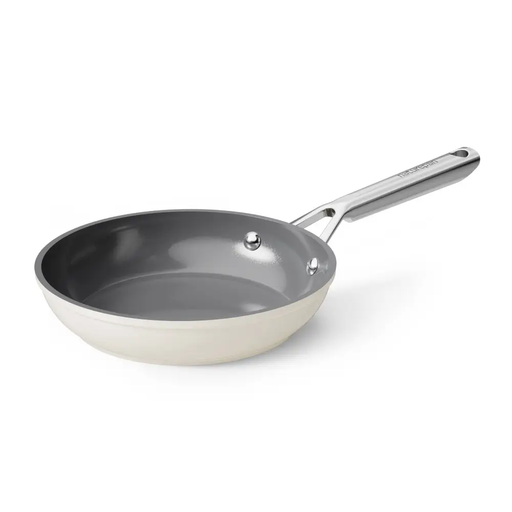
Why it's a match: With a 24 cm diameter, this is the ideal all-rounder for daily meals for 2 to 3 people. From a fried egg in the morning to a piece of fish for dinner, this pan is a reliable partner.
According to the manufacturer, the ceramic coating is reinforced with diamond and titanium particles. This is designed for a longer lifespan than standard coatings, addressing the pitfall of rapid wear.
Completely PFAS, PFOA, and PTFE-free. Suitable for all heat sources, including induction, and oven-safe up to 230°C.
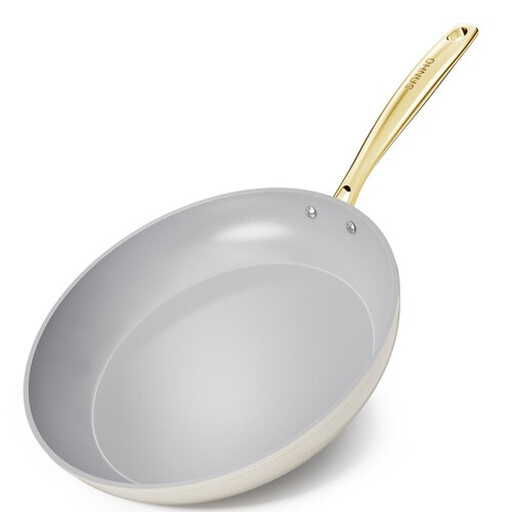
Why it's a match: For those who prioritise health, this pan offers peace of mind. Its compact 20 cm size is perfect for preparing single-serving meals, breakfast, or side dishes with minimal oil.
This pan tackles the misleading "PFAS-free" claim by explicitly specifying that it is free of PFAS, PFOA, PTFE, lead, and cadmium. This provides extra reassurance.
Highly versatile: suitable for all heat sources and oven-safe up to a high temperature of 260°C.
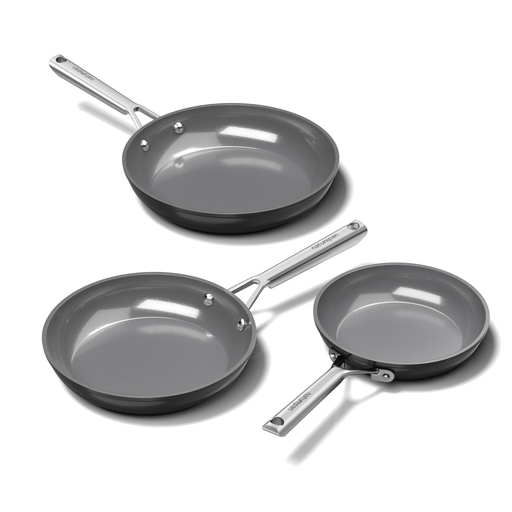
Why it's a match: Why choose one pan when a complete set gets you ready for anything? This ceramic pan set (20, 24, and 28 cm) covers all your cooking needs, from a small egg to a one-pan meal for the whole family.
By opting for a set with a consistent, reinforced coating, you avoid having to buy individual pans of varying quality later. All pans are designed for durability and performance.
A complete and versatile solution. All pans are PFAS-free, suitable for induction, and oven-safe up to 260°C.
We have compiled a complete, up-to-date list of products that meet these strict selection criteria and current regulations.
The lifespan of a ceramic frying pan depends heavily on the quality of the coating and its maintenance. A high-quality pan with a reinforced layer can last for several years with proper use. Tips for a longer lifespan:
Yes, a PFAS-free frying pan is considered a healthy choice. Traditional non-stick coatings containing PTFE can release potentially harmful fumes when overheated (above 260°C). A ceramic layer is more stable at high temperatures and does not contain PFAS, PFOA, or PTFE, so there is no risk of these chemicals leaching into your food.
This is almost always because the base of the pan is no longer completely flat. For a frying pan for induction, direct contact with the cooktop is essential. If the base warps due to heat or a manufacturing defect, the magnetic connection is broken, and the pan stops heating. Therefore, always choose a pan with a thick, sturdy, and warp-resistant base.
