
Vandaag of morgen in huis

Kwaliteit gegarandeerd

Welkomstaanbiedingen ontgrendelen: GRATIS bezorging | Tot 80% korting | Gratis 30 dagen JoyPlus-proefperiode
Download de app
A ceramic fan heater can make a cold bedroom, workplace or study more comfortable in next to no time. However, a claim such as ‘heats up in just a few seconds’ says little about energy consumption, noise levels or whether the heater is suitable for your room. A compact electric heater works particularly well as supplementary heating; for an entire home, it is generally no substitute for central heating.
As a Joybuy Product Recommendation Officer, I filter product information according to verifiable specifications. This helps you see which features make a practical difference and which marketing claims should be treated with some caution.
A 2000-watt fan heater can blow out warm air quickly, but at full power it also uses 2 kWh per hour. At an electricity price of €0,30 per kWh, that works out at around €0,60 per hour. A PTC ceramic heater often regulates heat output through different settings and a thermostat, but ceramic technology does not automatically make the appliance economical to run.
Therefore, look out for:
A manufacturer may specify a coverage area of 10, 20 or even 60 m². However, this depends on insulation, ceiling height, outdoor temperature, windows and the desired temperature. A small heater is not automatically suitable for a large living room.
Use the stated coverage area as a guide, not a guarantee. For a well-insulated home office or bedroom, 1500 to 1800 watts may be sufficient as supplementary heating. A draughty room requires more power or a longer operating time.
A heater with tip-over protection and overheating protection provides an additional layer of safety, but does not prevent every risk. Always place the appliance on a stable, dry and level surface. Keep it at least 1 metre away from curtains, bedding, furniture and other flammable materials.
Never cover an electric heater, block the air outlet or use the appliance in a bathroom or other damp area unless the manual explicitly states that this is permitted.
The power output determines how much electrical energy the heater uses at maximum. Many models have settings such as 900, 1300 and 1500 watts, or low and high settings. A lower power setting is useful for gradually keeping a small room warm and can help limit energy consumption.
A 2000W ceramic fan heater is particularly suitable when you want extra heat quickly. However, check that the socket and circuit are suitable. Ideally, connect a powerful heater directly to a wall socket and avoid unsuitable extension leads or multi-way adaptors.
A fan will always make some noise. A stated value of 25 to 50 dB can be useful for comparison, but measurement conditions vary from one brand to another. According to the product information, the DREO Atom 416 operates between 25 and 42 dB, while the PELONIS is rated at 50 dB.
‘Quiet’ therefore does not mean silent. If you are looking for a quiet heater for the bedroom, it is worth checking for:
A heater with a thermostat switches the heating element off or reduces its output once the set temperature has been reached. This can be more convenient than switching the heater on and off manually. A timer is practical for working from home, studying or pre-heating a room for a limited period.
An oscillating heater moves the airflow horizontally around the room. The stated angle varies by model: the PELONIS and Xiaomi specify 70 degrees, while the Bear states 90 degrees. Oscillation distributes heat more widely, but does not automatically increase heating power.
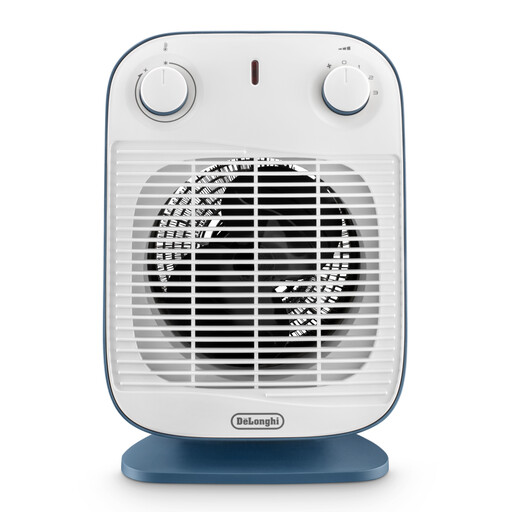
Why it suits this profile: This model has simple dial controls, three heat settings and an adjustable thermostat. It is easy to use for anyone who does not need an app or remote control.
The product specifications state 2000 W, three settings and overheating protection. You should still adjust the intended coverage to suit the insulation and layout of the room.
2000 W power, three heat settings, adjustable thermostat and anti-frost function.
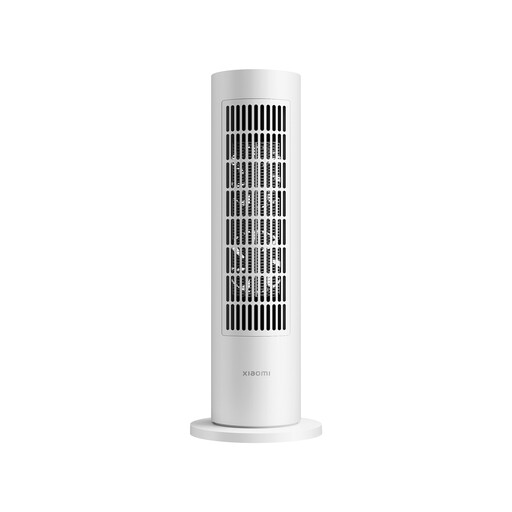
Why it suits this profile: Suitable for users who want to control their heating via an app, voice assistant or timer and prefer a tower model with 70° oscillation.
The controls and timer make it easy to plan short periods of use. According to the product information, the Mi Home app and an internet connection are required for full app functionality.
2000 W, PTC ceramic element, 70° oscillation, thermostat, tip-over protection and overheating protection.

Why it suits this profile: An option for bedrooms, offices and study spaces where a low stated noise level, remote control and timer are important.
The model has three power levels, a thermostat from 5 to 35 °C and a 12-hour timer. The manufacturer states 34 dB and up to 40% energy savings; these are claims based on DREO’s own research and are not a fixed guarantee for every situation.
1500/1300/900 W, remote control, 12-hour timer, tip-over protection and overheating protection.
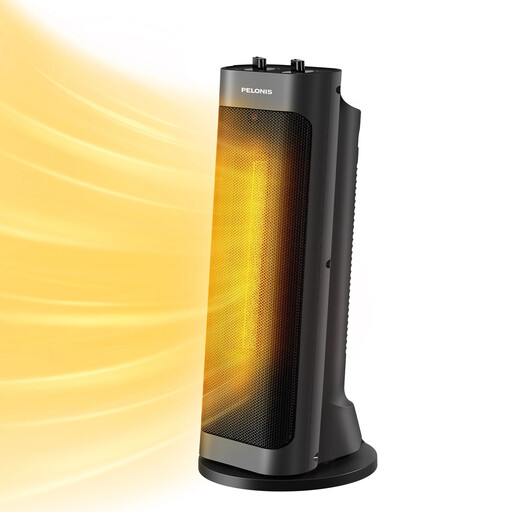
Why it suits this profile: With its compact design, carry handle and 70° oscillation, this model suits people working from home who move the heater between the office, bedroom and living room.
The specifications list four heat settings, a thermostat, tip-over protection and overheating protection. The claim that it heats up in 3 seconds comes from PELONIS product information.
2000 W, four settings, 70° oscillation, carry handle and a stated noise level of 50 dB.
We have put together a complete, up-to-date list of products that fully meet these strict selection criteria and the applicable European safety regulations.
Before buying, check that the plug, manual and product information are suitable for use in the Netherlands. Look for information about CE marking, electrical safety and the statutory guarantee. A CE marking is not a quality ranking; it indicates that the manufacturer declares that the product meets the relevant EU requirements.
Place the heater:
Only use a portable heater while you are awake, and regularly check the cable, plug and casing. Stop using it immediately if you notice a burning smell, sparks, unusual heat or damage.
This mainly depends on the power output, operating time and thermostat setting. A 1500-watt model uses 1.5 kWh per hour at full power; a 2000-watt model uses 2 kWh. A lower setting, timer and good insulation can help limit consumption. Ceramic technology alone does not automatically make a heater energy-efficient.
You can if the manual permits it and you keep a sufficient distance from bedding and curtains. Ideally, choose a model with overheating protection, tip-over protection, a timer and a low stated noise level. Do not leave the heater unattended or allow it to operate while covered.
Lifespan varies depending on the model and how intensively it is used. Keep the ventilation openings free from dust as instructed in the manual, do not pull the appliance by its cable and store it in a dry place. Stop using a heater if the casing, cable or plug is damaged; repairs should be carried out by an authorised professional.
