
Vandaag of morgen in huis

Kwaliteit gegarandeerd

Welkomstaanbiedingen ontgrendelen: GRATIS bezorging | Tot 80% korting | Gratis 30 dagen JoyPlus-proefperiode
Download de app
Ceramic bowls suit many British households, from yoghurt and porridge to soup, pasta, salad and snacks. However, an attractive pattern says little about everyday practicality. A bowl may be too small for a normal portion, unsuitable for the microwave or difficult to store.
That is why Joybuy’s Product Recommendation Officer advises you to focus on information you can verify. This helps you avoid buying something that no longer suits your kitchen or eating habits after just a few weeks.
Product photos do not always give an accurate impression of the actual dimensions. A small breakfast bowl may look spacious online, while a diameter of 9.5 cm is mainly suitable for small snacks or decorative use. For pasta or a meal salad, you will generally need a wider bowl with a larger capacity.
Always check:
A product description may state that bowls are dishwasher-safe, microwave-safe or oven-safe. This does not automatically apply to the lid, decoration or accessories. Bowls with a plastic lid may also have different temperature limits.
Read the care information before buying and check the instructions after delivery. With ceramic items, also avoid sudden temperature changes, such as placing a cold bowl straight into a hot oven. Check bowls for cracks or damage before use.
A set of 4 bowls is convenient for a family or if you like to use matching crockery. For one person, a set of 2 or even a single Japanese bowl may be more practical. Also consider your storage space: stackable bowls take up less room, but check that they really sit securely on top of one another.
Ceramic is a broad material category. Stoneware often has a slightly more substantial look and is widely used for everyday bowls. Porcelain generally has a finer, lighter appearance. However, suitability for the microwave, oven and dishwasher depends on the specific product and its finish, not just the material name.
Look out for the following information:
According to the product description for the Dafuceramic models, these bowls are made from ceramic and are suitable for the dishwasher, microwave and oven. This remains a supplier product specification; always follow the usage instructions provided.
A breakfast bowl of around 50 cl is suitable for yoghurt, breakfast cereal, fruit or a small serving of soup. For pasta, ramen or a generous salad, a wide ceramic pasta bowl with a larger capacity is more suitable. A ceramic soup bowl often has higher sides to hold liquids more effectively.
Use this guide as a starting point:
Do not just look for “easy to clean”; look for an explicit statement that the item is dishwasher-safe and microwave-safe. For oven use, it should also be clear that this applies to the bowl itself. A wooden base, plastic lid or metal detail may restrict how it can be used.
For safe everyday use:
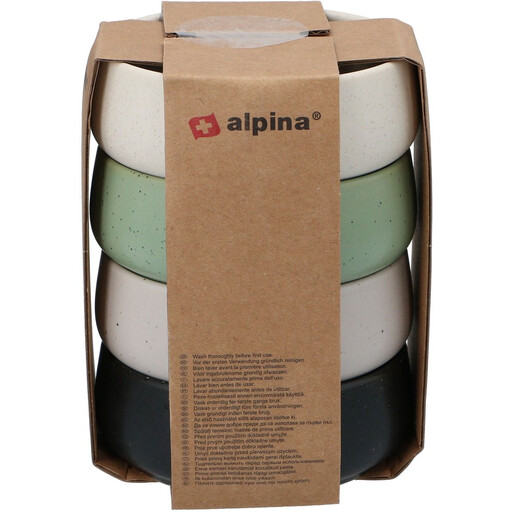
Why it suits this profile: This set of four compact bowls is designed for small portions, snacks, children’s activities or hobbies. With a diameter of 9.5 cm, its uses are clearly defined.
The small size is clearly stated, so you are unlikely to mistake this model for a deep soup or pasta bowl.
Set of 4, ceramic, round shape and, according to the product information, dishwasher-safe.
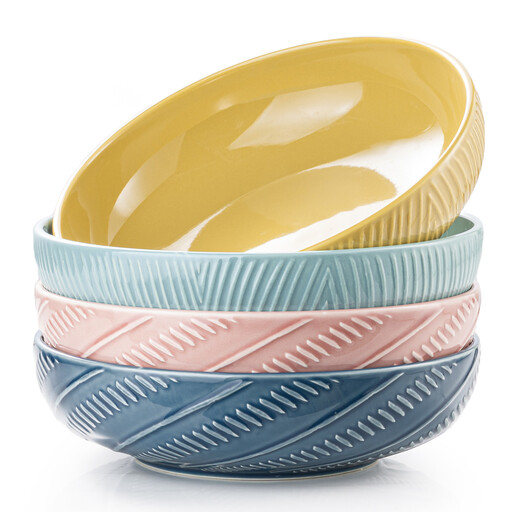
Why it suits this profile: The wide shape and stated dimensions of 8.5 inches by 2.4 inches are suitable for pasta, salad, soup and generous family portions.
The specifications state the size, stackability and suitability for use in the dishwasher, microwave, fridge and oven. Check the current instructions before use.
Set of 4, wide shape and, according to the product description, stackable and suitable for several appliances.
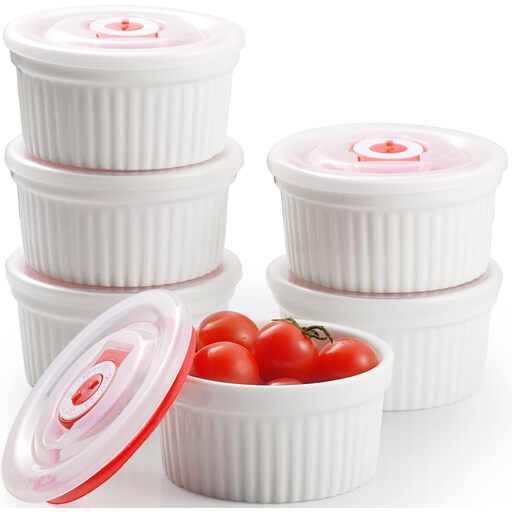
Why it suits this profile: The 8 oz capacity is suitable for individual desserts, dips, quiche, pudding and small food-preparation tasks in the kitchen.
The set separately specifies the ceramic ramekins and plastic lids. According to the product information, the lids are not intended for oven use and have their own temperature limit.
6 pieces, 8 oz capacity per ramekin and lids with date dials for storage in the fridge or freezer.
We have compiled a complete, up-to-date list of products that fully meet these strict selection criteria and the applicable European safety regulations.
It varies by model. Look for the explicit product specification dishwasher-safe. Decorative finishes, wooden components and plastic lids may have separate care instructions. Also check the label or manual after purchase.
A wide, relatively shallow ceramic pasta bowl is generally practical for pasta, ramen and meal salads. Pay attention to the capacity and diameter. For example, the YumiPLUS Japanese pasta bowls in the range state a capacity of 1,200 ml per bowl; use the measurement mainly as a guide and adjust it to suit your portions.
Avoid thermal shock. Do not put a cold bowl straight into a hot oven, and do not place a hot bowl on an ice-cold surface. Do not use damaged crockery and handle stacked bowls carefully, even when the product description describes them as stackable.
