
Vandaag of morgen in huis

Kwaliteit gegarandeerd

Welkomstaanbiedingen ontgrendelen: GRATIS bezorging | Tot 80% korting | Gratis 30 dagen JoyPlus-proefperiode
Download de app
Ceramic bowls and ramekins are useful for breakfast, soup, desserts, meal prep and serving snacks. Even so, it is not wise to focus only on colour or an attractive set price. The difference between a useful purchase and tableware that mainly takes up space often comes down to size, usage instructions and care.
A ramekin described as oven-safe in the product information is not automatically able to withstand every temperature change. Ceramic can crack due to thermal shock, for example when you place a dish straight from the freezer into a hot oven.
So check:
An oven-safe ramekin is also not intended for use on a hob, over an open fire or in direct contact with a flame, unless this is expressly stated.
A set of four or six bowls may seem appealing, but the number of pieces says little about how practical they are to use. An 8 oz bowl, approximately 237 ml, is suitable for individual desserts, dips or small portions. For soup, ramen or a generous salad, you will need a larger capacity.
As well as the number of pieces, consider:
A wide pasta bowl of around 36 oz is suitable for pasta, salad and generous portions. A smaller ramekin works better for crème brûlée, soufflés, custard and sauces.
According to the product information, various ceramic bowls are dishwasher-safe. This makes cleaning easier, but repeated use of an intensive programme may eventually affect the glaze, pattern or colour. Also check whether the lids have the same properties as the ceramic dish.
With ceramic ramekins with plastic lids, care advice is often different: the ramekins can go in the dishwasher, while hand washing is recommended for the lids. Do not use a scouring sponge on a glazed surface, and check bowls after a fall for small cracks or chips.
Where possible, choose a product whose material is clearly specified, such as ceramic, stoneware or porcelain. Product information may also state that the surface is lead-free, cadmium-free or suitable for food contact. Treat this as a manufacturer’s product specification; always check the current product page and safety instructions.
A smooth glaze offers practical advantages: food residue is less likely to stick to the surface and cleaning is generally easier. Textured or handmade patterns can be decorative, but may sometimes require a little more attention when washing up.
Use the following guide as a practical starting point:
For everyday use, stackable bowls are handy if you have limited cupboard space. A wide bowl may hold plenty, but it also takes up more room if the shape does not stack neatly.
Do not rely on one general claim; check each appliance separately. For example, a product may be suitable for the oven, microwave, fridge, freezer and dishwasher, while its accompanying lid is intended only for storage or limited microwave use.
With ceramic dishes, it is sensible to:
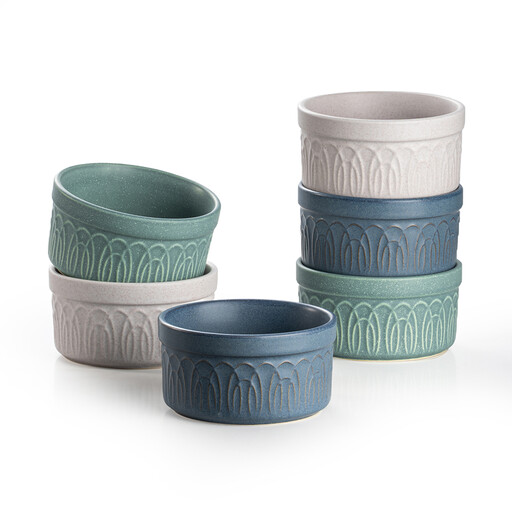
Why it suits this profile: The 8 oz capacity is manageable for anyone starting out with baking, making desserts or looking for small dipping bowls. With six pieces, you can prepare several portions at once.
The product information lists oven, microwave, freezer and dishwasher use. The warning against sudden temperature changes still applies.
Set of 6, 8 oz capacity, glazed ceramic and, according to the product information, suitable for the oven and dishwasher.
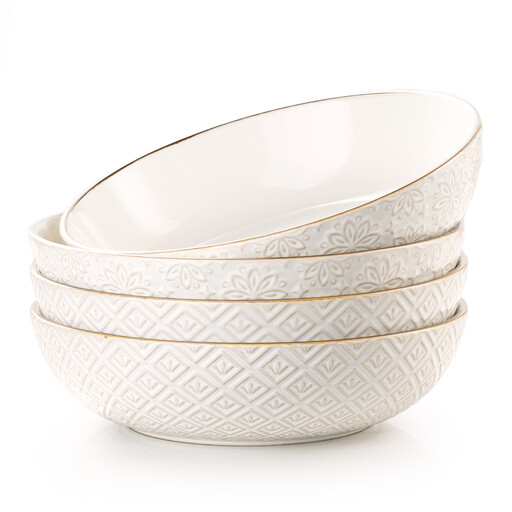
Why it suits this profile: The wide shape is suitable for pasta, salads, soup, oven dishes and generous main meals. The design works equally well for everyday use and entertaining guests.
The dimensions of 8.5 inches by 2.4 inches and the stackable shape make storage more predictable than with deep, unusually shaped bowls.
Set of 4, 36 oz capacity, stackable and, according to the product information, suitable for the oven, microwave, fridge and dishwasher.
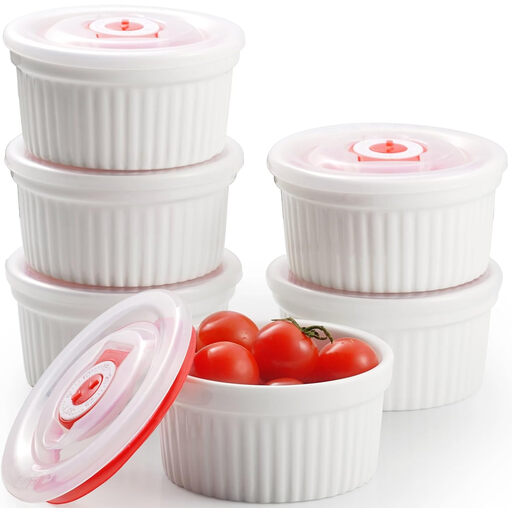
Why it suits this profile: The larger capacity and included lids are practical for keen home bakers, meal prep and individual oven dishes that will be chilled and stored later.
The product information distinguishes between the ceramic ramekins and plastic lids. The lids are not intended for oven use and have a temperature limit.
6 12 oz ramekins, lids with date dials and, according to the product information, suitable for the oven, microwave, freezer and dishwasher.
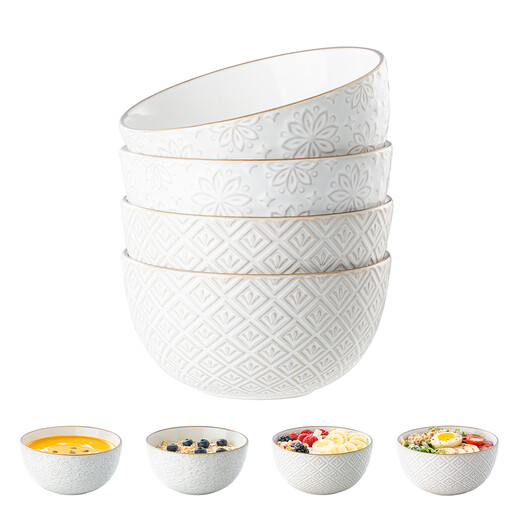
Why it suits this profile: These bowls are suitable for breakfast, soup, noodles, ramen, fruit and salad. The four different textured patterns give the set a distinctive look on the table.
The product information states the 29 oz capacity, stackability and suitability for use in the oven, microwave, freezer and dishwasher. With textured surfaces, always check that food residue remains easy to reach.
Set of 4, 29 oz capacity, stackable design and, according to the product information, a scratch-resistant glaze.
We have put together a complete, up-to-date list of products that fully meet these strict selection criteria and the applicable European safety regulations.
Ceramic can last for many years when used correctly. Avoid sudden temperature changes and allow a hot bowl to cool down before rinsing it. When baking, use oven gloves and place hot dishes on a trivet.
Also bear the following in mind:
That depends on the specific product information. Look for an explicit statement that the product is oven-safe and check the warnings about thermal shock. A bowl that is suitable for the oven cannot automatically be used on a hob or over an open fire.
For a small portion of soup, around 500 to 700 ml is practical; for generous soup, ramen or pasta dishes, a bowl of around 29 to 36 oz may be a better fit. Consider the shape too: wide pasta bowls leave room for toppings, while deeper soup bowls are less likely to spill.
No. Check this for each product. With some sets, the ceramic bowls are dishwasher-safe, but the plastic lids must be washed by hand. Always follow the care instructions on the product page and packaging.
