
Vandaag of morgen in huis

Kwaliteit gegarandeerd

Welkomstaanbiedingen ontgrendelen: GRATIS bezorging | Tot 80% korting | Gratis 30 dagen JoyPlus-proefperiode
Download de app
Ceramic bowls suit all kinds of meals, from breakfast and soup to pasta, salads, snacks and tapas. However, a beautiful photo reveals little about everyday use. A bowl may be too small for a standard portion, unsuitable for the dishwasher or awkwardly large to store in your cupboard.
With these buying tips, you can compare ceramic bowls, porcelain bowls and earthenware bowls based on the features that really matter in a British kitchen.
Patterns, glaze and colour attract attention, but make sure you also check the diameter, height and capacity. A small bowl measuring around 9.5 cm is suitable for snacks or decoration, but not necessarily for soup or a generous breakfast portion.
Also consider the shape. A wide, shallow bowl works well for pasta and salad. A deeper bowl is more suitable for soup, ramen or breakfast cereal, as liquids and toppings are less likely to spill over the edge.
Not every bowl from a dinnerware or bowl set can go in the dishwasher. Sometimes the dishwasher information applies only to the ceramic components and not to a wooden or bamboo serving board. Always check the care instructions for the complete product.
One example is a snack set containing ceramic bowls and bamboo: according to the product information, the bowls can go in the dishwasher, while the board must be cleaned by hand. This difference helps prevent the wood from warping or becoming damaged.
Ceramic is a broad umbrella term. Porcelain is generally manufactured differently from earthenware, which means it may feel, weigh and respond to temperature differently. Earthenware bowls often have a robust, artisanal appearance, but may sometimes require hand washing.
So don’t focus only on words such as “premium” or “luxury”. Look at the specific information: material, dimensions, capacity, microwave use, oven use and dishwasher compatibility.
Use these guidelines as a starting point:
Capacity is more useful than diameter alone. According to the product information, each YumiPLUS Japanese pasta bowl has a capacity of 1,200 ml. This makes them suitable for generous portions of ramen, soup, pasta or salad, but potentially less practical for a small breakfast.
Pay attention to the following points:
Also avoid sudden changes in temperature. Placing a cold ceramic bowl straight into a very hot oven or onto a hot surface may cause it to crack. Always follow the manufacturer’s instructions.
For a small kitchen, stackable bowls are practical. Check whether the rim and shape really allow them to be stacked efficiently. For example, four wide pasta bowls may take up more cupboard space than four narrower breakfast bowls.
A bowl set is not automatically better value either. Compare the number of pieces with the size of your household and check whether all the bowls are the same size. A set of four identical bowls is convenient for everyday use, while a serving set with several small bowls is more suited to drinks and nibbles.
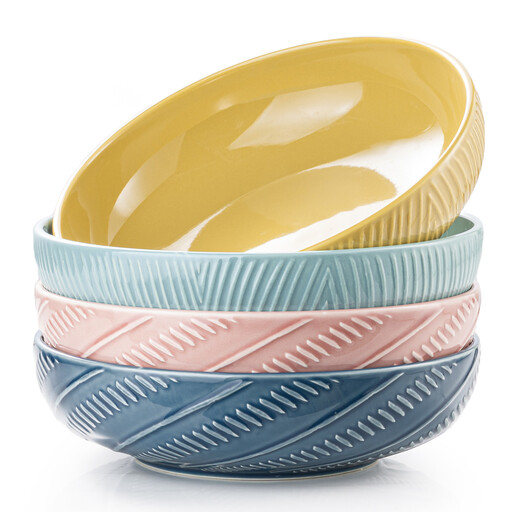
Why it suits this profile: This set contains four wide bowls measuring approximately 21.6 cm, suitable for pasta, salad, soup, breakfast cereal and fruit. This makes it a versatile bowl set for several everyday meals.
The product information states that the bowls have a stackable design and can be used in the microwave, oven, fridge and dishwasher. However, check the current instructions on the product page before buying.
Set of 4; wide shape; stackable; according to the product description, suitable for the dishwasher and microwave.
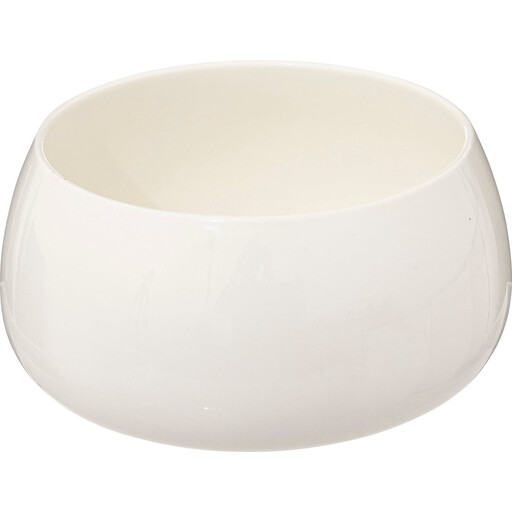
Why it suits this profile: The 21 cm white porcelain bowl has a calm, understated look that works well for salads, fruit and shared dishes. Its rectangular shape is an alternative to standard round serving bowls.
The dimensions and material are clearly stated. According to the product information, the bowl is microwave-safe but not suitable for the dishwasher or oven.
Porcelain; 21 cm size; microwave-safe; neutral white colour.
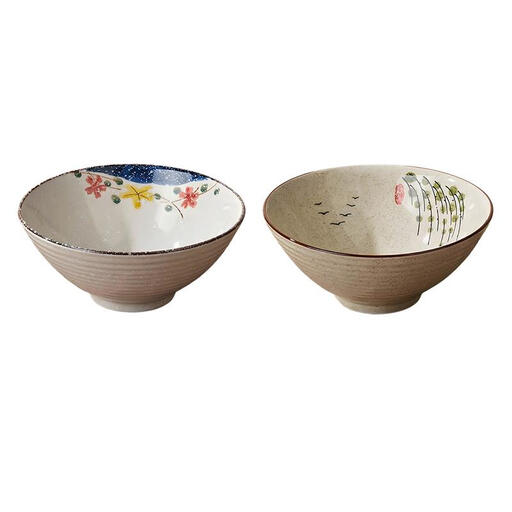
Why it suits this profile: According to the product information, each of the two bowls has a capacity of 1,200 ml. This makes them suitable for ramen, noodles, soup, pasta and generous salads.
The capacity is clearly stated. The product information mentions microwave and dishwasher use, but not oven use; therefore, do not use the bowls on the hob or in the oven.
Two generously sized bowls; Japanese style; capacity of 1,200 ml per bowl; according to the product information, suitable for the microwave and dishwasher.
We’ve put together a complete, up-to-date list of products that fully meet these strict selection criteria and the applicable European safety regulations.
Ceramic stays looking its best for longer when you use it in accordance with the product instructions. Keep the following points in mind:
Small earthenware or ceramic bowls are useful for tapas and snacks. A set with a board creates an attractive presentation, but the board usually requires different care from the bowls. For everyday breakfast, soup and pasta, a stackable bowl set is often easier to store.
This varies from product to product. Check the official care information. With sets containing multiple materials, the dishwasher guidance does not always apply to wooden or bamboo components. Also check whether the manufacturer says decorative patterns are suitable for frequent dishwasher use.
For pasta, wide bowls measuring approximately 21 to 23 cm are practical. For soup, the best choice depends on the depth and capacity. A bowl of around 15 to 18 cm is often suitable for a standard portion, while a model with a capacity of around 1,200 ml offers more room for ramen, noodles or generous meals.
Porcelain bowls often have a smooth, light appearance. Earthenware bowls are known for their more rustic look and heavier feel. Their suitability for use in the oven, microwave and dishwasher varies from model to model. Always check the product specifications rather than relying solely on the material name.
