
Vandaag of morgen in huis

Kwaliteit gegarandeerd

Welkomstaanbiedingen ontgrendelen: GRATIS bezorging | Tot 80% korting | Gratis 30 dagen JoyPlus-proefperiode
Download de app
Ceramic bowls suit many households, from breakfast and soup to pasta, salad and snacks. But an attractive bowl set can disappoint in everyday use. A capacity that’s too small, unclear care instructions or a shape that’s difficult to stack can quickly lead to extra costs.
As a Joybuy Product Recommendation Officer, I focus on verifiable details such as material, dimensions, capacity, care requirements and the number of bowls in the pack. This helps you distinguish marketing claims from features that really matter for everyday use.
A textured finish, ribbed design or bold colour can look lovely on the table, but some decorations can make bowls harder to clean. Check whether the inside is smoothly glazed and whether the bowl is dishwasher-safe. Handmade or wooden serving bowls may have different care requirements.
A bowl measuring around 14 to 15 cm is suitable for breakfast, soup or noodles, but it won’t necessarily hold a generous portion of pasta. Wider pasta bowls or salad bowls are more practical for pasta and salad. As well as the diameter, check the height and stated capacity.
Even if the product information says a bowl is oven- or microwave-safe, you should still use it with care. Avoid moving it suddenly from the freezer to a hot oven, and use oven gloves when handling hot dishes. Sudden temperature changes can damage the ceramic or glaze. Always follow the manufacturer’s care instructions.
Ceramic is a broad category of materials. Earthenware often has a more rustic look, while porcelain usually looks thinner. Stoneware is often chosen for its heavier, sturdier feel. The name alone doesn’t tell you everything about durability: also check the wall thickness, glaze, finish and care instructions.
Some product listings, for example, specify a lead- and cadmium-free finish. Treat this as a product specification from the seller and check the latest information on the product page. Brand claims about scratch resistance or extra durability shouldn’t be taken as guaranteed results.
Use this practical guide as a starting point:
Bear in mind that a stated capacity, such as 29 oz or 36 oz, isn’t the same as the recommended fill level. Filling a bowl to the brim is less practical and increases the chance of spills.
Stackable bowls are handy in small kitchens. Check that the bases and rims leave enough room to stack several bowls safely. Also look for these three features:
A set of four bowls is practical for a household, while a single bowl is a better choice if you’re adding to your existing tableware or want to mix and match colours.
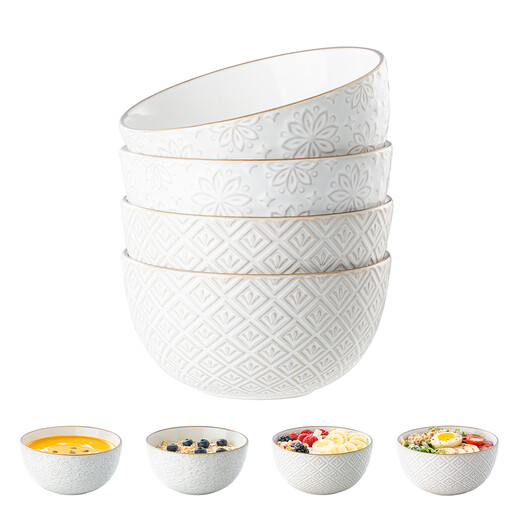
Why it suits this profile: A set of four gives you a simple everyday option for breakfast, soup, fruit, salad and noodles. The 29 oz capacity is suitable for daily use without having to put together a large tableware collection straight away.
The listed specifications describe a stackable design and explicitly state that the bowls are suitable for the dishwasher, microwave, oven and freezer. Before use, check the latest instructions and avoid sudden temperature changes.
Four bowls with a round shape, a 6-inch size and a smoothly glazed interior, according to the product information.
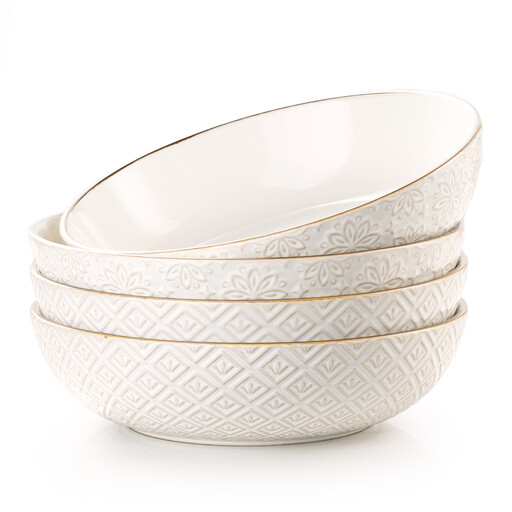
Why it suits this profile: The wide, shallow shape is designed for pasta, salad, main courses and generous portions. It suits households looking for one bowl set to use for a range of meals.
The 8.5-inch diameter and 36 oz capacity give you a clearer idea of the size than a style description alone. The listing also states that the bowls are stackable and suitable for the dishwasher, microwave and oven.
Four wide ceramic bowls with a stated food-safe ceramic base and a space-saving stackable design.
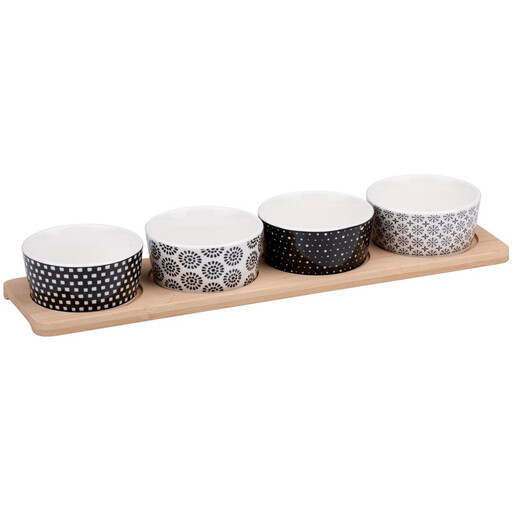
Why it suits this profile: The 38 x 10 cm oblong shape is designed for snacks, starters and desserts. This makes the set ideal for drinks parties, tapas and serving a selection of small bites.
The dimensions and stated use make it clear that this isn’t a deep soup bowl. That way, you won’t buy a serving set for a purpose that the shape isn’t suited to.
Ceramic material, white finish and, according to the product information, dishwasher-safe.
We’ve put together a complete, up-to-date list of products that meet these strict selection criteria and the current European safety regulations.
It depends on the product. Only use a bowl in the microwave if the product information explicitly says it’s suitable. Also check that it doesn’t have a metal rim or decoration. Don’t put a cold bowl straight into a very hot environment, as this can help prevent sudden temperature changes.
Their lifespan depends on how they’re used, the glaze, wall thickness and care. Ceramic bowls can last for years if you avoid knocks, sudden temperature changes and abrasive cleaning products. A dishwasher may be suitable, but always follow the manufacturer’s care instructions.
For everyday use, a set of four medium-sized soup or breakfast bowls is a practical starting point. Add wide bowls for pasta and salad, and smaller dipping bowls or snack bowls for nibbles. That way, you can buy what you need for each occasion instead of ending up with a large set that sits partly unused in the cupboard.
