
Vandaag of morgen in huis

Kwaliteit gegarandeerd

Welkomstaanbiedingen ontgrendelen: GRATIS bezorging | Tot 80% korting | Gratis 30 dagen JoyPlus-proefperiode
Download de app
Ceramic bowls suit many Dutch kitchens, from morning porridge to soup, pasta, ramen and salad at dinner. However, an attractive bowl is not automatically practical. The wrong size, unclear usage information or a shape that stacks poorly can leave your crockery taking up space rather than being useful.
The following points will help you compare ceramic bowls without being swayed by vague marketing claims.
A diameter of around 9.5 cm is suitable for small snacks, sauces or children’s tableware, but not for a generous portion of soup or pasta. Always check the diameter, height and capacity. A breakfast bowl often needs different dimensions from a Japanese ramen bowl.
Not every ceramic bowl is automatically suitable for use in the microwave or dishwasher. Look for an explicit statement in the product information. With glazed or decorative bowls, harsh cleaning products, metal cutlery and sudden temperature changes can damage the surface over time.
A striking colour or textured finish can make a bowl appealing, but a deep shape may be awkward for pasta. Conversely, a wide, shallow pasta bowl may be less suitable for broth or ramen. Think about the main use before buying and check whether the bowl is stackable in your kitchen cupboard.
For everyday use, you can broadly use the following guide:
A capacity of around 1,200 ml provides room for ramen, soup, pasta or rice dishes. However, check whether the stated capacity applies to each bowl and whether it refers to the maximum capacity. In practice, filling a bowl to the brim is not always convenient.
Ceramic is made from fired clay and often has a glaze. Look for:
Terms such as “lead-free”, “scratch-resistant” or “food-safe” should come from the official product information. According to the product description of certain models, these properties are stated; treat such brand or supplier information as product specifications and check the latest details on the product page.
Microwave-safe bowls are convenient for heating soup or leftovers. A statement that a bowl is suitable for the microwave does not automatically mean that it can also be used in the oven or freezer. Check each appliance separately.
For dishwasher-safe bowls, place them securely, avoid contact with hard metal utensils and follow the care instructions. Ceramic can experience thermal stress when moved quickly from the fridge to a hot microwave. If the product information warns against this, allow a cold bowl to reach room temperature first.
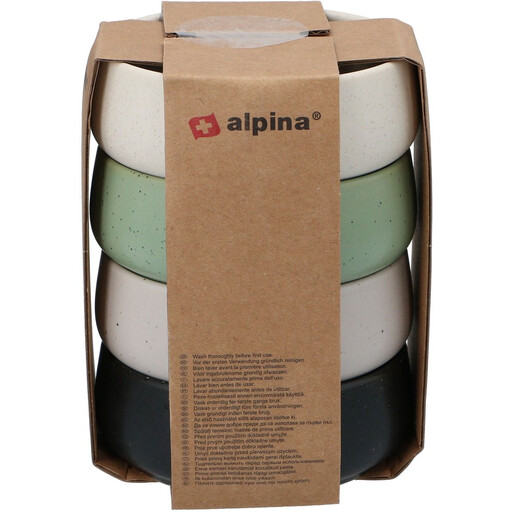
Why it suits this profile: The set of four is practical for smaller households, snacks, dips or children’s tableware. According to the product information, the round bowls have a diameter of 9.5 cm.
The compact size makes it clear that this is not a soup or pasta bowl for large portions. That helps you buy with a specific purpose in mind rather than judging by appearance alone.
Four bowls, ceramic material and, according to the product information, dishwasher-safe.
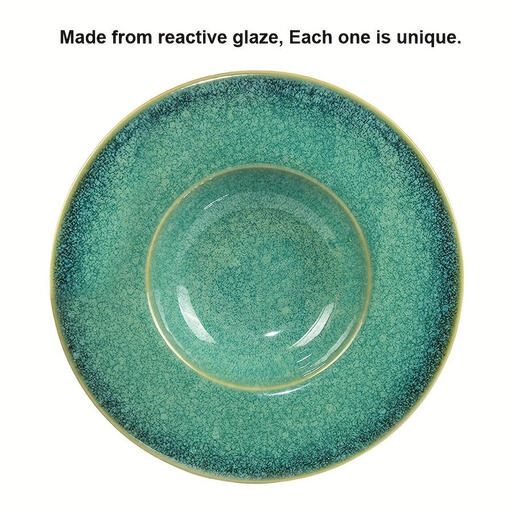
Why it suits this profile: This wide-rimmed bowl is designed for pasta, soup, salad and main courses. The product description states that it is made of porcelain, has a reactive glaze and a diameter of approximately 22.86 cm.
The dimensions and intended uses are clearly described. This makes it easier to judge whether the wide, shallow shape suits your portions.
According to the product information, suitable for the microwave and dishwasher, with a wide rim and decorative glazed finish.
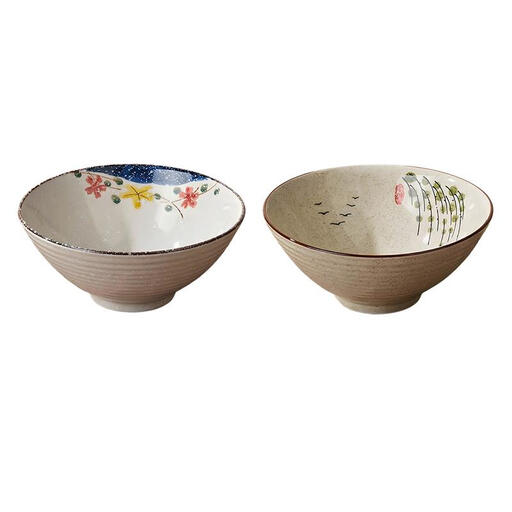
Why it suits this profile: The set of two is designed for generous portions of ramen, soup, pasta, salad or rice. According to the product information, each bowl has a capacity of 1,200 ml.
The generous capacity means you won’t end up using a small breakfast bowl for a full ramen meal. Before buying, however, check the latest care instructions for dishwasher and microwave use.
Two large bowls, ceramic, Japanese style and, according to the product description, suitable for microwave use.
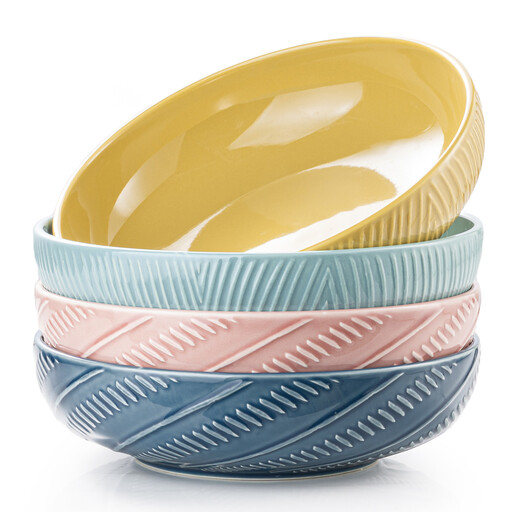
Why it suits this profile: This set of 4 bowls is designed for pasta, salad, breakfast, soup and fruit. The stated dimensions are 8.5 inches by 8.5 inches and 2.4 inches high.
The product information explicitly mentions a stackable design and multiple uses. That is helpful for families who value cupboard space and easy everyday care.
Four bowls, stackable and, according to the product description, suitable for the microwave, oven, fridge and dishwasher.
We’ve put together a complete, up-to-date list of products that fully meet these strict selection criteria and the applicable European safety regulations.
Ceramic can last for many years with everyday use, but it should be treated with care. Check bowls for cracks or sharp damage before use. Do not use a damaged bowl for food. Only stack bowls when their shape is suitable for stacking, and consider placing a soft layer between decorative models.
Use a mild washing-up liquid and a soft sponge when cleaning. If using a dishwasher, it is best not to position the bowls tightly against one another. This reduces the risk of knocks during the cycle.
That depends on the model. Only use a bowl in the microwave when this is clearly stated in the product information. Avoid sudden temperature changes and check the bowl after heating for excessive heat or damage.
For a generous portion of soup or ramen, a capacity of around 1,000 to 1,200 ml is practical. Also consider the depth and stability of the foot. A wide bowl is ideal for toppings, while a taller shape can retain heat and liquid more effectively.
Do not stack them too tightly, avoid hard knocks and do not use a metal scouring pad. If the manufacturer warns about thermal shock, do not place a cold bowl in direct contact with very hot food or liquid. Always check the specific care instructions on the product page as well.
