
Vandaag of morgen in huis

Kwaliteit gegarandeerd

Welkomstaanbiedingen ontgrendelen: GRATIS bezorging | Tot 80% korting | Gratis 30 dagen JoyPlus-proefperiode
Download de app
Ceramic bowls are suited to all sorts of meals, from porridge and soup to pasta, salad and nibbles. But an attractive glaze tells you little about how a bowl will work day to day. It might be too small for a generous portion, difficult to stack or less suitable for the oven than you expected.
Use this buying guide to compare ceramic bowls by their practical features. You can find a bowl set for everyday use, a ceramic serving bowl, or small soup and snack bowls for specific occasions.
A low, wide bowl works well for pasta and salads, but takes up more cupboard space. A deep soup bowl holds liquid more securely, but isn’t always practical for pasta or breakfast. So always check the diameter, height and capacity. Product photos can make the actual dimensions look larger than they are.
Ceramic isn’t automatically resistant to every change in temperature. Even when the manufacturer says a bowl is oven-safe, it’s best not to put a cold bowl straight into a very hot oven. Product descriptions for various models advise avoiding sudden temperature changes to reduce the risk of thermal shock and cracking.
Also check the difference between an oven-safe bowl and a microwave-safe bowl. A decorative bowl, one with a wooden part or one with a plastic lid may have different limitations.
A set of four or six bowls might seem practical, but check whether they’re stackable and will fit in your dishwasher. Hand-painted details, relief patterns and accessories may need extra care. What’s more, “dishwasher-safe” doesn’t always apply to every part of a set.
Choose the capacity based on how you’ll use the bowl:
Bear in mind that the stated capacity is often the maximum. The amount you can comfortably serve is usually less.
Ceramic, porcelain, earthenware and stoneware are all types of ceramic tableware, but they feel and weigh differently. A thicker wall may feel sturdier, while a fine porcelain bowl may be lighter.
According to the product descriptions for the DAFUCERAMIC models, the bowls are intended for food contact and have a glazed surface. The embossed cereal bowls are also described as having a lead- and cadmium-free finish. Always check this information on the specific product page; features of one range don’t automatically apply to all ceramic bowls.
Look for separate mentions in the specifications of:
Also follow the manufacturer’s warnings. For example, don’t put a bowl with a bamboo stand in the oven, and only use a plastic lid within the stated temperature limits. It’s best to stop using ceramic items that are damaged or cracked.
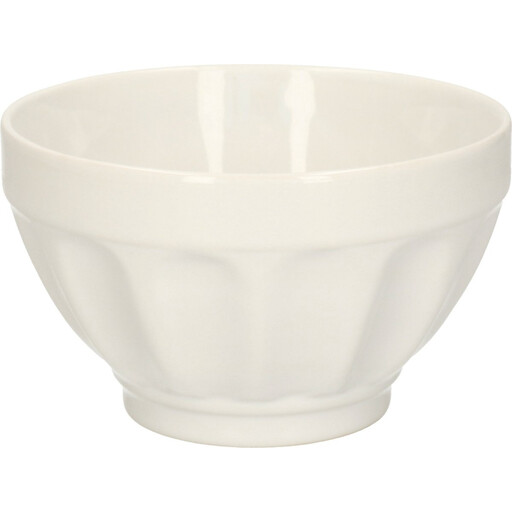
Why it suits this profile: A single 600 ml bowl is a straightforward choice for soup, cereal or noodles, without having to buy a large set.
The 600 ml capacity and approximate 14 cm diameter are clearly stated. The ribbed decoration is part of the design, and the product information specifically mentions that it’s stackable and dishwasher-safe.
600 ml capacity, ivory white colour and stackable design. According to the product description, it’s suitable for the dishwasher, microwave and oven.
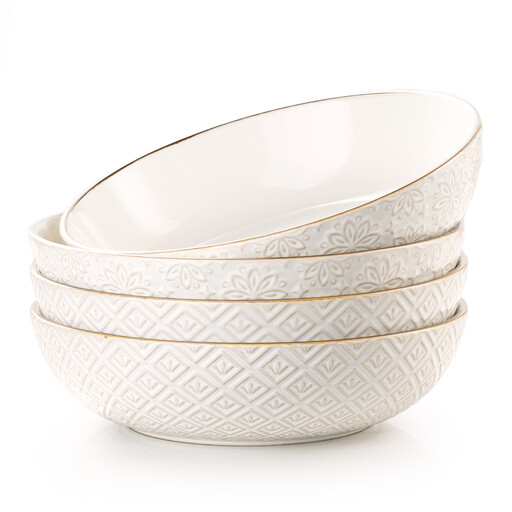
Why it suits this profile: The wide shape is designed for generous portions of pasta, salad and main courses. The set of four is ideal for households that want matching tableware.
The 8.5-inch size and 36 oz capacity are clearly stated. The product description also says the bowls are stackable, so you can work out how much cupboard space you’ll need in advance.
Set of four with a wide, shallow shape. According to the product description, the bowls are suitable for the dishwasher, microwave and conventional oven.
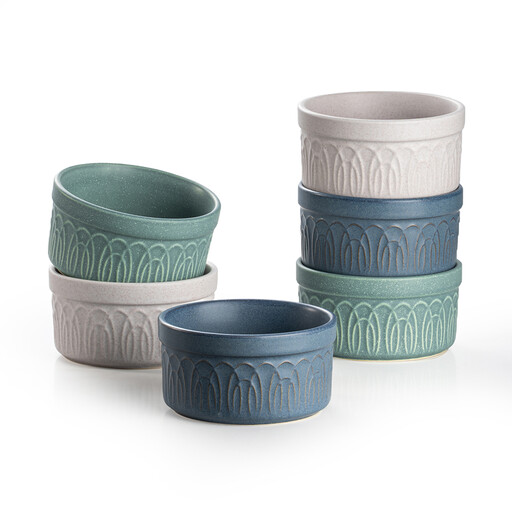
Why it suits this profile: These small ceramic bowls are designed for baking, desserts, dips and individual portions. They’re practical for keen cooks who use several small dishes at once.
The 8 oz capacity makes it clear these are ramekins, not full-size soup bowls. The product description also warns against using them over an open flame or exposing them to sudden temperature changes.
Set of six, described as suitable for the oven, microwave, freezer and dishwasher. The set can be used for crème brûlée, soufflés, quiches and dips.
We’ve put together a complete, up-to-date list of products that meet these strict selection criteria and current European safety regulations.
It depends on the product. Check whether the product information explicitly says microwave-safe. Gold rims, metal details and wooden or plastic parts may come with restrictions. Also, don’t heat a bowl for longer than necessary, and handle it carefully afterwards.
Their lifespan depends on the material, glaze, use and care. Avoid hard knocks, metal scouring pads and sudden temperature changes. A dishwasher-safe bowl may be suitable for everyday use, but check it regularly for hairline cracks, chipped edges and peeling glaze.
A set of 4 ceramic bowls is handy for a household or as a gift for a housewarming, wedding or other special occasion. Choose a set with matching shapes and capacities if you want a coordinated table setting. For more flexibility, combine different sizes: pasta bowls, soup bowls and smaller snack bowls.
