Who is this choice relevant to?

Online shop owner with an existing camera

You’re looking for a lens that fits your current camera mount and works for both whole-bowl shots and close-ups. Check the exact version: Sony, Nikon, Fujifilm and Sigma, among others, make lenses for specific camera systems.

Photographer of whole bowls

You want to show the shape, rim and colour clearly. Adobe recommends using a controlled set-up with carefully managed lighting for product photography. Also test whether the largest bowl fits within the space available in your own set-up.

Photographer of glaze details

You take separate photos of texture or finish, so you need enough magnification, light and control over focus. Sony’s guide to macro photography describes 1:1, or 1×, as a magnification ratio; Adobe describes focus stacking as a way to combine shots taken at different focus points.

What should you consider when choosing?

Shorter macro or close-up lens

Choose this if: you mainly want to photograph the whole bowl, its shape and its rim in a compact set-up.

Bear in mind: maximum magnification varies by model; at high magnification, there may be little room in front of the lens for lighting.

90–105 mm macro lens

Choose this if: you want to capture small glaze textures or finishes as separate detail shots and can work from a sufficient distance.

Bear in mind: the longer shooting distance may be impractical for whole-bowl shots in a small studio; the shallow depth of field also needs extra attention when shooting close-up details.

Test your existing lens first

Choose this if: the whole bowl is your main subject and your current lens can already focus at the framing you want.

Bear in mind: an existing lens isn’t automatically suitable for very small details; test your lighting set-up and focus before buying a lens with greater magnification.

Consideration What to check before buying Who is this important for?
Compatibility Check the exact camera, mount and version; different mounts aren’t interchangeable. If I want to keep using my current camera, the lens needs to fit the right mount. Around 33% of consumers put compatibility first.
Framing the whole bowl Test the largest bowl in your own set-up, allowing room for the background and lighting. For a clear overview shot, I want to fit the whole bowl in the frame. Around 27% of consumers prioritise this framing.
Showing glaze details Compare the maximum magnification with the smallest detail you want to photograph separately, and check how much room there is in front of the lens. If small textures or finishes deserve their own photo, I want to know whether the magnification will be sufficient. Around 20% of consumers prioritise these close-ups.
Focus and lighting Take test shots with your own camera and lighting, and check whether the parts of the bowl you want are in focus. With a curved bowl, I want to assess both the focus I need and whether reflections can be managed. Around 20% of consumers give focus and lighting top priority.

Common buying mistakes

  • Focusing only on the word ‘macro’

    Maximum magnification varies from lens to lens. Canon lists a maximum of 0.5× for the RF 35mm F1.8 Macro IS STM; that isn’t the same as 1:1.

    Compare the stated magnification with the smallest glaze detail you want to photograph separately, rather than relying on the product name alone.

  • Confusing focusing distance with working space

    Fujifilm lists a minimum focusing distance of 10 cm for the XF30mmF2.8 R LM WR Macro and explains that, at high magnification, the subject comes very close to the front lens element. So this distance doesn’t necessarily tell you how much space there is in front of the lens.

    Check that there’s room for your lighting with the framing you want.

    For very close-up shots, you may need to reposition your lighting.

  • Choosing a long macro lens without testing it with your largest bowl

    Choosing a lens for small details doesn’t automatically mean the whole bowl will fit within your available shooting space.

    Before buying, test the framing of your largest bowl from the camera position you plan to use.

    A longer shooting distance may require more room in your set-up.

  • Assuming a business order has the same returns policy

    KVK distinguishes between consumer contracts and business agreements; small business owners may only be able to rely on consumer protection in certain circumstances.

    Before placing your order, check who the contracting party is and which returns terms apply to the business purchase.

Lens brands to consider

Canon

Canon’s RF range offers options for EOS R cameras, from a shorter close-up lens to a longer macro lens.

  • Canon lists maximum magnification of 0.5× for the RF 35mm F1.8 Macro IS STM and 1.4× for the RF 100mm F2.8L Macro IS USM.
  • The 35mm isn’t a 1:1 lens; with the 100mm, check that you have enough distance to frame the whole bowl. These are Canon specifications.

Sony

The FE 90mm F2.8 Macro G OSS, model SEL90M28G, is an E-mount option for separate detail shots.

  • Sony lists 1.0× magnification, a minimum focusing distance of 0.28 m and optical stabilisation.
  • The focusing distance doesn’t automatically tell you how much working space there is in front of the lens. Assess the framing with your own camera and set-up.

Fujifilm

The XF30mmF2.8 R LM WR Macro combines a shorter focal length with 1:1 magnification in the X system.

  • Fujifilm lists a minimum focusing distance of 10 cm and a weight of approximately 195 g.
  • According to Fujifilm, the subject comes very close to the front lens element at maximum magnification. Allow for space for lighting; these are manufacturer specifications.

Sigma

According to Sigma, the 105mm F2.8 DG DN MACRO | Art is available for Sony E-mount and L-Mount.

  • Sigma lists 1:1 macro magnification and a minimum focusing distance of 29.5 cm.
  • Check that you choose the right mount: the versions aren’t interchangeable. Sigma’s statements about image quality are manufacturer claims.

Panasonic

The LUMIX S 100mm F2.8 MACRO, model S-E100, is an L-Mount option with a medium-length macro focal length.

  • Panasonic lists 1× magnification and a minimum focusing distance of 0.204 m.
  • Check whether a 100 mm shooting distance suits your space and the framing you want.

Lenses on Joybuy

This selection includes Sony E-mount lenses for photography and close-ups. Check the stated maximum magnification carefully: these models offer different levels of magnification and aren’t all macro lenses.

Sony E 50mm f/1.8 OSS Black lens

Sony E 50mm f/1.8 OSS Black

The product information mentions product and close-up photography. Bear in mind its limited magnification if you want to capture very small glaze details.

Fixed 50 mm focal length, f/1.8 and maximum magnification of 0.16.

Joybuy
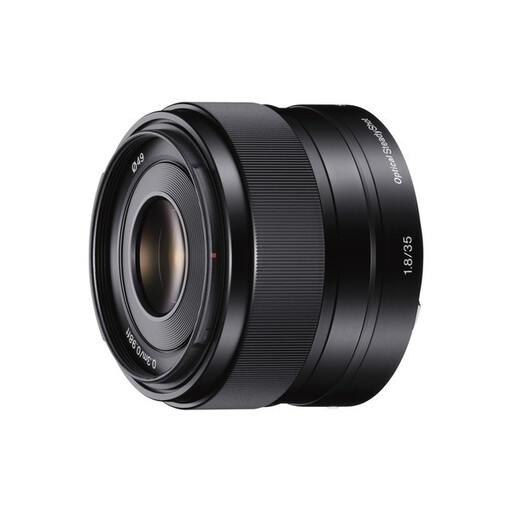
Sony SEL 35mm F1.8 OSS lens

Sony SEL 35mm F1.8 OSS

The product information mentions photography and videography. Its maximum magnification of 0.15 is limited for very small glaze details.

Fixed 35 mm focal length, f/1.8 and OSS image stabilisation; Sony E-mount.

Joybuy
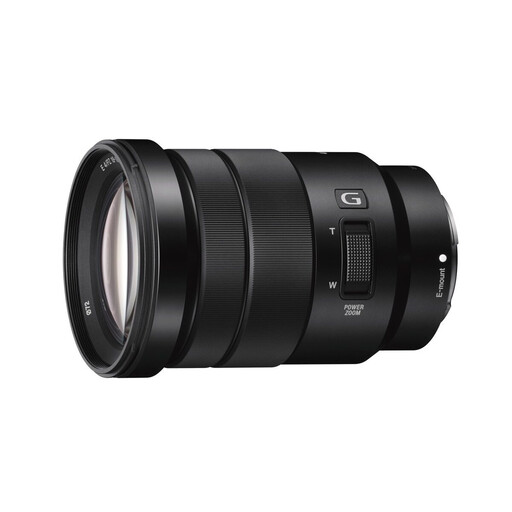
Sony E PZ 18–105mm f/4 G OSS lens

Sony E PZ 18–105mm f/4 G OSS

The zoom range gives you a choice of focal lengths while shooting; its maximum magnification of 0.11 is limited for very small glaze details.

18–105 mm zoom range, constant maximum aperture of f/4 and OSS image stabilisation.

Joybuy
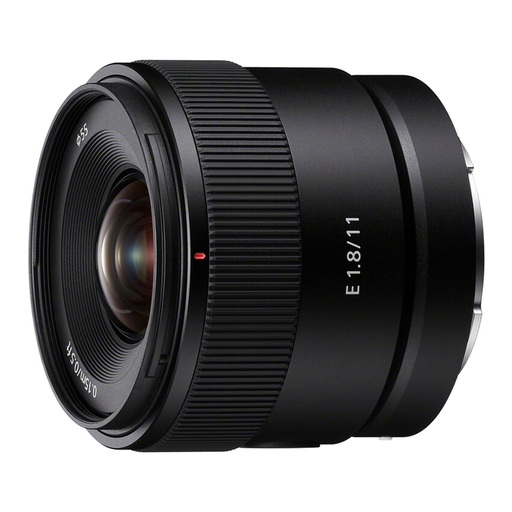
Sony E 11mm F1.8 APS-C lens, model SEL11F18

Sony E 11mm F1.8 APS-C (SEL11F18)

The product information mentions photography, video and close-ups. The stated magnification varies by focusing mode and is limited for very small details.

11 mm, 104° angle of view and minimum focusing distance of 0.15 m. Magnification is 0.13 with AF and 0.20 with MF; this is an ultra-wide-angle lens.

Joybuy

Frequently asked questions

Do you need 1:1 macro for every photo of a ceramic bowl?

No. For an overview shot, the first thing to consider is whether the whole bowl fits clearly in the frame; higher magnification can be useful for a separate, small glaze detail. Sony describes 1:1 as 1× magnification; Canon lists a maximum of 0.5× for the RF 35mm F1.8 Macro IS STM.

How can you keep the rim and inside of a bowl in focus at the same time?

First, test the focus with the framing you want. If one shot isn’t enough, you can combine shots taken at different focus points using focus stacking, while keeping the camera in a fixed position. Adobe describes this technique for product and macro photography. Allow extra time for shooting and editing.

What should you consider when photographing glossy glaze?

Assess reflections using the actual bowl and your own lighting set-up. Adobe emphasises the importance of controlled lighting in product photography; higher magnification or a different lens won’t automatically fix an awkward reflection.

Does the usual cooling-off period apply if you buy the lens for business?

Don’t assume it does. KVK distinguishes between consumer contracts and business agreements; small business owners may be able to rely on consumer protection in certain circumstances. Before placing your order, check whether you’re buying as a consumer or entering into a business contract, and which returns terms apply.

Can you use someone else’s photos for your Dutch online shop?

Only use someone else’s photos if you have the necessary rights. Business.gov.nl states that copyright in original photographs arises automatically and that the creator can grant permission to use them, for example through a licence. If you commission product photography, agree what use is permitted for your online shop.

What product information should accompany photos of bowls?

Make sure the product information is clear and accurate, and that the photos complement it. Business.gov.nl lists size, colour, material and model among the details customers should be able to read before ordering.
