
Regular celery juicer
You want to juice fibrous stalks often and are looking for a routine you can stick to, including chopping and cleaning.


If you regularly make celery juice without pulp, a compact slow juicer is a sensible option, provided the feed chute, cleaning and overall set-up suit your kitchen. A centrifugal juicer may be a better fit if speed and storage matter more; according to the Consumentenbond, centrifugal juicers are generally quicker, but can also be noisier, and a slow juicer doesn’t automatically produce more juice. If you want to keep the fibre, choose a blender and expect a thicker drink rather than juice with the pulp separated.
You want to juice fibrous stalks often and are looking for a routine you can stick to, including chopping and cleaning.
You need room for the appliance and collection containers, and want to be able to put everything away easily after use.
You want to make a glass without spending much time on preparation and cleaning, and are happy to make trade-offs in noise, texture or juicing method.
Choose this option if: you want to juice celery regularly and are happy to cut the stalks to size when needed.
The trade-off: according to the Consumentenbond, a slow juicer often takes longer to prepare and clean than a centrifugal juicer.
Choose this option if: making a glass quickly and being able to store the appliance easily are important to you.
The trade-off: the Consumentenbond generally describes centrifugal juicers as quicker, but often noisier too; check the specifications of the exact model.
Choose this option if: you want to keep the fibre and don’t mind a thicker drink.
The trade-off: a blender doesn’t separate the pulp from the liquid, so it won’t make juice with the same texture as a juicer.
| Consideration | What to look for when buying | Who is this important to? |
|---|---|---|
| Processing fibrous celery | Check the instructions for fibrous ingredients, the feed chute and how the pulp is ejected. | If I juice celery regularly, I want to know whether the feed chute and pulp outlet suit my routine. Around 33% of consumers prioritise processing celery. |
| Worktop and cupboard space | Measure the width, depth and clearance at the place where you’ll use and store it; allow room for collection containers too. | With limited space, I need room for both the appliance and the collection containers. Space is the top priority for around 27% of consumers. |
| Cleaning after use | Check which parts come apart, how they need to be cleaned and whether parts of the exact model are dishwasher-safe. | If I juice regularly, I want to know how many parts I’ll need to clean afterwards. Around 27% of consumers prioritise keeping cleaning to a minimum. |
| Speed and ease of use | Check the preparation, cleaning and noise information for the exact model. | If I mainly want to make a glass quickly, I weigh convenience against the juicing method. Around 13% of consumers prioritise speed and simplicity. |
A model number may refer to a different type of appliance than the product title suggests. For example, Unold identifies article number 48880 as an ice-cream maker, not a slow juicer.
Before buying, check the brand, full article number and appliance type against the manufacturer’s information.
The stated dimensions of an appliance don’t tell you how much space you’ll need to use it. Clearance beneath kitchen cupboards and room for collection containers may also matter.
Measure the space available for use and storage, and allow for any parts that sit beside the appliance while you’re juicing.
The Consumentenbond says a slow juicer doesn’t automatically produce more juice than a centrifugal juicer. Juicing also leaves much of the fibre behind in the pulp.
Choose according to the drink you want, the space available and the work involved in juicing. Voedingscentrum states that vegetable juice doesn’t count towards the recommended daily amount of vegetables.
The H310A is a compact vertical slow juicer for anyone short on space who wants a juicer with few separate strainer parts.
The Viva HR1832/30 is a centrifugal juicer for anyone who values a compact design and quick cleaning.
The Slow Juicer Sam, article number 78275, is a compact slow juicer with stated cleaning instructions.
KitchenBrothers models feature in a Dutch editorial ranking; this doesn’t mean they have been tested specifically for juicing celery.
This selection includes slow juicers for anyone who wants to make juice, and blenders for those who want to keep the fibre in a thicker drink. Before buying, check the dimensions and instructions for the version you choose.
 No image available
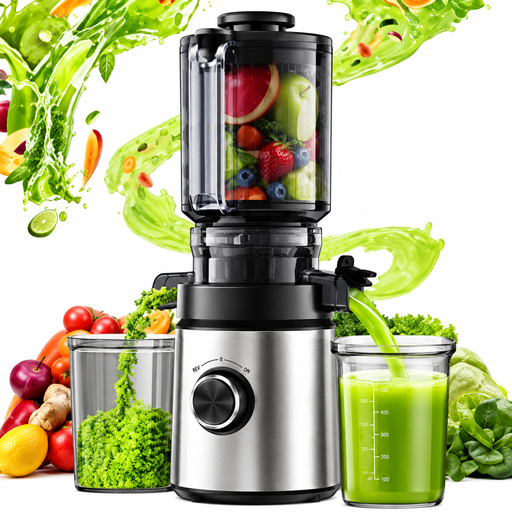
The wide feed chute may be useful if you want to process celery in a slow juicer; follow the instructions for the exact model.
The product name specifies 2 l, a 130 mm feed chute and 2 glasses.
 No image available
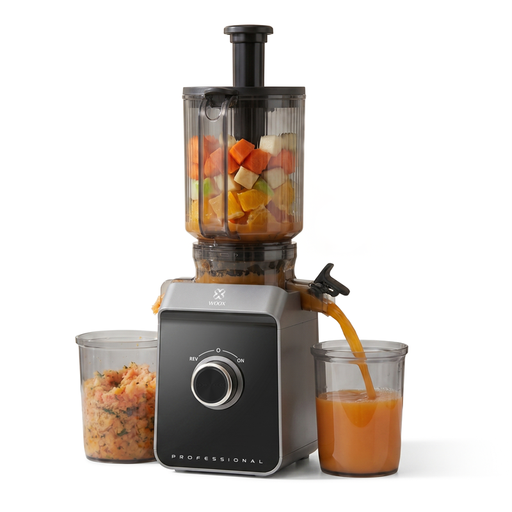
The product information mentions celery and a reverse function, which may suit anyone who wants to juice celery, provided they follow the operating instructions.
The stated dimensions are 189 × 170 × 395 mm. The instructions recommend cutting fibrous vegetables into 3–4 cm pieces and allowing the motor to rest after a maximum of 10 minutes of continuous use. The product information also lists a 600 ml juice jug and an 836 ml pulp container.
 No image available
A blender is a good fit if you want to keep the fibre and make a thicker drink rather than juice with the pulp separated.
The product specifications list a 2,1 l jug and a 1200 W motor.
 No image available
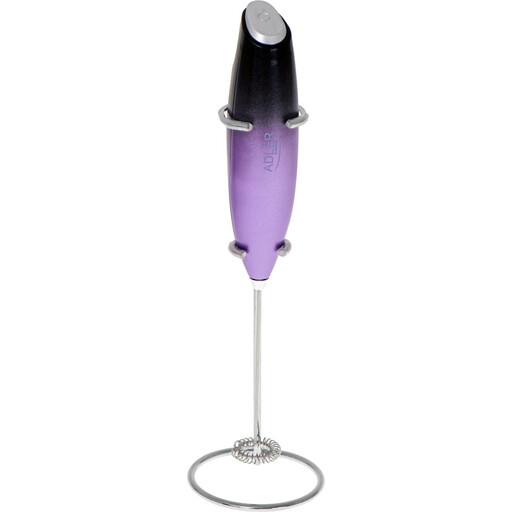
This blender is an alternative for anyone who wants to make a thicker drink with fibre rather than juice with the pulp separated.
The product name mentions a travel cup.
No, it depends on the drink you want and how you weigh up speed, cleaning and space. The Consumentenbond says a slow juicer doesn’t automatically produce more juice than a centrifugal juicer; also check the instructions for celery for the exact model.
Wash the stalks thoroughly and cut them to fit your model’s feed chute. Follow the manual for any further preparation instructions and guidance on clearing blocked pulp.
No. According to Voedingscentrum, vegetable juice doesn’t count towards the recommended daily amount of vegetables; juicing also leaves much of the fibre behind in the pulp.
For a standard online purchase in the Netherlands, you generally have a statutory 14-day cooling-off period from delivery, although exceptions may apply. If a product proves faulty under normal use, the seller may be responsible for putting things right under the statutory guarantee; ACM ConsuWijzer explains these consumer rights.
CE marking is compulsory for electrical consumer products; parts that come into contact with food must comply with Regulation (EC) No 1935/2004. The Netherlands Food and Consumer Product Safety Authority explains the CE requirement, while the European Commission sets out the rules for food-contact materials. A CE mark is a declaration by the manufacturer and, on its own, doesn’t prove that a particular item has been independently tested.