
Workshop leader with a soup pan
The soup is already cooked, and participants would prefer to blend it straight in the pan rather than transfer it while hot.


If the celeriac soup is already cooked and you want to blend it in the pan during your workshop, a hand blender is the most straightforward option: there’s no need to transfer the hot soup. A blender jug may be a good choice if a smooth texture is your priority and the manufacturer’s instructions confirm that the specific model is suitable for hot ingredients. A soup maker is mainly worth considering if you also want to cook the ingredients in the appliance. Always follow the chosen model’s instructions on batch size and how to use it.
The soup is already cooked, and participants would prefer to blend it straight in the pan rather than transfer it while hot.
A smooth texture is a priority, and using a separate jug is acceptable as long as it’s suitable for hot ingredients.
The ingredients are cooked in the appliance and then blended. Whether this suits the workshop depends on the amount it can handle per batch.
If the soup is already cooked, blending it in the pan is the most straightforward method. A blender jug or soup maker is a better fit if texture or combining cooking and blending matters more.
Suitable when: the soup is already cooked and you want participants to blend it straight in the pan.
Bear in mind: splashes, and the soup may not be quite as smooth as it would be in a blender jug.
Suitable when: a smooth texture is important and the instructions confirm that hot soup is allowed.
Bear in mind: you’ll need to transfer the soup, and follow the instructions on fill levels, lid position and handling hot ingredients.
Suitable when: the workshop also involves cooking the ingredients in the same appliance.
Bear in mind: the capacity per batch; the Philips HR2204/80R1 is a refurbished model with a 1.2-litre jug.
| What to consider | What should you check? | Who should consider this? |
|---|---|---|
| Blending in the pan with control | Check the controls, weight, cord length and cleaning instructions for the blending foot. The Consumentenbond recommends at least 600 W for heavier blending; wattage alone doesn’t guarantee a particular result. | If you want to work straight from the soup pan during the workshop, you can avoid transferring the soup and assess how easy the appliance is to use at your workstation. Around 36% of consumers prioritise blending in the pan. |
| Desired smoothness | Check that the exact jug model is suitable for hot ingredients, and follow the instructions for filling, the lid and speed settings. | If a smooth texture is important, you could consider a suitable blender jug and accept that you’ll need to transfer the soup. Around 29% of consumers prioritise smoothness. |
| Amount per batch | Compare the usable capacity with the amount of soup you want to blend at a time, and check the instructions for consecutive use. | If you want to plan the flow of workshop batches, choose a capacity that suits the portions. Around 21% of consumers prioritise the amount per batch. |
| Combining cooking and blending | Check whether the appliance can also cook, which programmes the exact model offers and whether its capacity is sufficient. | If you want to cook and blend the ingredients in the appliance, choose one that suits this combined method. Around 14% of consumers give this top priority. |
A jug’s stated capacity isn’t always the same as its usable capacity. Tefal lists a 2-litre jug for the BL871D31, with a usable capacity of 1.5 litres; the Philips HR2204/80R1 has a stated capacity of 1.2 litres.
Plan the workshop around the usable capacity and the model-specific instructions.
A smaller usable capacity may mean you need to schedule more blending or cooking batches.
A jug is suitable for hot soup only if the specific model is designed for it. The instructions also explain how to fill the jug and use the lid.
Check the guidance for hot ingredients before transferring and blending the soup.
A soup maker combines cooking and blending, which is different from blending soup that’s already been cooked in a pan. The Philips HR2204/80R1 has a stated jug capacity of 1.2 litres.
Before buying, decide whether cooking in the appliance is really part of the workshop.
If the capacity doesn’t suit the amount you’re planning to make, you may need extra cooking batches.
The ErgoMaster MSM6M810 is a hand blender option for blending soup in the pan.
The MultiQuick 7 MQ7000X is a hand blender option if ease of use and handling are important to you.
The PerfectMix+ BL871D31 is a blender jug option if you want to blend soup in a jug.
The Viva SoupMaker HR2204/80R1 suits anyone who wants to cook and blend soup in the appliance.
This Joybuy selection is mainly made up of hand blenders for blending soup in the pan, with one blender jug model also included. For hot soup, always check the instructions and any usage restrictions for the specific model.
 No image available
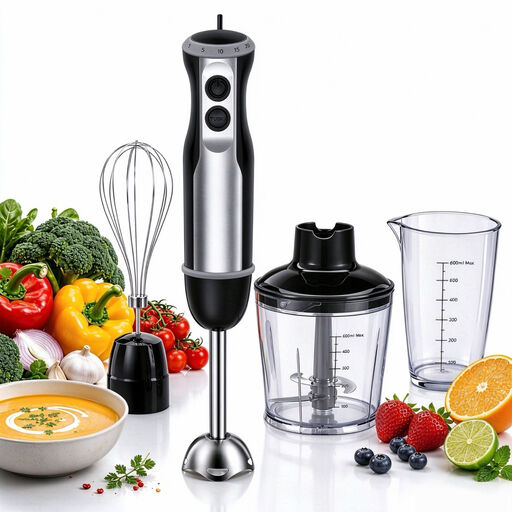
The product title lists soup as a use, making this type suitable for blending in the pan.
The title lists 6 speeds and a turbo function.
 No image available
The product title lists soup and purée as uses, making it suitable for blending with a hand blender.
The title lists 600 W, 2 speeds, and a whisk and chopper as accessories.
 No image available
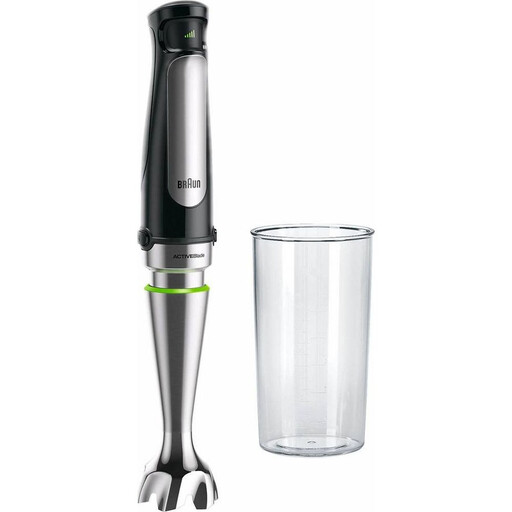
This hand blender is an option for blending in the pan; Braun lists variable SmartSpeed control.
Braun specifies 850 W, a 1.2-metre cord and a weight of 0.638 kg for the MQ7000X.
 No image available
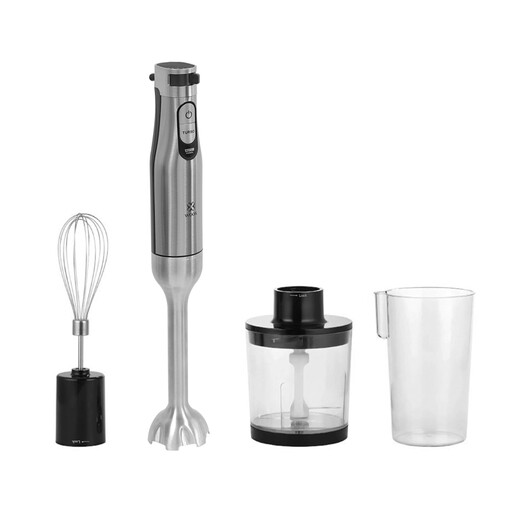
The product title lists soup as a use for this hand blender, which is suitable for blending in the pan.
The title lists 1200 W, a cord and accessories for chopping, whisking and frothing, among other uses.
 No image available
A blender jug is a different way of working from blending in the pan. The product information excludes ingredients hotter than 60 °C.
The title lists 450 W and a nominal capacity of 1.9 litres; the product information gives an effective capacity of 1.0 litre. It restricts the model to domestic indoor use and excludes commercial use. Check whether this restriction is suitable for your workshop.
No. First check that the specific model is suitable for hot ingredients. Then follow the instructions on quantity, the lid and speed settings. Even a suitable jug doesn’t replace the model-specific instructions.
Follow the cleaning instructions for each part. A detachable hand blender foot can make cleaning easier. Tefal lists removable blades and a dishwasher-safe glass jug for the BL871D31. These features don’t automatically apply to the motor unit or other models.
For a consumer purchase, contact the seller about your statutory guarantee. According to ACM ConsuWijzer, the seller must resolve the issue free of charge if a product breaks down too quickly during normal use, for example by repairing or replacing it. If you’re buying for business use, check which terms apply.
Electrical appliances placed on the market in the Netherlands must meet the applicable product safety requirements and CE marking rules. Parts that come into contact with food must also meet food contact material requirements. The Netherlands Food and Consumer Product Safety Authority and Ondernemersplein provide information about these rules. This information alone doesn’t prove that a specific model is suitable for hot soup or the quantity needed for your workshop.