
Vandaag of morgen in huis

Kwaliteit gegarandeerd

Welkomstaanbiedingen ontgrendelen: GRATIS bezorging | Tot 80% korting | Gratis 30 dagen JoyPlus-proefperiode
Download de app
A ceiling fan is more than just a set of rotating blades. It's an investment in comfort, especially during hot summers and even in the winter. But the search can be frustrating. Many models look great online but turn out to be noisy, wobbly, or simply unsuitable for the space in practice. Before you make a decision, it's important to know a few common pitfalls that can lead to a disappointing purchase.
The three most common mistakes are:
By understanding these points, you can search more effectively for a model that truly fits your situation.
To avoid the pitfalls, it's helpful to focus on a few concrete specifications. These largely determine how satisfied you will be with your purchase.
The fan's diameter is directly linked to the size of the room. The wrong ratio will render the fan ineffective. As a rule of thumb, you can use the following guidelines:
The motor is the heart of the fan. There are two main types: AC (alternating current) and DC (direct current).
The choice between a ceiling fan with a light and a ceiling fan without a light depends on your needs and interior design.
Not everyone has the same preferences. That's why we've highlighted a few models that fit specific user profiles.
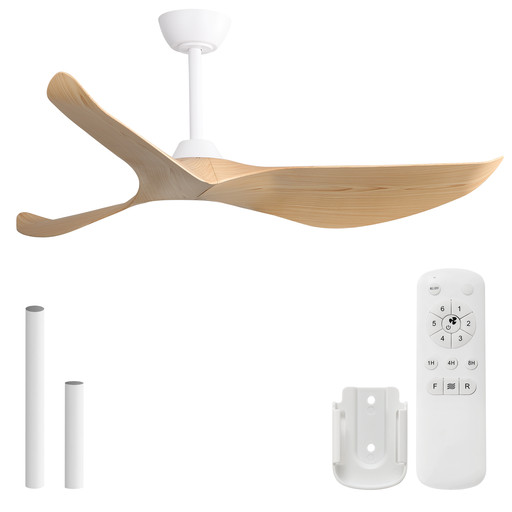
Why This Fits Their Persona: Ideal for a home office, kid's room, or smaller bedroom where subtle, quiet air circulation is desired. Its minimalist white design is unobtrusive and fits into almost any modern interior.
With a 38-inch (approx. 96 cm) diameter, this model is perfectly sized for smaller rooms, preventing an overpowering airflow. The motor is engineered for quiet operation.
Compact size and a sleek, white design without a light. The ABS blades are durable and easy to clean.
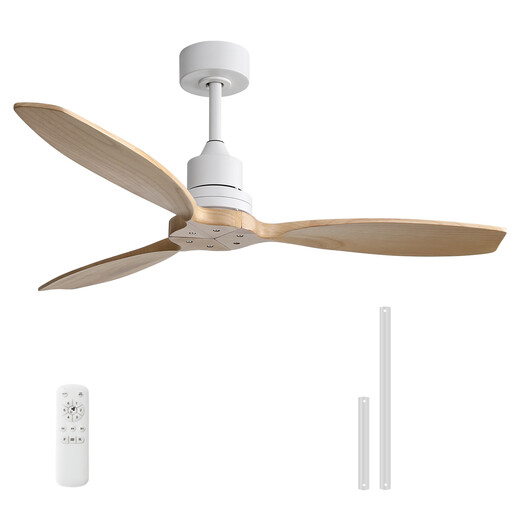
Why This Fits Their Persona: For those who believe a functional object should also be a design element. The combination of a white motor and blades with a natural wood look fits perfectly in a Scandinavian or modern interior.
The 52-inch (approx. 132 cm) diameter ensures effective air circulation in larger living rooms. It's a design ceiling fan that enhances the room's aesthetic rather than disrupting it.
Real wood blades for a warm, high-quality appearance. The quiet motor also makes it suitable for open-plan living spaces where tranquility is important.
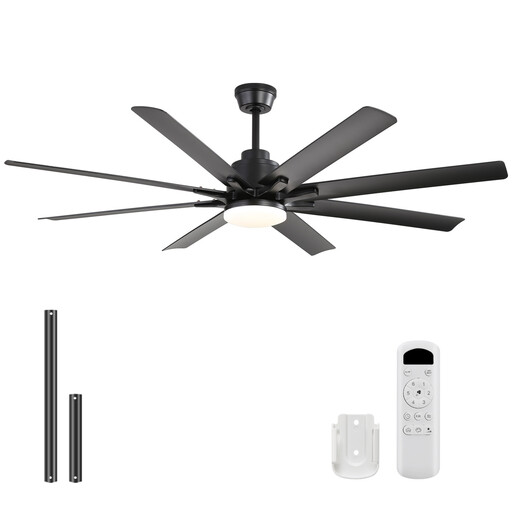
Why This Fits Their Persona: Perfect for those who prioritise functionality. This model combines cooling and lighting, making it ideal for a master bedroom or living room where you want to replace an existing light fixture without extra installation work.
This model is a ceiling fan with a light, which solves the problem of having limited power outlets in the ceiling. The 52-inch size is suitable for most medium to large rooms.
Integrated lighting and powerful air movement thanks to its 8 blades. The bold, black design fits well in an industrial or modern interior.
We have compiled a complete, up-to-date list of products that meet these selection criteria and current safety regulations.
For a handy DIY enthusiast, installing a ceiling fan is generally manageable. Always ensure the power is turned off at the circuit breaker. It is crucial to verify that the ceiling and the electrical junction box can support the fan's weight. If in doubt, or with older ceilings, it is wise to hire an electrician.
The noise level is measured in decibels (dB). A fan is considered silent if it produces a noise level of less than 40 dB on its lowest settings, comparable to the sound in a library. Models with a DC motor are typically the better choice in this regard.
Yes, absolutely. Many modern ceiling fans have a summer and winter mode. In winter mode, the blades rotate in the opposite direction. This pushes the risen warm air down along the ceiling and walls. This results in better heat distribution in the room and can help to slightly reduce heating costs.
