
Vandaag of morgen in huis

Kwaliteit gegarandeerd

Welkomstaanbiedingen ontgrendelen: GRATIS bezorging | Tot 80% korting | Gratis 30 dagen JoyPlus-proefperiode
Download de app
A bag of cat food or a multipack of wet food may seem like an easy choice. Yet many cat owners in the Netherlands buy products that do not suit their cat’s age, lifestyle or eating habits. Packaging often features appealing terms such as “with chicken”, “in gravy” or “for vitality”, but these phrases do not automatically mean that the food is suitable as a daily diet.
With this practical guide, you can focus on the information that really matters: nutritional status, life stage, ingredients, portion size and intended use.
Not every product is intended to be a complete meal. Complete food contains, according to the label, all the nutrients the manufacturer has formulated for the relevant life stage. Complementary food, such as some cat soups and broths, is intended to be given alongside a complete staple food.
For example, Felix Soup Fish is labelled as complementary food for adult cats. The recommended amount is one pouch per 4 kg of body weight per day, as a supplement to a balanced diet. So do not use it as a replacement for your cat’s daily main meal.
“Cat food with chicken” or “cat food with fish” does not mean that the product consists entirely of that ingredient. The label states the percentage of the named ingredient. In various Felix varieties, for example, the proportion of the named fish or meat is 4%.
So always check the full ingredients list. The order indicates which ingredients appear relatively earlier in the composition, according to the product information. Also check whether the product is intended for kittens, adult cats or sterilised cats.
A cat food multipack can be practical, but only if your cat accepts the flavour and texture. A large pack that goes unused ultimately costs more. Storage instructions also matter with wet food: opened portions generally need to be covered and refrigerated, then used within the period stated on the label.
Look on the packaging for the official designation, such as “complete pet food” or “complementary pet food”. This is more important than a marketing term on the front of the pack.
Kitten food is tailored to the growth stage. According to the product description, Purina One Junior Chicken & Grain Formula is intended from weaning to 12 months, and also for pregnant or nursing cats. Whiskas Junior Classic Selection in Sauce provides separate guidelines for kittens under 3 months, from 4 to 5 months, and from 6 to 12 months.
For adult cats from around 1 year old, choose food intended for adult cats. If your cat has been sterilised or neutered, look for a product specifically formulated for this situation. According to the product information, Purina One Sterilcat is intended for sterilised or neutered adult cats and states that it contains an adapted protein-to-fat ratio and balanced minerals.
If your cat has a medical condition, food sensitivity or you are unsure which food is right, it is advisable to consult a vet. Brand product claims are not personalised nutritional advice.
Wet cat food generally contains a high proportion of moisture and is available as cat food in gravy, cat food in jelly, pâté or broth. The best choice largely depends on what your cat accepts and how easily you want to divide up portions.
Pay attention to:
For example, INABA Broth Chicken with Salmon states that it contains 93% moisture and is intended as a hydrating treat. According to the product information, it contains chicken broth, chicken and salmon, but it is not a substitute for complete food.
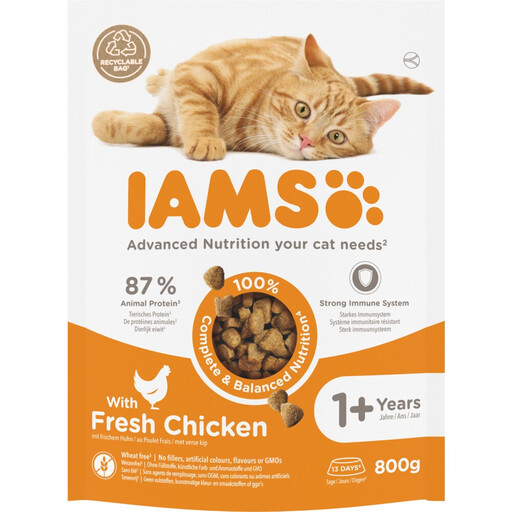
Why it suits this profile: A manageable 800 g bag for anyone looking for complete staple food for an adult cat without buying a large supply straight away.
The product description explicitly states that this is 100% complete and balanced food for adult cats.
With fresh chicken; according to the product information, 87% animal protein and omega 3 and 6.
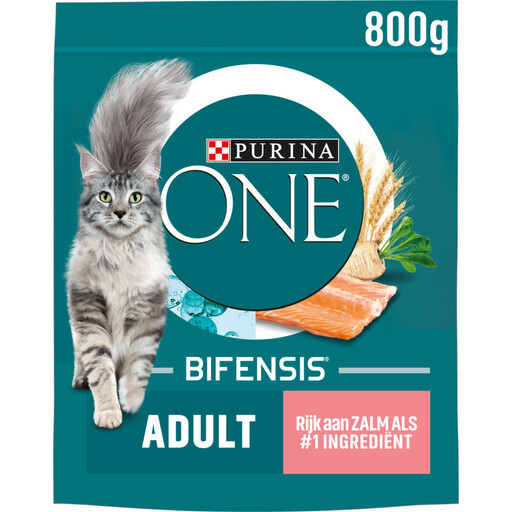
Why it suits this profile: Suitable for owners of adult cats who want to check the protein source and wholegrain variety in advance.
The product information names salmon as the first ingredient and states that it is complete food for adult cats.
800 g pack; salmon and wholegrain variety; intended for cats aged 1 year and over.
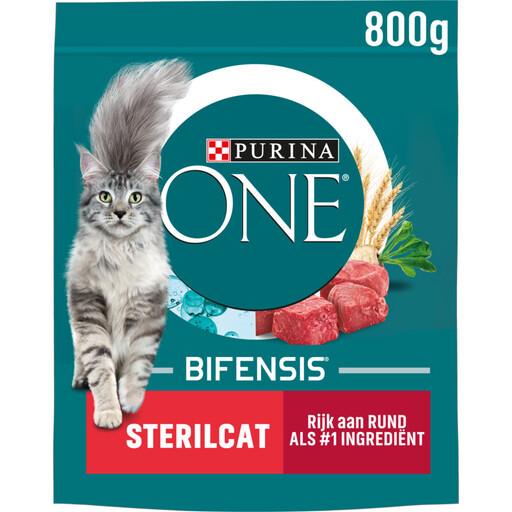
Why it suits this profile: For owners of a sterilised or neutered adult cat who monitor portions and daily activity.
The packaging is specifically labelled for sterilised and neutered adult cats, rather than for all cats without distinction.
The product information states 37% crude protein, 13% fat and feeding guidelines based on body weight.

Why it suits this profile: A targeted choice for kittens from weaning to 12 months, in a pack that remains manageable during the growth stage.
The product description clearly states the target group and age: kittens from weaning to 12 months.
Chicken & Grain formula; 800 g; according to the product information, complete food for kittens.
We have put together a complete, up-to-date list of products that fully meet these strict selection criteria and the applicable European safety regulations.
It depends on your cat’s preferences, the nutritional composition and your daily routine. Wet food generally contains more moisture and comes in portions that are easy to divide. Dry cat food lasts longer after opening and is easy to measure. With both types, check that the food is complete and follow the feeding guideline on the packaging.
Always follow the label. Many opened portions of wet food should be covered, refrigerated and used within 24 to 48 hours. Wet food is best served at room temperature, and leftovers that have been left out of the fridge for too long should be thrown away. Store dry food in a cool, dry place in a tightly sealed container.
Start with the feeding guideline on the packaging and consider your cat’s body weight, age and activity level. Ideally, divide wet food between several meals. Weigh your cat regularly and adjust the amount if its weight or daily activity changes. Treats, soup and other complementary products count towards the total daily intake.
