
Vandaag of morgen in huis

Kwaliteit gegarandeerd

Welkomstaanbiedingen ontgrendelen: GRATIS bezorging | Tot 80% korting | Gratis 30 dagen JoyPlus-proefperiode
Download de app
Choosing cat food seems straightforward until you’re faced with dozens of options: wet cat food, dry cat food, kitten food, food for adult cats, treats and cat soup. Packaging often uses words such as “natural”, “premium” or “with fish”, but these terms don’t always tell you whether a product is suitable for everyday feeding.
For cat owners in the UK, there are three common pitfalls to watch out for:
First, check the legal description on the packaging. Complete cat food is intended to be fed as your cat’s daily diet, following the feeding guide. With complementary food, such as soup or a liquid treat, the main meal should still be complete cat food.
One example is Felix Soup Fish Wet Cat Food 6×48g. According to the product information, it is complementary food for adult cats. The recommended amount is one pouch per 4 kg of body weight per day, as a complement to a balanced diet. INABA Churu Cat Tuna is also a treat, not a complete meal.
Food for adult cats is generally formulated for cats from around one year old. Kitten food is intended for the growth stage and comes with its own feeding guide. So don’t simply feed the same food to a kitten and an adult cat.
According to the product information, Purina One Junior Kitten Food Chicken & Grain Formula is intended for kittens from weaning up to 12 months. Iams cat kitten/junior chicken 10kg and Iams cat kitten ocean fish 3kg are also dry food options for kittens. For pregnant or nursing cats, always follow the instructions on the packaging and speak to a vet if you’re unsure.
Wet cat food has a high moisture content and is often sold in pouches or trays. According to the product specifications, Felix Delicious Fish Strips in Sauce contains 78% moisture and comes in 12 pouches of 80 grams. The feeding guide recommends three to four pouches a day for a 4 kg cat; for a neutered cat, up to three pouches, depending on their circumstances.
Dry cat food keeps for longer after opening and is easy to weigh out. As well as the flavour, check the analytical constituents, such as protein, fat, fibre, ash and moisture. Feeding guidelines for neutered cats may differ from those for standard adult food. According to the product description, Farmina N&D Prime Complete Cat Food for Neutered Cats - Chicken - 300g is specifically for neutered cats and contains 38% crude protein, 16% fat and 9% moisture.
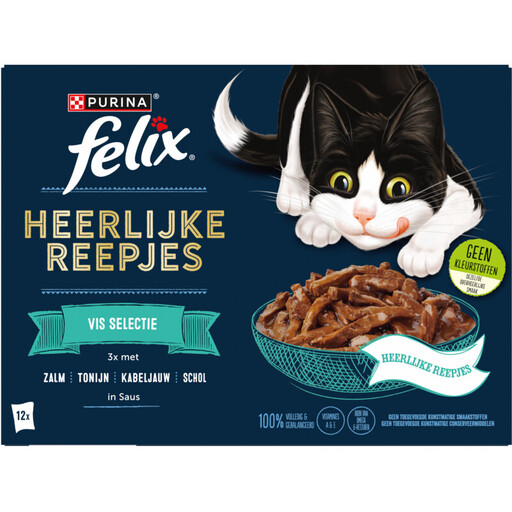
Why it suits this profile: A straightforward multipack with four fish varieties and 80-gram portion pouches. According to the product information, it is a complete food for adult cats.
The product information clearly states the life stage, food status and daily feeding guide. This makes it easy to distinguish from complementary soup or treats.
12 pouches of 80 grams; varieties with salmon, tuna, cod and plaice; 78% moisture according to the specification.
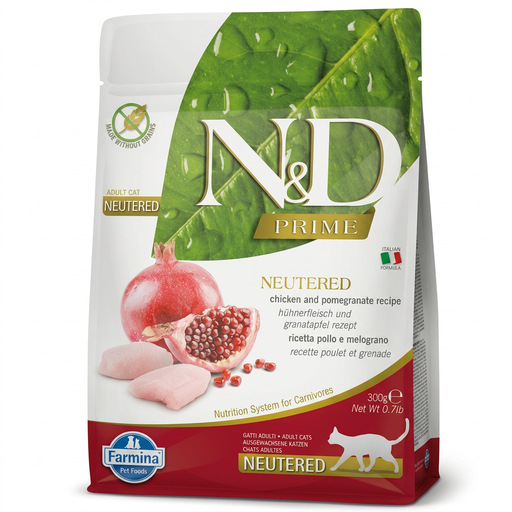
Why it suits this profile: Formulated for neutered cats, with specified ingredients including chicken, herring, egg and fish oil.
The packaging does more than highlight the flavour: it states the intended cats, nutritional values and portions per body weight.
Complete food for neutered cats according to the product description; 38% crude protein and 9% moisture.
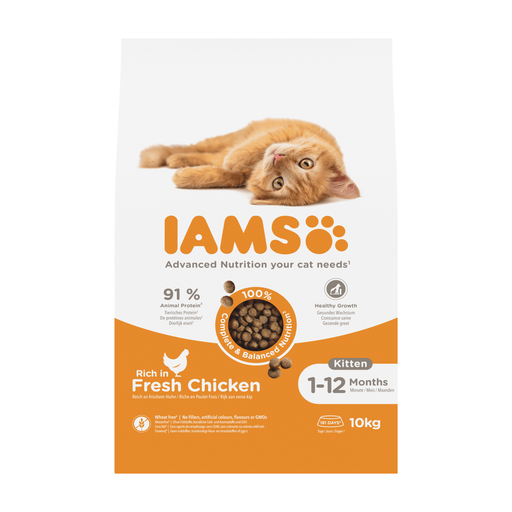
Why it suits this profile: A large bag of dry kitten food for households with a kitten or several young cats.
It is clearly labelled as kitten food. According to information from Iams, the formula includes DHA, taurine, minerals and vitamin D.
10 kg bag; chicken flavour; dry food that’s easy to weigh out by the gram.

Why it suits this profile: A dry food for adult cats, made with turkey and wholegrain cereals and formulated for cats that spend most of their time indoors.
The intended use for indoor cats is clearly stated. Claims about gut flora, hairballs and odour come from Purina and should be understood as brand claims.
800-gram pack; turkey as the named animal protein source; ingredients include chicory root and cereals.
We’ve put together a complete, up-to-date list of products that meet these strict selection criteria and the applicable European safety regulations.
It depends on your cat’s weight, age, activity level and type of food. Use the feeding guide on the packaging as a starting point, then adjust the amount to suit your cat’s body condition. If you’re combining wet and dry food, remember to account for both amounts.
Wet and dry cat food each have different practical benefits. Wet food generally has a high moisture content and comes in individual portions. Dry food is easy to store and weigh out. The right choice depends on what your cat will eat and whether the product is complete for their life stage.
Store unopened food according to the instructions on the packaging. Opened wet food usually needs to be covered, kept in the fridge and used within the stated period. For example, Felix Soup instructions say to refrigerate an opened pouch and use it within two days. According to the product information, an opened INABA Churu stick should be used within 24 hours. Always check the label on your specific product.
