
Manager of delicate catalogues
Wants to capture bound copies without pressing the spine against a glass plate, so checks the curvature and dimensions of the open book. ScanSnap and CZUR describe contactless overhead scanning.


Choose a contactless overhead scanner if a bound catalogue cannot safely lie flat on glass; a book-friendly flatbed is an alternative if the binding can be opened enough and the page fits on the scan bed. Also compare the capture area, page-curvature correction and lighting for glossy paper. Manufacturers’ specifications are not an independent test of image quality. For scans shared in the studio, the Dutch government and Stichting Reprorecht set out different conditions for private use and occasional internal business use.
Wants to capture bound copies without pressing the spine against a glass plate, so checks the curvature and dimensions of the open book. ScanSnap and CZUR describe contactless overhead scanning.
Scans glossy images and a range of materials, and wants to assess the lighting with a test scan of a similar page. CZUR and IRIS describe lighting features for glossy pages.
Wants to be able to search the text in suitable scans and, when files are shared, checks who is allowed to use them. Plustek lists searchable PDF output; the Dutch government and Stichting Reprorecht set out conditions for use and sharing.
Choose this when: you don’t want to press the spine of a bound catalogue against a glass plate.
Trade-off: check the capture area and make a test scan of the spine; page-curvature correction doesn’t prove that colours will be reproduced faithfully.
Choose this when: the catalogue can be opened sufficiently without risk and the page fits on the scan bed.
Trade-off: the page needs to lie on the glass, so measure the full spread too and check the dimensions of the model you choose.
| Consideration | What should you check? | Who is this important for? |
|---|---|---|
| Binding and spine | Check for contactless scanning, the dimensions of the open book and a test scan near the spine. | If I don’t want to press a delicate catalogue flat, I’ll prioritise a suitable overhead solution and check how it captures text near the spine. Around 33% of consumers would make protecting the binding their top priority. |
| Glossy images | Assess the lighting and reflections with a test scan of the paper you use. | For glossy plates, I want to assess reflections and detail in a test scan of my own, not rely solely on a claim about the lighting. Around 27% of consumers would make image reproduction their top priority. |
| Catalogue size | Measure the pages and spreads and compare them with the capture area of the exact scanner model. | I’ll also measure the largest page or spread to make sure it fits on the scan bed. Around 20% of consumers would make catalogue size their top buying priority. |
| Finding and sharing text | Check the OCR output with your own catalogue and establish which permission or arrangement applies to shared use. | If several studio staff need to find text, I’ll test the OCR with my own material and consider file sharing separately. Around 20% of consumers would make finding text their top priority. |
An A4 scan bed won’t necessarily fit the page or spread you need. Plustek lists the OpticBook 4800 and Epson the Perfection V39II as A4 models; check the exact scan area before you choose.
Measure both a single page and the full spread, then compare those dimensions with the stated capture area.
CZUR and IRIS describe lighting features for glossy pages, but these features alone don’t show how faithfully an artwork will be captured.
Make a test scan of a glossy page from one of your own catalogues and assess reflections, detail and colour for your intended use.
The Dutch government says that a private copy for personal use must not be distributed or made public. For business use covered by an applicable arrangement, Stichting Reprorecht describes occasional internal use of, among other things, a small part of a book.
Before scanning, decide who will receive the files, how much material will be copied and which permission or arrangement applies to the intended use.
The SV600 is a contactless overhead option for bound and delicate materials.
The ET series offers overhead book scanning; check the specifications for the exact ET model.
The IRIScan Desk 7 Business combines scanning of books, documents and objects with OCR.
The OpticBook 4800 is a book-focused flatbed for catalogues that can be placed safely and suitably on the glass.
The Perfection V39II is an A4 flatbed for individual pages and documents that fit.
These Joybuy products are flatbed scanners and a document camera for catalogue pages that fit within the stated scan area. Note the CZUR Shine 800’s limitation with high-gloss materials.
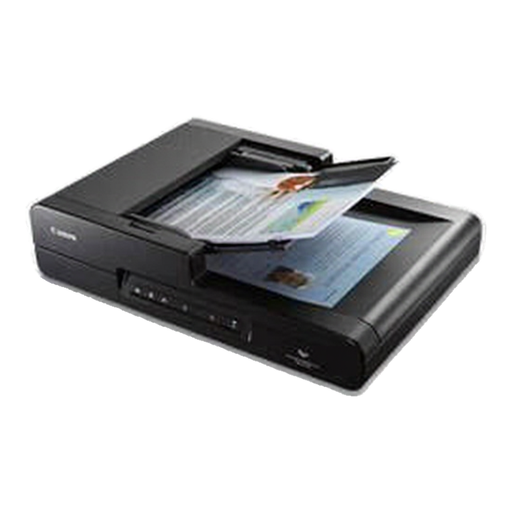 Image unavailable
Suited to a studio that can safely place a bound copy on the glass and also wants to feed in loose documents.
Listed specifications: A4, 600 × 600 DPI, flatbed and ADF.
The product description mentions a 50-sheet ADF, duplex scanning at 20 pages per minute and output to editable PDF.
This isn’t a contactless overhead scanner; check that the catalogue can safely lie on the glass.
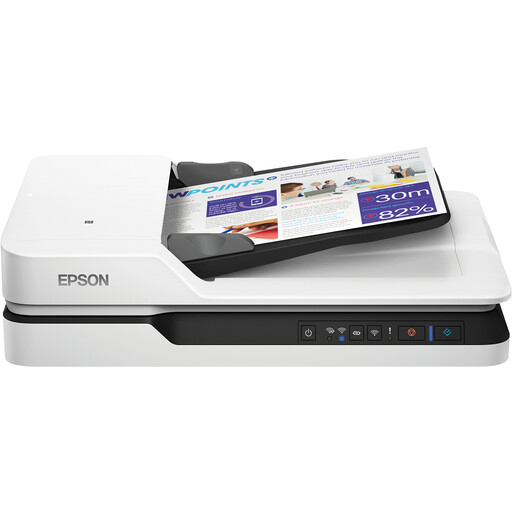 Image unavailable
An option when a book or bound document can safely lie on the flatbed and the studio also wants to use a wireless or USB connection.
Listed specifications: A4 and 1200 × 1200 DPI.
The product description mentions Wi-Fi, USB 3.0 and duplex scanning.
A4 is the stated paper size; check that your catalogue pages fit on the scan bed.
 Image unavailable
Suited to flat catalogue pages within the stated size when text recognition is needed and the pages aren’t high-gloss.
The product description mentions A3 and A4 documents, OCR for more than 180 languages, USB and a foldable design.
According to the product description, this model isn’t designed for high-gloss materials, including glossy photographs and magazines.
The description mentions use with Windows and macOS; check that it’s compatible with the studio’s computers.
Not automatically. The Dutch government says that a private copy for personal use must not be distributed or made public. For business use covered by an applicable arrangement, Stichting Reprorecht describes occasional internal use of, among other things, a small part of a book. Check whether the studio and intended use fall within those conditions. You’ll need to arrange the rights separately for any other use.
No, not if you use a contactless overhead scanner, such as the SV600 described by ScanSnap. Plustek lists OCR and searchable PDF output for the OpticBook 4800. Choose a way to position the copy safely and test the text recognition with your own catalogue; the OCR feature doesn’t guarantee error-free results.
Measure the scanning area and your largest originals, and check the computer and software requirements for the exact model. Also agree where files will be stored and who will have access; an agreement about storage doesn’t replace permission to copy or share protected content.