
Vandaag of morgen in huis

Kwaliteit gegarandeerd

Welkomstaanbiedingen ontgrendelen: GRATIS bezorging | Tot 80% korting | Gratis 30 dagen JoyPlus-proefperiode
Download de app
A cat water fountain can be useful for indoor cats, fussy drinkers and households with several pets. Some cats are more attracted to running water than to a standard bowl, while a filter can help catch hair and visible impurities. However, not every automatic pet water fountain is equally practical.
The main problems usually only become apparent after several weeks of use. Think of a noisy pump, a filter that is difficult to source or a reservoir with hard-to-reach corners. Terms such as “smart”, “self-cleaning” and “wireless” also mean little if it is unclear how the device works and how much maintenance is still required.
A noise level below 20 dB sounds appealing, but the result also depends on the surface, the water level and how the pump is positioned. An empty tank or air in the pump can create additional noise. If you want to place the fountain in a bedroom or home office, it is worth checking for:
A water fountain with a filter is not a maintenance-free solution. Filters collect hair, dust and residue from the water, so they need to be replaced in accordance with the product instructions. Check in advance which filter layers are used and whether replacement filters are easy to order.
A 3-layer filter, for example, may consist of activated carbon, ion-exchange resin and a sponge. A 4-layer or 5-layer system may contain additional filter material, but more layers do not automatically mean the device is better suited to your situation. Replacement costs and cleaning requirements also need to be taken into account.
With a wireless pet water fountain, the pump may run on a battery, while the charging stand still needs to be connected to a socket. This is convenient when cleaning or temporarily moving the fountain, but it is not the same as unlimited wireless use.
Also pay attention to the difference between:
For one cat, a 2-litre water fountain can be practical, provided you check and refresh the water regularly. For several cats or a combination of cats and small dogs, a larger reservoir makes more sense. Allow for evaporation, splashes and the fact that the stated capacity is not always the usable amount during operation.
A 2-litre model will usually fit well in a flat and is relatively easy to carry. A 2.5 to 3.3-litre reservoir gives you more leeway. Large 10-litre models are mainly intended for households with several pets and take up considerably more space.
Stainless steel, porcelain and BPA-free plastics each have practical advantages. A stainless-steel drinking tray is generally easy to wipe clean. Porcelain can be heavy, but feels stable. Plastic is lightweight and often cheaper, but check whether all the components can be separated properly.
More important than the material alone is the construction. Ideally, choose a model where:
A cat water bowl with a sensor or automatic pump contains electrical components. Place the charging or power base on a dry, stable surface and follow the manufacturer’s warnings. A fully enclosed or magnetically coupled pump can reduce the risk of contact between water and wiring, but always check which components may and may not get wet.
A water-level indicator and automatic shut-off when the tank is empty are practical features. They do not remove the need to refill the fountain, but they make it easier to notice a low water level in good time.
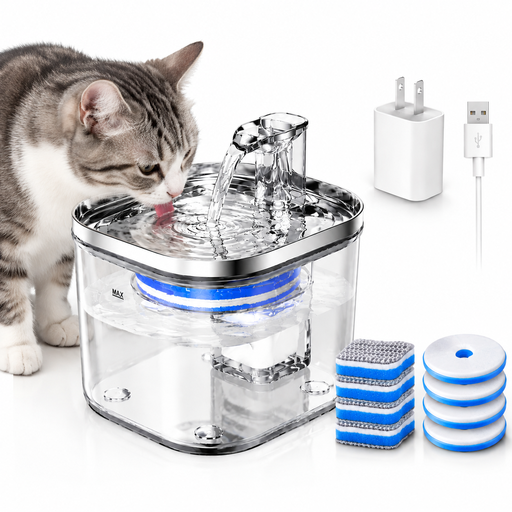
Why it suits this profile: A straightforward model with a 2-litre capacity, quiet water circulation and replacement filters included, ideal for anyone trying a cat water fountain for the first time.
The filters are included in the package, so you can immediately see what maintenance is involved.
2-litre capacity, filter included and suitable for cats and small dogs.
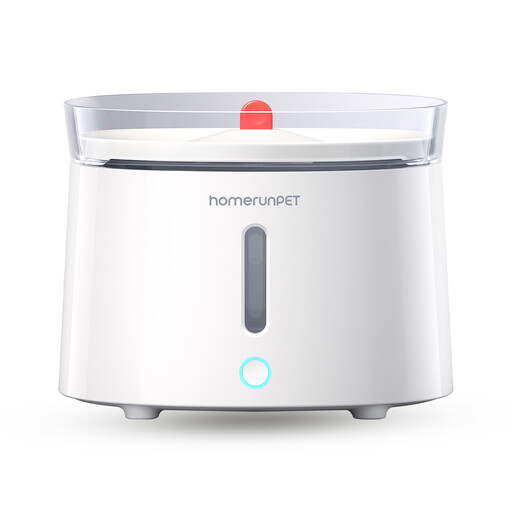
Why it suits this profile: The combination of a porcelain drinking tray, wireless pump and four-stage filtration suits users who place a high value on materials and ease of cleaning.
The pump and reservoir can be removed separately. The product information also recommends cleaning the pump every two weeks.
2-litre capacity, porcelain bowl, four-stage filter and a stated noise level of 20 dB.
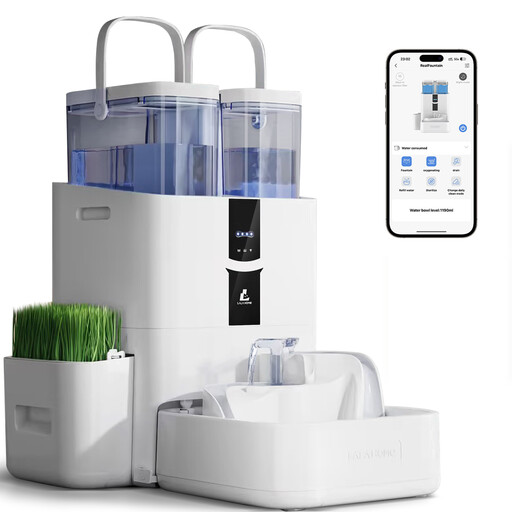
Why it suits this profile: The large capacity and app support are designed for households with several cats and dogs, where frequent refilling can be inconvenient.
The product information mentions water-level and filter monitoring via the app, but regular cleaning and filter replacement are still required.
10-litre capacity, two reservoirs, app connectivity and a five-stage filtration system according to the product description.
We have compiled a complete, up-to-date list of products that fully meet these strict selection criteria and the applicable European safety regulations.
Even a quiet cat fountain requires regular maintenance. Check the water level daily and replace the water when it becomes cloudy or develops an unusual smell. Clean the reservoir and drinking tray regularly with a mild cleaning product, then rinse everything thoroughly.
The pump needs particular attention: hair and limescale can reduce the water flow. Many models recommend cleaning the pump approximately every two weeks and replacing the filter every two to four weeks. The exact interval depends on water quality, frequency of use and the number of pets.
Do not use essential oils, medicines or other additives unless the instructions explicitly permit them. Place the fountain on a flat, water-resistant surface and keep the power adapter dry.
It can be, but consider the capacity, the shape of the drinking tray and how much water is used each day. For several cats, 2 litres may sometimes be enough, but a larger reservoir gives you more leeway. If you have several pets, consider providing two drinking points to reduce pushing and waiting.
This varies according to the model and water quality. Many product instructions recommend replacement every two to four weeks. If there is visible dirt, an unusual smell or reduced water flow, the filter may need to be replaced sooner. Also check whether the filter needs to be rinsed or soaked first.
A small pump generally uses very little power, but consumption depends on the operating mode. A sensor mode may run the pump less often than continuous circulation. With wireless models, you also need to take battery charging into account. Costs are usually limited, but check the power specifications and charging frequency of the model you choose.
