
Vandaag of morgen in huis

Kwaliteit gegarandeerd

Welkomstaanbiedingen ontgrendelen: GRATIS bezorging | Tot 80% korting | Gratis 30 dagen JoyPlus-proefperiode
Download de app
As a Product Recommendation Officer at Joybuy, I see the struggles cat owners face every day. You invest in a beautiful cat tree for your large cat, like a Maine Coon or Ragdoll, and within a few weeks, it's sitting unused in a corner. Or worse, it wobbles so much it becomes a hazard. A bad purchase is frustrating and a waste of money.
The problem often isn't the cat, but the product. Many cat trees are simply not designed for the strength and weight of larger cat breeds. Let's review the most common pitfalls so your next purchase can be a success.
To avoid these problems, there are a few technical specifications you should always check. These features determine whether a large cat tree is truly suitable for your pet.
The stability of an XXL cat tree starts at its foundation. A wide and weighted base plate is essential to keep the centre of gravity low and prevent the structure from tipping over. Pay attention to the dimensions of the base; the larger, the better.
Additionally, the diameter of the posts is crucial. For large cats, a post diameter of at least 9 cm is recommended. Thicker posts offer more resistance to the forces generated by jumping and climbing. Many high-quality models come with an anti-tip kit, a bracket to secure the cat climbing tree to the wall. This is a simple but highly effective way to guarantee a stable cat tree.
A large cat needs space. Check the dimensions of the key components:
The lifespan of a cat tree depends heavily on the materials used. The sisal rope is meant for scratching, so it must be wear-resistant. Opt for models with thick sisal rope (at least 6 mm thick) that is tightly wound around the posts. Thin ropes or low-quality sisal mats will wear out quickly. The plush upholstery should be soft, but also sturdy and well-stitched to withstand heavy use.
Based on the criteria above, we have selected several products that cater to the specific needs of large cat owners.

Why This Fits Their Persona: With multiple cats, there's often competition for the best spots. At 206 cm tall, this model offers two condos, two perches, and a hammock, providing enough separate zones for each cat to claim their own territory and avoid conflicts.
This cat tree tackles the 'too small' pitfall by offering an abundance of space. The multiple levels and resting spots make it an ideal `cat tree for multiple cats`.
Equipped with 13 sisal-wrapped posts and a scratching ramp, it maximises scratching opportunities and protects furniture. The manufacturer states a static load capacity of 70 kg.
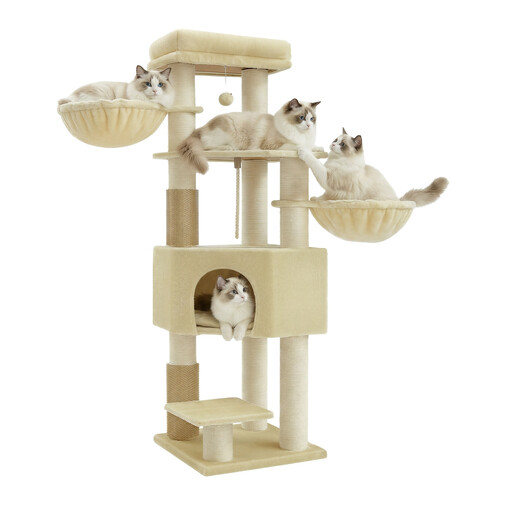
Why This Fits Their Persona: Owners of a Maine Coon, Ragdoll, or Norwegian Forest Cat need a cat tree that won't tip over. This model is specifically designed for heavy-duty use, focusing on maximum stability for the safety of large, active cats.
This model directly addresses the pitfall of instability. The weighted base plate and the included anti-tip kit ensure the cat tree remains firmly in place, even when a large cat jumps on it.
According to the manufacturer, this model has a maximum static load capacity of 105 kg. The 9 reinforced sisal posts provide ample scratching surface for intensive use.
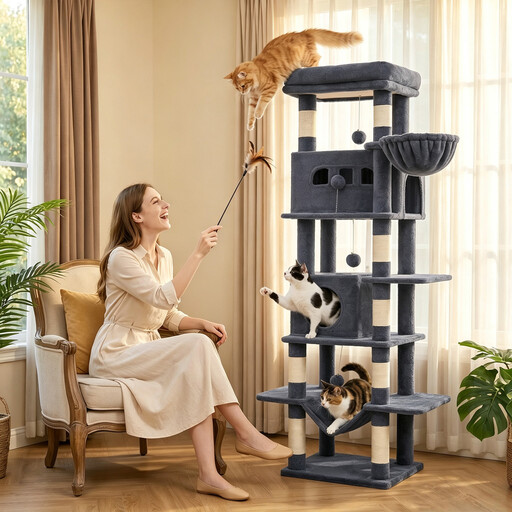
Why This Fits Their Persona: For cats that love to seek out high places but live in a home with limited floor space. This model maximises vertical space, offering a challenging climbing experience without taking up a large footprint.
Tall cat trees are often the wobbliest. This model is designed with a weighted, double-layered base and an anti-tip kit to ensure stability at height, which is essential for safety.
At a height of 212.5 cm with six levels, this `cat climbing tree` offers an exceptional climbing experience. The scientifically designed spacing between platforms makes climbing easier for cats of all ages.
A good cat tree is an investment in your cat's well-being and the protection of your furniture. We've compiled a complete, up-to-date list of products that meet these strict selection criteria.
The most effective method is to use the included anti-tip kit to secure the cat tree to a solid wall. Also, ensure the cat tree is placed on a completely flat surface. A thin mat underneath can sometimes help on a slippery floor. Finally, periodically check that all screws are still tightened securely.
This depends on the intensity of use and the number of cats. However, a high-quality model with thick posts and premium sisal can last for several years. On some cat trees, the sisal posts are replaceable, which can significantly extend their lifespan.
Cats are social animals and like to keep an eye on things. Place the cat tree in a room where the family spends a lot of time, such as the living room. A spot near a window is often a favourite, as it allows the cat to look outside. Avoid a secluded corner; the cat tree is likely to be ignored there.
