
Vandaag of morgen in huis

Kwaliteit gegarandeerd

Welkomstaanbiedingen ontgrendelen: GRATIS bezorging | Tot 80% korting | Gratis 30 dagen JoyPlus-proefperiode
Download de app
By: Joybuy Product Recommendation OfficerDate: July 28, 2026
Does your cat see the arm of your new sofa as its personal manicure station? You're not alone. Cats have a natural instinct to scratch. It maintains their claws, marks their territory, and helps them stretch. A good scratching post isn't a luxury; it's a necessity for saving your furniture and giving your cat its own safe space.
However, the options are overwhelming, ranging from a simple post to a complete cat condo that reaches the ceiling. To help you make the right choice for your cat and your home, we've put together a practical guide. Here you'll find objective tips and a selection of popular models, without any exaggerated marketing jargon.
Before you choose a model, it's wise to consider a few key points. These will determine whether the cat tree becomes a success or is left unused in a corner.
A wobbly cat tree is an unsafe cat tree. A cat that has one bad experience will likely ignore the post forever. A stable cat tree is therefore essential. Look for the following features:
The ideal cat tree fits your cat's personality and the available space in your home.
The most common material for the scratching surfaces is sisal rope. This is a strong, natural fibre that is perfect for a cat's claws. The resting areas are usually covered with soft plush fabric. Check that the sisal is tightly wound around the posts and that the fabric is well-finished. This determines how long the cat tree will last.
Based on product specifications and functionality, we have selected a number of models that meet different needs.

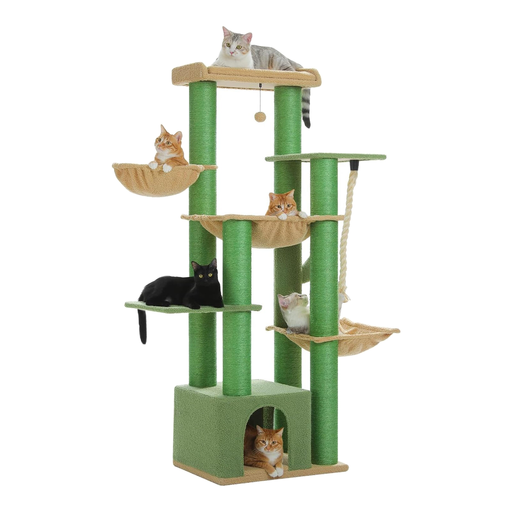
Why This Model Stands Out At a height of 206 cm, this is an impressive cat condo that challenges cats to climb high. The model is equipped with no fewer than 13 sisal-wrapped posts and a slanted scratching board, ensuring a scratching spot is always available. The two condos, two observation platforms, and a cat tree with a hammock offer plenty of opportunities for rest and play. According to the manufacturer, the structure has a total static load capacity of 70 kg.
Key Features
Who is it for? This is a suitable choice for owners of multiple cats or energetic breeds that love to climb. It provides enough vertical space and separate spots to prevent conflicts.
Why This Model Stands Out This cat tree for large cats is specifically designed with sturdiness in mind. The 13 sisal posts have a diameter of 11 cm, which is significantly thicker than many standard models. This ensures a very stable cat tree. The model features three hammocks of different sizes and extra-large perches on top, perfect for cats that love to stretch out.
Key Features
Who is it for? Ideal for owners of heavier cat breeds such as the Maine Coon, Ragdoll, or Norwegian Forest Cat. It's also a great option for a multi-cat household that needs a robust and durable cat condo.
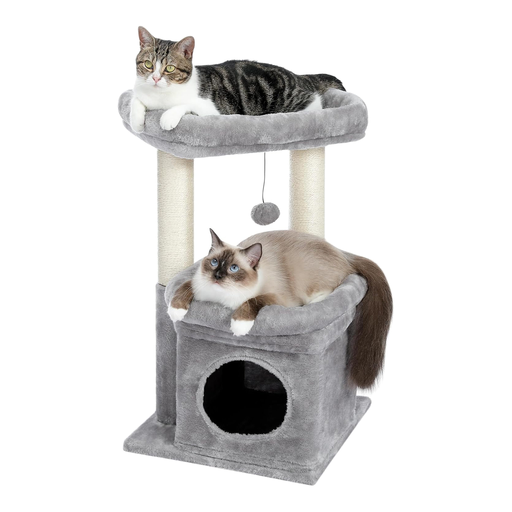
Why This Model Stands Out Not everyone has room for a giant cat tree. This compact model, at 70 cm high, proves that functionality doesn't have to take up much space. It has a surprisingly spacious and softly padded perch on top, two sisal posts for daily scratching sessions, and a replaceable toy ball. The reinforced base provides the necessary stability.
Key Features
Who is it for? An excellent small cat tree for people with limited living space, or as a first scratching post for a kitten. Also suitable for a single, calm adult cat that mainly needs a nice sleeping spot and a basic scratching option.
A cat tree is used intensively, which means the sisal parts, in particular, can wear out over time. Some models offer the option to replace parts such as the scratching board or sisal posts. This is a sustainable solution that can significantly extend the life of the furniture.
See our selection of cat trees with a replaceable scratching board here.
This depends on your cat. An adult cat should be able to fully stretch out against a scratching post. A height of at least 80-90 cm for the vertical scratching section is a good guideline. For cats that love to climb, the general rule is: the higher, the better.
Place the cat tree in an attractive, central location, such as the living room or near a window. Rub some catnip on the sisal posts to spark interest. Play with your cat near the post and reward them when they use it. Never force your cat or punish them for using their old scratching spot; simply make the new spot more appealing.
Cats are social animals that like to be part of family life. Therefore, place the cat tree in a room where you spend a lot of time. A spot by the window provides extra entertainment. If your cat has a favourite (and undesirable) scratching spot, like the sofa, initially place the cat tree next to it as a positive alternative.
