
Vandaag of morgen in huis

Kwaliteit gegarandeerd

Welkomstaanbiedingen ontgrendelen: GRATIS bezorging | Tot 80% korting | Gratis 30 dagen JoyPlus-proefperiode
Download de app
Are the sides of your sofa, the legs of your dining table, or your new curtains your cat's favorite scratching post? You're not alone. Cats have a natural instinct to scratch, climb, and survey their territory. A good cat tree isn't a luxury; it's a necessity that caters to these instincts.
However, the market is flooded with options, from compact posts to elaborate cat condos. This guide is designed to help you make a practical choice. We'll cut through the marketing jargon and focus on what truly matters for you and your cat, so you can confidently buy a cat tree that will last for years.
Before we dive into our recommendations, here are a few key points to help you make the right choice.
A wobbly structure will be avoided by most cats. A stable cat tree is essential, especially if you have an energetic or heavier cat. Look for a wide, weighted base. For a large cat tree or a cat tree for large cats like Maine Coons or Ragdolls, a model with a wall anchor is a wise choice for extra safety. Height is also important; a cat needs to be able to fully stretch while scratching. A small cat tree might suffice for a kitten or a calm cat in an apartment, but a larger model offers more opportunities for climbing and play.
Most scratching posts are wrapped in sisal rope. This is a strong, natural material that's ideal for maintaining their claws. The quality of the sisal and the thickness of the rope help determine its lifespan. In addition to traditional plush, we're increasingly seeing the wooden cat tree. These models are often not only more durable but, as designer cat trees, also fit better into a modern interior.
Observe your cat's behavior. Is it a climber that loves to find the highest spot? Then choose a tall model with multiple platforms. Does your cat enjoy sheltered spots for sleeping? A cat tree with one or more condos is ideal. Hammocks and baskets provide comfortable resting places for those lazy afternoon naps.
Based on functionality, materials, and user needs, we've curated a selection of popular choices.
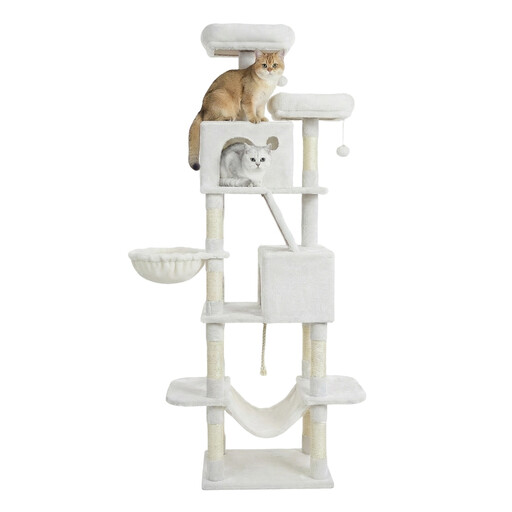
Why it stands out: At a height of 206 cm, this is a true climbing paradise. It's an all-in-one solution that combines climbing, scratching, playing, and resting in a single piece of furniture.
Pros:
Who is it for? This is the ideal large cat tree for owners of multiple, highly active cats, or for those seeking a cat tree for large cats that offers ample space and challenge.
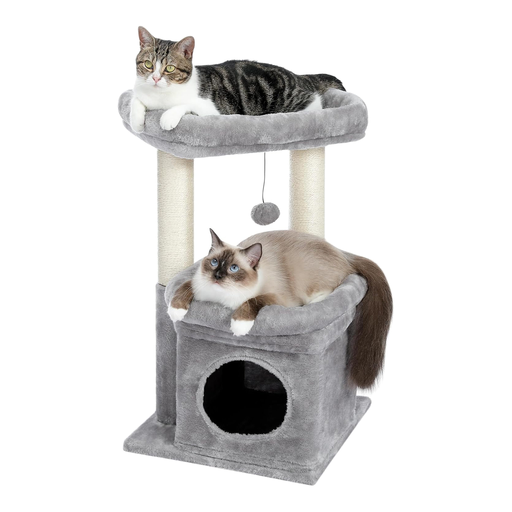
Why it stands out: This cat tree proves that compact doesn't have to be boring. It offers multiple functions within a small footprint.
Pros:
Who is it for? Perfect for cat owners with limited space, or as a first cat tree for a kitten or a single, calm adult cat.
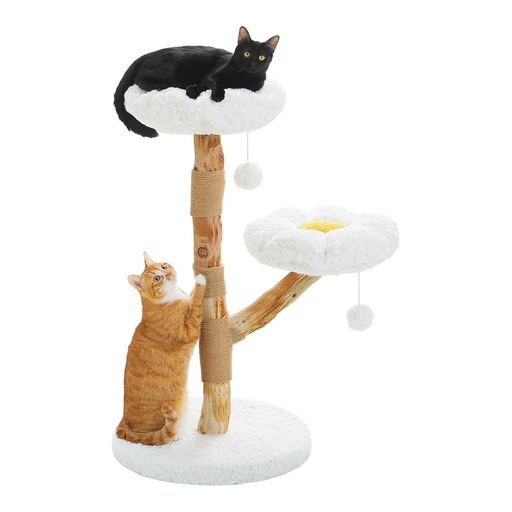
Why it stands out: This designer cat tree combines functionality with a unique, stylish look that won't look out of place in a modern interior.
Pros:
Who is it for? For the design-conscious cat owner looking for a functional piece of furniture that blends seamlessly into their decor, without compromising on the cat's needs.
If you haven't found the perfect match for your cat and your interior, or if you're looking for individual components to create your own climbing wall, there are countless possibilities to build a custom play paradise.
? Check out our selection for a DIY Cat Climbing Wall here.
Place the cat tree in a spot where your cat likes to spend time. This is often in the living room, near a window, or close to the furniture they previously used for scratching. A cat tree placed in a secluded corner is often ignored.
Introduce the cat tree in a positive way. Rub some catnip on it or play with your cat near the post. Reward your cat with a pet or a treat when they use the cat tree. Don't force anything; most cats will start exploring the new addition out of curiosity on their own.
A cat needs to be able to fully stretch against the scratching post. For an average adult cat, this means a scratching surface of at least 80-90 cm high. For larger breeds, a taller post is recommended. Climbers will benefit from a model that reaches the ceiling or has multiple high platforms.
