
Vandaag of morgen in huis

Kwaliteit gegarandeerd

Welkomstaanbiedingen ontgrendelen: GRATIS bezorging | Tot 80% korting | Gratis 30 dagen JoyPlus-proefperiode
Download de app
A cat tree can create extra room in a flat for climbing, scratching, playing and sleeping. Even so, a purchase can sometimes disappoint. A tall cat tower may wobble, a cat house may be too small and a cheap cat scratching post can wear out quickly. So look beyond the number of levels or an attractive product photo.
A cat tree over two metres tall looks impressive, but height alone says little about how sturdy it is. A narrow base, thin boards or insufficient fastening can cause movement when a heavy cat jumps up. Always check:
Stability is even more important with a cat tree for several cats. Multiple cats may jump or play on different levels at the same time.
A cat scratching post is only practical if your cat has enough vertical and horizontal scratching space. A small sisal patch at the bottom is often not enough. Pay attention to where the sisal is placed: support posts that also function as scratching posts allow your cat to scratch while climbing.
A cat tree with several sisal posts can help direct scratching behaviour towards a dedicated area. This does not guarantee that your furniture will remain completely untouched; every cat has different preferences.
A cat hammock, cat bed or cat house may sound appealing, but the dimensions determine whether your cat will actually use them. A large cat needs enough room to stretch out. A timid cat may place more value on an enclosed resting spot than on an open platform.
Any included cat toys also deserve attention. Hanging balls and feathers can wear out. Check them regularly and replace parts as soon as they become loose or damaged.
First, measure the space where the cat tree will stand. Leave enough room around it so your cat can jump safely and so that you can clean the tree. With several levels, the distances between the platforms are also important. A stepped layout may be more practical for kittens and older cats than large jumps.
A small scratching post with a tunnel can be suitable for a kitten or a small home. The Cats Collection Scratching Post with Tunnel & Toys, for example, measures 40 × 30 × 41 cm, and according to the product specifications has a tunnel and three resting spots. This makes this type of product a compact combination of scratching space, play area and resting place.
Do not only look at the cat tree’s total weight. Also check how wide the base is and how many posts support the structure. For models designed for heavy cats or several cats, a reinforced base, thick boards and an anti-tip feature are useful points to check.
The descriptions of some models state a capacity of up to six cats weighing a maximum of 6.8 kg each. Treat this as the supplier’s product specification and check before buying that the information is still shown on the product page.
Sisal is a commonly used material for scratching posts. Plush can feel comfortable, but it collects hair and dust. Removable, washable cushions make maintenance easier. Also check whether hanging toys can be replaced.
Loose cat toys can complement a cat tree. According to the product description, the ZEZE Lemon Silvervine Cat Toy contains silvervine, catnip and crinkle paper. The scent and sound may spark a cat’s interest, but reactions vary from one animal to another. Keep an eye on your cat during the first few play sessions and replace the toy if the fabric tears or the filling becomes visible.
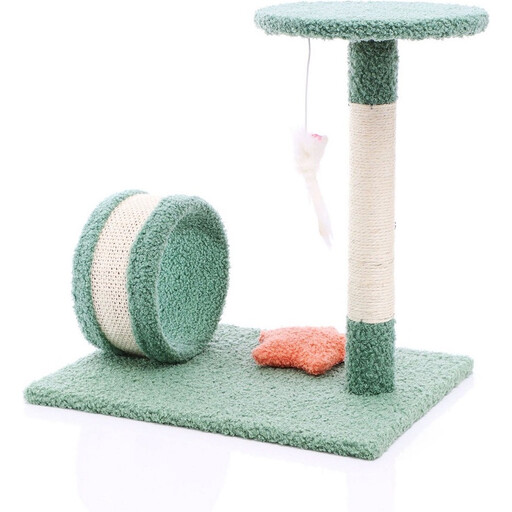
Why it suits this profile: The compact dimensions are suitable for a flat, a kitten or a household that wants to try a simple cat scratching post first.
The product information states the exact size, a tunnel and three resting spots. This means you do not have to rely solely on a lifestyle photo.
40 × 30 × 41 cm; sisal material; tunnel, toys and three resting spots.
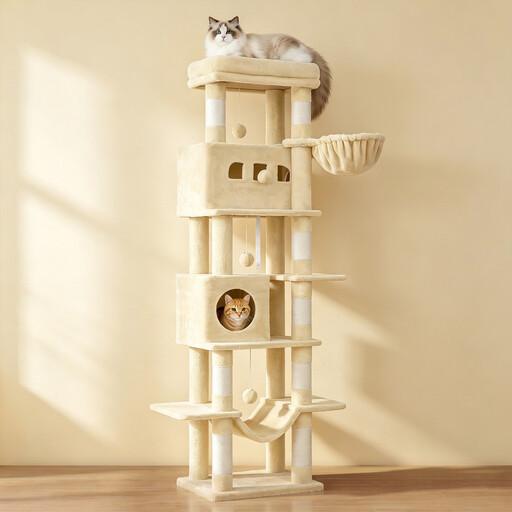
Why it suits this profile: This model combines several resting and scratching zones for households that want to use a large cat tree as a dedicated play and resting area.
The stated double base, anti-tip locking mechanism and eight sisal posts provide specific points to check rather than just a general claim about stability.
212.5 cm high; six levels; two cat houses; hammock; eight sisal posts.
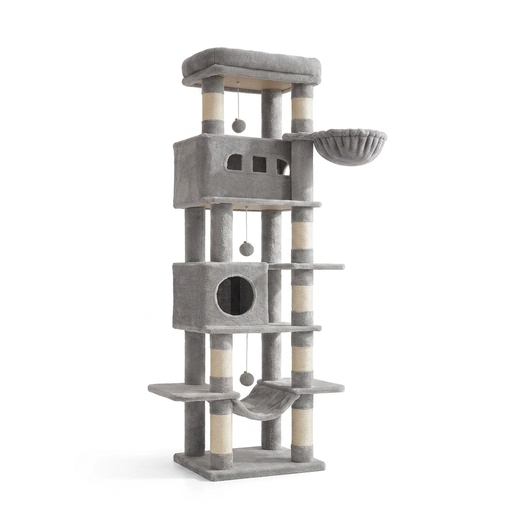
Why it suits this profile: The wide platforms, several houses and hammock are designed for large cats and households with several pets.
The product description mentions 17 support posts, eight of which have sisal, plus a double reinforced base and anti-tip feature.
170 cm high; 50 × 30 cm platform; two cushions; two houses; hammock and 17 posts.
We have put together a complete, up-to-date list of products that fully meet these strict selection criteria and the applicable European safety regulations.
That depends on the number of cats, their weight and the available space. A compact model may be enough for one kitten. Large cats and multiple cats benefit from wider platforms, several resting spots and a sturdy base. Measure both the floor area and the room height before ordering.
A spot by a window or in a living area often works well, as cats can keep an eye on their surroundings there while staying in regular contact with the household. Make sure the surface is stable and that there is enough clear space around the tree. Always follow the manufacturer’s assembly instructions.
Its lifespan depends on the materials, how intensively it is used and how well it is maintained. Check the sisal, fabric, screws and hanging toys regularly. A cat tree will generally last longer when damaged parts are replaced promptly and the structure is tightened again. This also prevents a minor defect from becoming a safety issue.
