
Vandaag of morgen in huis

Kwaliteit gegarandeerd

Welkomstaanbiedingen ontgrendelen: GRATIS bezorging | Tot 80% korting | Gratis 30 dagen JoyPlus-proefperiode
Download de app
Having a cat brings a lot of joy, but sometimes a few challenges too. Scratched furniture, restless energy, and a lack of a dedicated spot for your cat are common problems. A good cat tree is often the solution. It provides an outlet for natural behaviours like scratching, climbing, and observing. But with so much choice, it can be difficult to find the right one.
As a Joybuy Product Recommendation Officer, I'm here to help. In this article, I'll give you practical tips and present a selection of popular models, so you can make an informed decision that suits your cat, your interior, and your budget.
Before we look at the products, here are a few key considerations. A well-thought-out choice ensures the cat tree will actually be used and will last for a long time.
A wobbly cat tree will be ignored by most cats. A stable cat tree with a wide, weighted base is essential, especially if you have a large or heavy cat, or multiple cats. For breeds like the Maine Coon or Ragdoll, a large cat tree or even an XXL cat tree is a must. Pay attention to the total height and the dimensions of the base. A cat needs to be able to stretch out completely while scratching, so a post that is at least 80-90 cm high is recommended.
Most cat trees are wrapped with sisal rope. This is a strong, natural material that is ideal for nail maintenance. Check the thickness and density of the sisal. In addition to scratching opportunities, many models offer extra features. A cat tree with a condo gives your cat a secure hiding spot, while a cat tree with a hammock provides a comfortable place to rest. A cat tower or cat climbing tree with multiple levels encourages climbing behaviour and gives your cat a high vantage point, which they naturally enjoy.
Think about where you want to place the cat tree. Do you have limited space? Then a small cat tree or a corner model is a smart option. Cats are social animals and like to have their cat tree in a place where the family often gathers, such as the living room. A spot near a window is also popular, as it allows them to look outside. Make sure the cat tree is not in the way, but is central enough to be attractive to your cat.
Based on product specifications and functionalities, we have selected a few models that meet different needs.
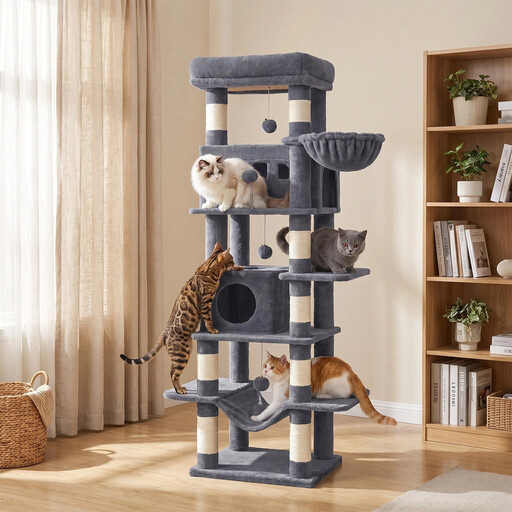
Why This Model Stands Out This 170 cm high cat tower is a complete play paradise. With six levels, multiple condos, and a hammock, it offers plenty of space to climb, play, and rest. The manufacturer states that the construction is designed for stability, with a weighted base and an anti-tip mechanism.
Pros
Who Is It Suitable For? This model is an excellent choice for owners of multiple cats or active, large cats that love to climb. It provides enough personal space for every cat.
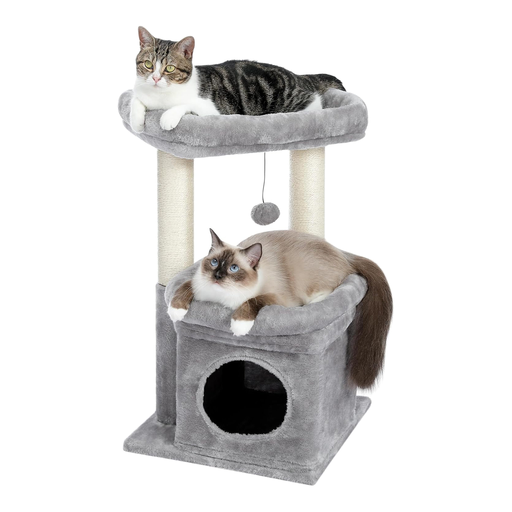
Why This Model Stands Out This compact cat tree from PAWZ Road proves you don't need a lot of space for a functional cat tree. With a height of 70 cm, it fits easily into smaller apartments or rooms while still offering multiple features.
Pros
Who Is It Suitable For? Perfect for kittens, smaller cat breeds, or households with limited space. It's a functional and budget-friendly entry-level solution.
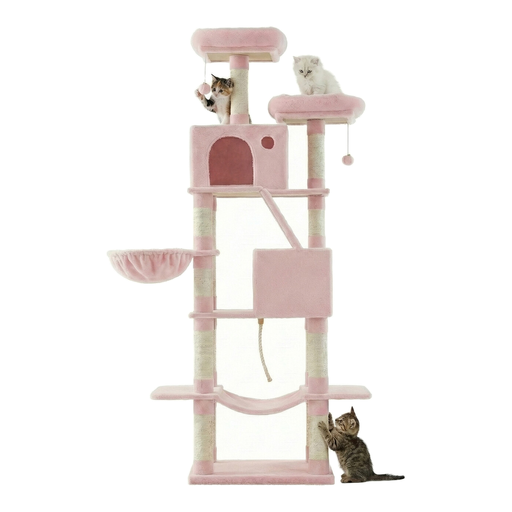
Why This Model Stands Out With an impressive height of 206 cm, this is a true XXL cat tree. This model from SONGMICSHOME is designed for the most demanding climbers and multi-cat households. The striking pink colour also gives it a playful look.
Pros
Who Is It Suitable For? This large cat tree for large cats is ideal for very active cats, catteries, or households with a large number of cats. It's an investment in an ultimate play and rest area.
This selection is just a starting point. There are countless variations in size, style, and functionality. Are you looking for a different model or want to compare more options?
? Check out our full range of Sisal Cat Trees.
1. How tall should a cat tree be? A cat needs to be able to fully stretch out against the scratching post. For an average adult cat, this means the vertical scratching surface should ideally be at least 80 cm high. A taller cat tower or cat climbing tree offers additional benefits, as cats love to survey their surroundings from a high spot.
2. Where is the best place to put a cat tree? Place the cat tree in an area where your cat likes to spend time, such as the living room or near a window. Cats like to mark their territory in social spaces. Avoid isolated spots like an attic or basement, as the cat tree is unlikely to be used there.
3. How do I get my cat used to a new cat tree? Make the new cat tree appealing. You can sprinkle some catnip on it or place a favourite toy at the top. Play with your cat near the tree and reward them when they use it. Never force your cat, but encourage curiosity and exploration.
