
Vandaag of morgen in huis

Kwaliteit gegarandeerd

Welkomstaanbiedingen ontgrendelen: GRATIS bezorging | Tot 80% korting | Gratis 30 dagen JoyPlus-proefperiode
Download de app
Noticing new snags in your sofa? Or is your cat using the doorframe as a manicure station? You're not alone. Cats have a natural instinct to scratch to maintain their claws, mark their territory, and relieve stress. A good scratching post isn't a luxury; it's a necessity for a content cat and an undamaged interior.
However, the selection is vast. From a simple post to a complete cat tree, how do you know which is right for your cat and your home? This guide will help you navigate the options. We'll cut through the marketing jargon and focus on what truly matters: stability, material, and functionality. This way, you can make an informed decision.
Before you choose a model, it's wise to consider a few practical matters. These three points will help you filter the options.
A wobbly scratching post will be ignored by most cats. They simply don't feel secure on it. A stable scratching post has a wide, heavy base plate that prevents it from tipping over when your cat leaps onto it at full speed. For owners of a Maine Coon, Ragdoll, or another large cat, this is especially important. Pay attention to the total weight of the scratching post and the dimensions of its base. Models that you brace against the ceiling, known as a floor-to-ceiling cat tree, often provide extra sturdiness.
Most scratching posts are wrapped in sisal rope. This is a durable, natural material that cats love to sink their claws into. Check that the posts are fully covered and that the rope is tightly wound. Many scratching posts offer more than just a place to scratch. Consider features like:
Measure the space where you plan to place the scratching post. If you live in an apartment, a small scratching post or a compact, vertical model is a smart choice. If you have more space or multiple cats, a large cat tree with various levels is ideal. There are also many designer cat tree models available today that look like a piece of furniture and fit seamlessly into a modern interior.
Based on functionality, material, and design, we've highlighted a few popular choices for you.
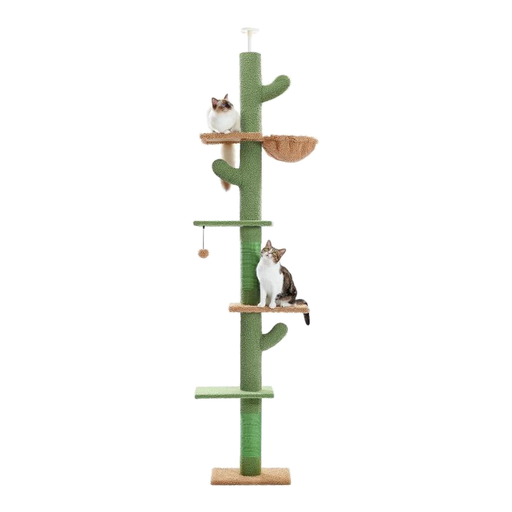
Why it stands out This model combines functionality with a playful design. The unique cactus shape is an eye-catcher, while the floor-to-ceiling construction makes optimal use of the vertical space in your room. No drilling is required; you simply brace the post between the floor and the ceiling.
Key Features
Who is it for? Ideal for cat owners with limited floor space who are looking for a stable and stimulating climbing and scratching spot for their small to medium-sized cat.
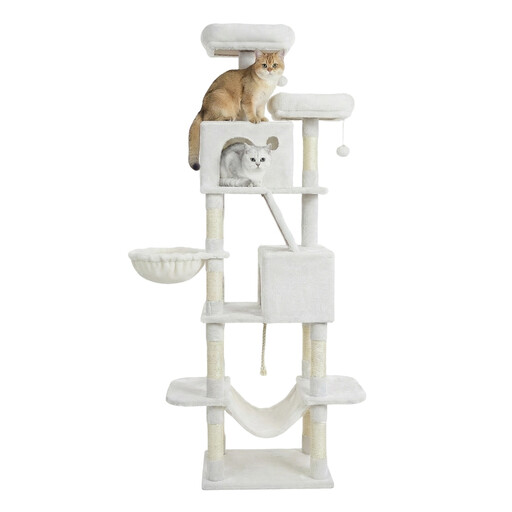
Why it stands out At over two metres tall, this is a serious cat tree for the active climber or multi-cat households. It offers different zones for rest, play, and observation, so every cat can find their own favourite spot.
Key Features
Who is it for? Perfect for multi-cat households or for owners seeking a scratching post for large cats that provides an all-in-one solution with enough space for everyone.
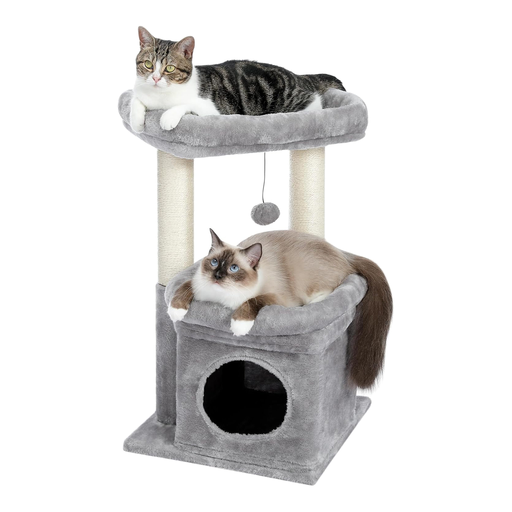
Why it stands out A compact size without compromising on comfort and stability. This model proves that a small scratching post can also be luxurious and sturdy. The spacious, softly upholstered top perch is a major plus.
Key Features
Who is it for? An excellent choice for those living in a smaller home or apartment, or as an additional scratching and resting spot in another room. Suitable for cats of all sizes.
Every cat and every home is different. If these models don't quite match what you had in mind, that's no problem. We've curated a broader selection to help you find the perfect match.
Explore more affordable cat scratching posts and find the ideal solution for your feline friend.
For an adult cat, a scratching post should ideally be tall enough for them to stretch out completely. A scratching surface of at least 90 cm is recommended. Taller models, like a cat tree, offer additional benefits as cats enjoy surveying their surroundings from a high vantage point.
Place the scratching post in a strategic location, for example, near the sofa they currently scratch or by their favourite sleeping spot. Rub some catnip on the sisal posts to attract them. Reward your cat with a pet or a treat when they use the post. Play with a wand toy around the scratching post to entice them to climb on it.
Replace the scratching post if the structure becomes unstable, which poses a safety hazard. It's also time for a new one if the sisal rope is completely worn out and the underlying material is visible. Cats do not like to scratch on a bare surface. On some models, you can replace the sisal posts individually.
