
Vandaag of morgen in huis

Kwaliteit gegarandeerd

Welkomstaanbiedingen ontgrendelen: GRATIS bezorging | Tot 80% korting | Gratis 30 dagen JoyPlus-proefperiode
Download de app
A bag of cat treats may seem like a quick purchase, but the differences between cat snacks can be significant. One cat may only eat soft cat treats, while another prefers crunchy morsels or accepts a liquid cat treat. Claims such as “for dental care” or “against hairballs” also deserve a critical look.
As a Joybuy Product Recommendation Officer, I therefore start by checking verifiable information: the ingredients, moisture content, feeding guidelines and the age group a product is intended for. This helps you avoid paying for a pack that is not suitable for your cat.
Most cat treats are complementary pet food. They are not a replacement for a complete meal. If you give your cat too many treats every day, the extra calories can upset the balance of its normal diet. The packaging usually states a maximum amount. For Felix Crispies, for example, this is a maximum of 12 grams or around 80 pieces per day for an adult cat weighing approximately 4 kg.
Use treats as a reward, a snack between meals or as part of playtime. If necessary, reduce the main meal in line with the feeding guidelines.
A label such as “anti-hairball” or “dental care” does not automatically mean that a problem will disappear. According to the product description, G'woon Cat Treats Anti-hairball was developed to help reduce hairballs. Its ingredients include 4% lignocellulose and 4% crude fibre. These are verifiable details, but they are not a medical guarantee.
The feeding instructions are also important for dental care treats. Purina Dentalife and Whiskas Dentabites describe a potential contribution to reducing tartar, according to information provided by the brands themselves. Treat this as additional care, not as a replacement for check-ups or dental care if your cat is experiencing problems.
Cat treats with fish or chicken may sound appealing, but always check the ingredients. A product labelled “salmon flavour” does not necessarily consist mainly of salmon. Felix Crispies Salmon & Trout, for example, lists 0.4% salmon meal and 0.4% trout meal. That is clearly different from a treat in which fish fillet is the main ingredient.
Also look out for potential allergies, grains, sugars and storage instructions. “No artificial additives” is only relevant when the full ingredients list supports this claim.
Choose treats for adult cats when the packaging specifies this. Some products are suitable for kittens from 8 weeks of age, such as Catisfactions Salmon Flavor. Others are not suitable for kittens, such as Whiskas Cat Sticks Beef Flavor.
For a kitten, age is not the only consideration. Small, soft pieces may be more practical than hard treats, but always supervise your kitten while it eats. Follow the age and serving information on the packaging.
The format determines how you can use the treat:
A liquid treat often contains a relatively high proportion of moisture. INABA Broth Chicken with Salmon Recipe, for example, lists 93% moisture; INABA Churu lists 90.5%. According to the product information, these treats are intended as complementary snacks and not as a replacement for drinking water or complete food.
Check three points before buying cat treats:
Keep dry cat treats sealed and in a cool place. Always check the packaging for the exact date and storage instructions.
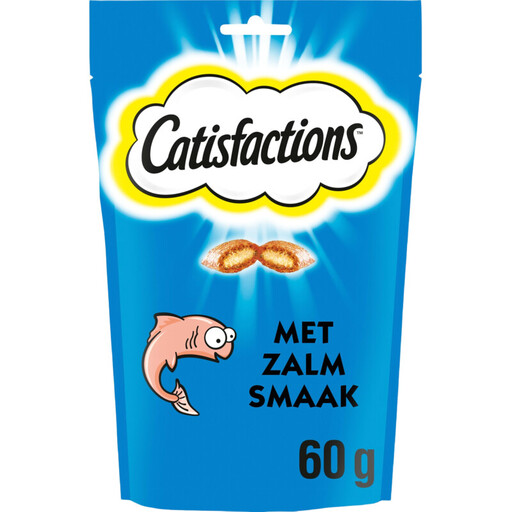
Why it suits this profile: Suitable for households with an adult cat or a kitten from 8 weeks of age looking for a small, soft treat.
The product information clearly states the minimum age of 8 weeks and fewer than 2 calories per piece. This makes it easier to adjust the serving size.
Crunchy outside, soft filling, and suitable for adult cats and kittens from 8 weeks of age.
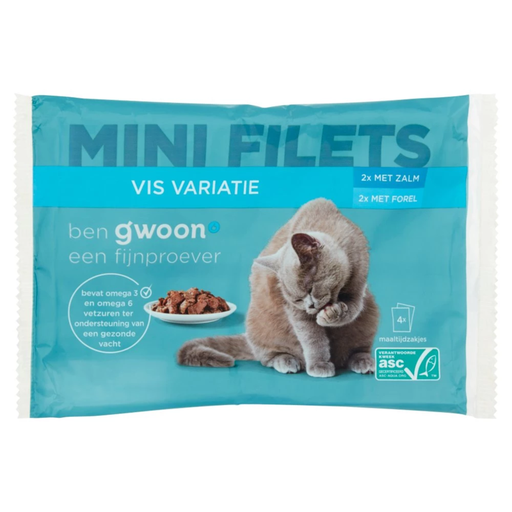
Why it suits this profile: For adult cats whose owners appreciate a variety of fish flavours and individually wrapped portions.
The pack contains two salmon and two trout fillets. The product description also states that it contains no artificial colourings, flavourings or preservatives.
Four individually wrapped mini fillets, 16% protein per 100 grams and 84 kcal per 100 grams.

Why it suits this profile: For owners who want to combine daily dental care with treat time.
The packaging provides a specific guideline: a maximum of 17 treats per day for an adult cat weighing 2.5 kg. The dental claim comes from the brand’s product information.
Crunchy, porous texture; 35% protein and 3.6% crude fibre according to the product details.
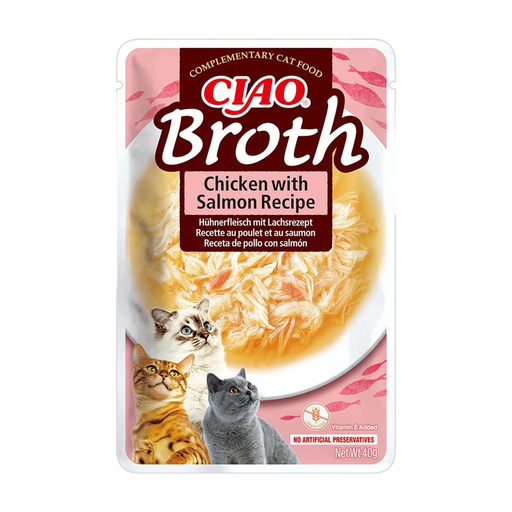
Why it suits this profile: A practical choice for cats that are more receptive to a liquid treat than an extra dry morsel.
The moisture content is clearly stated as 93%. The treat is offered as complementary food; fresh drinking water is still essential.
50 grams per pack, with chicken broth, chicken and salmon listed as ingredients.
We have put together a complete, up-to-date list of products that fully meet these strict selection criteria and the applicable European safety regulations.
This varies from product to product. According to the product information, Catisfactions Salmon Flavor is suitable from 8 weeks of age. Whiskas Cat Sticks Beef Flavor, on the other hand, is not suitable for kittens. Always check the age indication and choose small portions.
Liquid treats often contain a high proportion of moisture. INABA Broth Chicken with Salmon lists 93% moisture and INABA Churu Tuna 91%. They can be given as a complementary treat, but do not replace fresh drinking water or complete cat food.
Some products are intended for these purposes according to the brand’s product information. G'woon Cat Treats Anti-hairball, for example, contains lignocellulose and states a recommended daily amount. Dentalife and Whiskas Dentabites describe a contribution to dental care according to the brands’ own information. Use these treats as a supplement and ask a vet for advice if your cat has persistent problems.
