
Vandaag of morgen in huis

Kwaliteit gegarandeerd

Welkomstaanbiedingen ontgrendelen: GRATIS bezorging | Tot 80% korting | Gratis 30 dagen JoyPlus-proefperiode
Download de app
A little treat may seem simple, but the range of cat treats varies considerably. You’ll find cat biscuits, soft cat snacks, liquid cat treats and sticks with chicken, fish or beef. The right choice depends not only on the flavour your cat enjoys. The ingredients, texture, portion size and suitability for your cat’s age also matter.
The packaging may prominently mention “salmon”, “chicken” or “beef”, even though the ingredient is only present in a small amount. Always check the full ingredients list and the stated percentages. For example, Felix Crispies Salmon & Trout lists 0.4% salmon meal and 0.4% trout meal. This makes the snack particularly suitable for cats that enjoy a light, crunchy texture, rather than necessarily for owners looking for a treat with a high fish content.
According to the product information, Whiskas Cat Sticks Salmon contains 50% salmon within the fish and fish derivatives category. In this case, the product name and ingredients provide different information from a general flavour description alone.
Most cat treats are complementary pet food. They are intended as an extra alongside complete cat food. If you regularly give too many, calories from treats can disrupt your cat’s daily diet. That is why the feeding guidelines on the packaging are more important than the size of the treat.
Felix Crispies states a maximum of 12 grams for an adult cat weighing around 4 kg, equivalent to approximately 80 pieces. Catisfactions Cheese recommends a maximum of 20 pieces per day for adult cats and a maximum of 6 pieces for kittens. Adjust the main meal if you give treats more frequently.
Crunchy cat treats are easy to portion and can be suitable for use in a food puzzle. Soft cat treats are often more convenient for cats that are less comfortable eating hard biscuits. A liquid cat treat can be used as a food topper, but after opening it should be refrigerated or used promptly, as stated on the packaging.
Also pay attention to your cat’s age. Some products are intended for adult cats only. According to the product information, Whiskas Cat Sticks with chicken, beef or salmon are not suitable for kittens. Catisfactions, on the other hand, is also listed as suitable for kittens from 8 weeks old, with separate feeding guidelines.
First check whether the product is intended for:
Also check whether it is complementary or complete food. A tin of Gourmet Gold Tender Treats is described as complete food for adult cats, while many cat treats are complementary food. Use the feeding instructions on the packaging as your starting point.
For cats that do not drink much, a high-moisture snack can be a practical extra. INABA Fun Bites products state a moisture content of 93%. According to the product description, they can be given on their own or mixed into regular food. This makes them suitable as hydrating cat treats or as a food topper. The snack does not replace fresh drinking water, so always provide a clean water bowl.
Dry cat treats generally contain much less moisture. Felix Crispies, for example, is a light, dry snack. This type is easy to take with you and store, but does not provide the same amount of moisture per portion.
As well as the flavour, compare:
According to the product information, Whiskas Temptations Beef contains 411 kcal per 100 grams. Catisfactions states that each piece contains fewer than 2 kcal, but it is still important to stick to the daily limit. For cats with allergies or specific dietary needs, the ingredients list is the deciding factor. If in doubt, ask your vet for advice.
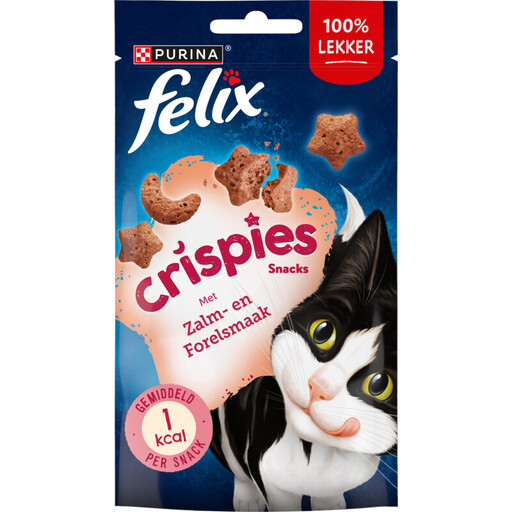
Why it suits this profile: A small pack with light, crunchy pieces is practical when you want to try different cat treats without immediately buying a large quantity.
The product information clearly states that this is complementary food for adult cats and gives a maximum daily amount.
45 grams, a light texture, salmon and trout flavour, and a stated feeding guideline of no more than 12 grams per day for a 4 kg cat.
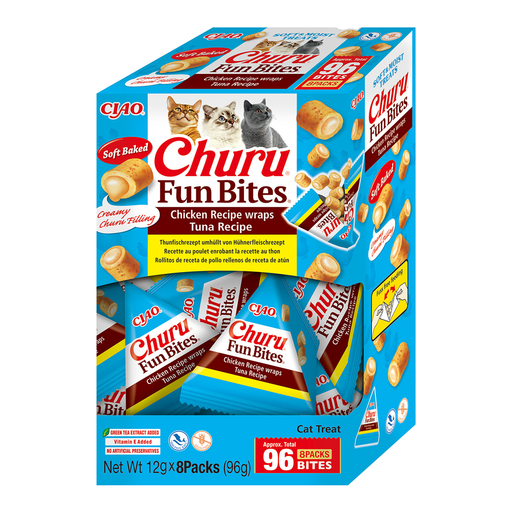
Why it suits this profile: This variety is ideal for cat owners who value moisture content and versatility as well as flavour.
The 93% moisture content is stated in the product details, so you do not have to rely solely on a general hydration claim.
146 grams, 93% moisture, chicken broth as the main ingredient, and suitable for serving on its own or as a topper.
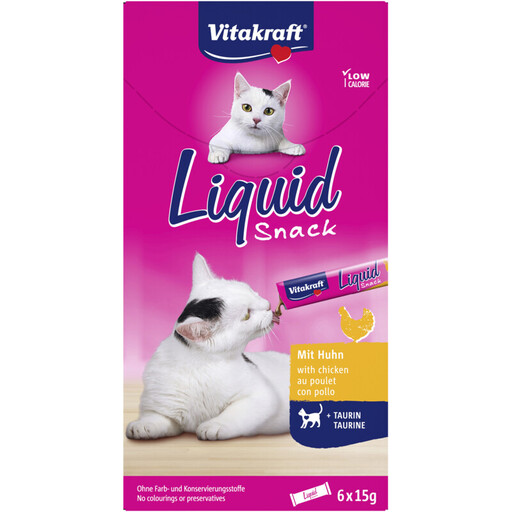
Why it suits this profile: A liquid cat treat is handy as a reward, as a topping over biscuits or when you are looking for a soft texture.
The portion is stated per sachet: a maximum of one snack per day. It also states that any opened remainder should be refrigerated and used immediately.
Six 15-gram portions, a liquid texture and several ways to serve it, including as a topping or chilled treat.
We have put together a complete, up-to-date list of products that fully meet these strict selection criteria and the applicable European safety regulations.
Give your cat a treat at a set time or associate it with desired behaviour, such as calmly going into the carrier or walking over to a scratching post. Break soft sticks into small pieces when you want to give several rewards in one day. Crunchy cat treats are useful for search games, provided you keep track of the total amount.
For kittens, small portions and a suitable age indication are important. Do not choose a product for adult cats if the label states that it is unsuitable for kittens. For all treats, supervise your cat while eating and provide fresh drinking water.
This varies depending on the product, weight, age and activity level. Follow the feeding guidelines on the packaging and reduce the main meal if necessary. As a practical rule of thumb, treats should generally provide no more than around 10% of your cat’s daily calorie intake. This is particularly important for high-energy sticks and filled cat biscuits.
A liquid cat treat often contains more moisture than a dry treat. INABA, for example, states a moisture content of 93%. This type of product can be given as an extra or topper, but it does not replace fresh water or complete food. If your cat’s drinking habits remain unusual, it is advisable to consult a vet.
Store dry treats in a cool, dry place and seal the packaging properly. Liquid or wet products should be refrigerated according to the label and used within the stated period. For a large pack, you may wish to note the opening date. This makes it easier to keep track of freshness, portions and when a new pack is needed.
