
Vandaag of morgen in huis

Kwaliteit gegarandeerd

Welkomstaanbiedingen ontgrendelen: GRATIS bezorging | Tot 80% korting | Gratis 30 dagen JoyPlus-proefperiode
Download de app
Buying a bag of cat treats seems simple, until you have to choose between cat biscuits, a liquid cat treat, a multipack or a treat for feline dental care. Packaging often focuses on flavour, ingredients or an appealing nutritional claim. However, one prominent word tells you little about whether a product is suitable for your cat.
The key questions are: is the treat complementary or complete food, how much should you give each day and is the texture suitable for the purpose you are buying it for? The checks below will help you avoid making the wrong purchase.
Most cat treats are complementary pet food. This means they are intended as a reward, between-meal snack or topping, not as a replacement for complete cat food. If you give several treats a day, deduct that amount from your cat’s usual meal. Many packs state as a practical guideline that treats should provide no more than around 10% of the daily energy intake.
One exception in the range is Gourmet Gold Tender Treats, which is offered as complete food for adult cats. Always check the legal product description on the packaging before using a product as a meal.
A chicken-flavoured product may also contain cereals, vegetable protein extracts or other animal by-products. According to the product information, Whiskas Cat Sticks Chicken Flavor contains, among other ingredients, meat and animal derivatives, of which 26% is chicken. Catisfactions Chicken lists 4% chicken.
This does not automatically make these products unsuitable. However, you should understand the difference between a flavour variety, chicken as a named ingredient and a single protein source. If you are specifically looking for a chicken cat treat, it is worth checking the full ingredients list.
A liquid cat treat can be useful for cats that drink very little from a bowl, but it does not replace fresh drinking water. According to the stated analysis, INABA Churu Cat Chicken contains 90.5% moisture. The INABA Fun Bites varieties list 93% moisture. These are verifiable product specifications; the statement that the product supports fluid intake is a brand claim, not a guarantee for every cat.
First, look for the description complementary pet food or complementary feed. This determines how you should use the treat as part of your cat’s feeding routine. A complementary product should be given in small quantities alongside your cat’s usual food.
Also check the feeding guidelines. INABA Churu, for example, recommends 1 to 2 sticks per day for adult cats, while the multipack states a maximum of 3 to 4 pieces per day. The guideline may vary between varieties.
For cats for which you are considering a hydrating treat, the moisture percentage and serving size are relevant. Liquid treats such as INABA Churu and Vitakraft Liquid Snack Chicken are suitable for feeding by hand or using as a topping. A dry treat such as MjAMjAM Snack-Box Select Chicken Stomachs contains 2.2% moisture according to the analysis and therefore serves a very different purpose.
Also look at the energy content. Whiskas Dental Treats lists 325 kcal per 100 grams, while Felix Crispies lists 48 grams per pack and 12 grams as the amount for an adult cat weighing approximately 4 kg. A low number of calories per piece does not mean unlimited feeding is advisable.
Not every treat is suitable for kittens. According to the product information, Whiskas Cat Sticks Chicken Flavor is not suitable for kittens. Catisfactions Chicken and Cheese, on the other hand, are intended for adult cats and kittens from 8 weeks of age, with separate feeding recommendations.
For young cats, senior cats or cats following a vet-prescribed diet, it is sensible to check the ingredients and energy content particularly carefully. A grain-free cat treat is not automatically suitable for every cat; the overall composition and your cat’s individual circumstances remain important.
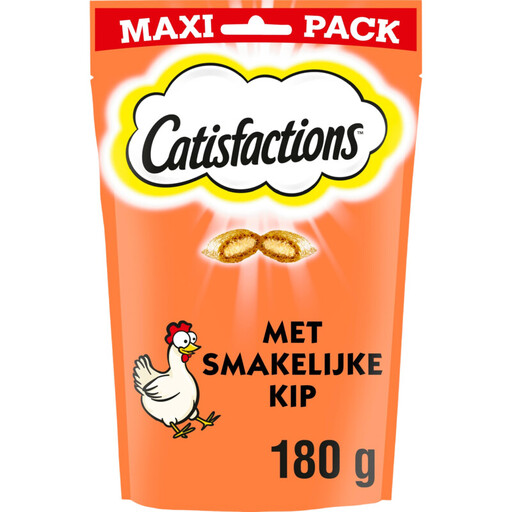
Why it suits this profile: A familiar dry cat treat in a 180-gram pack, suitable for adult cats and kittens from 8 weeks of age.
The packaging states the age limit and an energy content of 416 kcal per 100 grams. This helps you adjust the portion more accurately.
Crunchy outside, soft centre and, according to the product description, fewer than 2 kcal per piece.
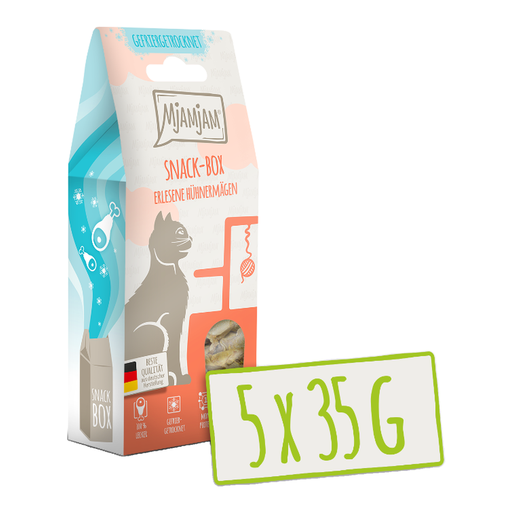
Why it suits this profile: For anyone looking for clear ingredients and a grain-free cat treat with a single animal protein source.
The ingredients list states 100% chicken stomach, while the product information describes it as free from grains, gluten and sugar.
Five 35-gram portions, 82.9% crude protein and suitable for rehydrating after soaking for 5 to 10 minutes.
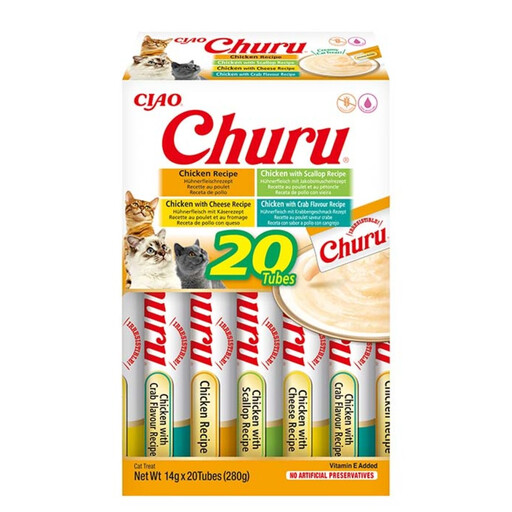
Why it suits this profile: Practical for daily rewards, interactive feeding, as a topping or for hiding medication.
The multipack contains 20 sticks of 14 grams and states a maximum of 3 to 4 pieces per day for adult cats.
91% moisture, 6 calories per treat according to the product information and multiple ways to use it.

Why it suits this profile: A crunchy treat for adult cats when dental care is one of the reasons for choosing a particular product.
The claim about reducing tartar comes from Whiskas and is not presented as a general guarantee. It remains a complementary treat.
240 grams divided into six boxes, 18% chicken and a stated feeding guideline of up to 17 pieces per day.
We have compiled a complete, up-to-date list of products that fully meet these strict selection criteria and the applicable European safety regulations.
This depends on its weight, age, activity level and the energy content per piece. Follow the guideline on the packaging and, ideally, keep treats to a maximum of around 10% of the daily energy intake. Adjust the main meal if you regularly give extra cat treats.
This varies by product. According to the product information, Vitakraft Liquid Snack Chicken is suitable from 3 months of age. Other varieties are intended for all ages or specifically for adult cats. Always check the age recommendation and do not give kittens a treat that is explicitly stated to be unsuitable.
Some brands make a specific claim about this. According to Whiskas product information, Dental Treats may help prevent tartar. This is a brand claim and not a substitute for daily care or advice from a vet. Choose the treat based on its texture, age suitability and complete ingredients list.
