
Vandaag of morgen in huis

Kwaliteit gegarandeerd

Welkomstaanbiedingen ontgrendelen: GRATIS bezorging | Tot 80% korting | Gratis 30 dagen JoyPlus-proefperiode
Download de app
Cat treats are handy as a reward, a little extra between meals, or a change in your daily routine. However, not every snack is suitable for every cat. A colourful packet, for instance, tells you little about the ingredients, and a flavour name doesn’t always mean that ingredient makes up a large part of the product.
With this practical guide, you can focus on what really matters: age, ingredients, calories, usage advice, and the difference between regular cat treats and dental treats for cats.
“Chicken”, “salmon” or “beef” on the front doesn’t automatically mean the product is mostly made from that ingredient. Always check the ingredients list and the percentage. For example, Whiskas Temptations with beef contains 4% beef according to the product information. Whiskas Cat Sticks Beef, on the other hand, states 80% beef within the meat and animal derivatives category.
So with cat treats with chicken, cat treats with salmon or cat treats with beef, the ingredients list matters more than the picture on the packet.
Catisfactions states less than 2 kcal per piece for several varieties. That can be handy if you give small rewards regularly, but the daily maximum still matters. Other snacks, for example, contain 325 to 416 kcal per 100 grams. A few extra treats each day can therefore add up in the total energy intake.
Give cat treats as a supplement to complete cat food, and adjust the main meal when the label advises you to.
Dental treats for cats have a specific texture or shape. According to Whiskas’ own research, Dentabites can help reduce tartar. According to Purina’s own research, the porous, crunchy structure of Dentalife is designed to help reduce tartar build-up. These are brand claims, not a guarantee for every cat.
Cat dental treats do not replace a check-up or care if your cat has any issues. Look out for signs such as bad breath, difficulty eating or red gums, and ask your vet for advice if you’re unsure.
Always check which age the treat is intended for. Catisfactions Salmon and Catisfactions Cheese are suitable for adult cats and kittens from 8 weeks old, according to the product information. Whiskas Cat Sticks Chicken, Beef and Salmon are not suitable for kittens, according to the usage advice provided.
So for a kitten from 8 weeks old, you wouldn’t automatically choose the same treat as for an adult cat. Also pay attention to the recommended amount per age.
The ingredients are listed in descending order. Also look at:
Felix Crispies Salmon & Trout contains 31.5% protein and 15.5% fat, according to the product information. The treat has a light, crunchy texture and is intended for adult cats. The salmon and trout component mentioned is limited; here too, the full ingredients list is what matters.
A small packet is handy for trying out a flavour first. A cat treat multipack or large bag can be more economical for daily use, but only if your cat actually eats that variety.
Pay attention to the shelf life after opening:
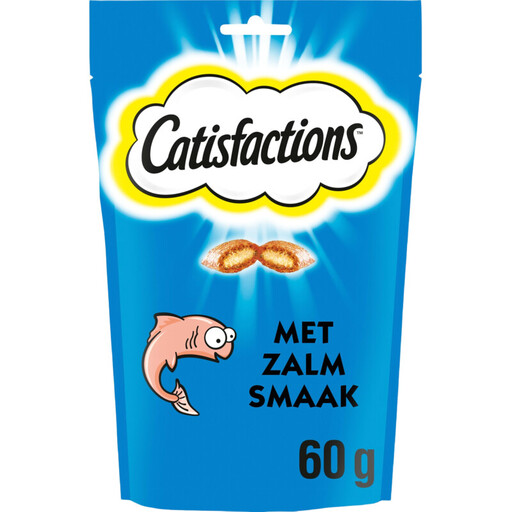
Why this fits the profile: A compact packet to try a popular flavour first. According to the product information, it is suitable for adult cats and kittens from 8 weeks old.
The product information states less than 2 kcal per piece and no artificial colourings, preservatives or flavourings. Check the current packaging for the full ingredients list.
Crunchy outside, soft filling and a 60 gram size.

Why this fits the profile: For cats that enjoy alternating between fish and dairy flavours, with a combination of crunchy and soft textures.
The ingredients list states 4% salmon and 4% cheese. This helps you put the flavour claim into proper context.
Mix of two flavours, up to 20 pieces per day according to the stated advice, and no artificial colourings, preservatives or flavourings.

Why this fits the profile: For adult cats where you want to use a daily dental treat as part of the care routine.
According to Purina’s own research, the porous, crunchy texture helps reduce tartar build-up. Do not see this as a replacement for brushing or veterinary care.
Contains calcium and taurine according to the product information; the daily recommendation for a 2.5 kg cat is 17 treats.
We’ve put together a full, up-to-date list of products that fully meet these strict selection criteria and comply with current European safety regulations.
That varies by product, weight, age and activity level. Follow the feeding advice on the packaging and keep treats to a small part of the daily energy intake. With some products, it is recommended to adjust the main meal.
Some are. Catisfactions states suitability for kittens from 8 weeks old, while Whiskas Cat Sticks are not suitable for kittens according to the product information. So always check the age indication, and don’t give a kitten a treat that is only intended for adult cats.
According to brand research, dental treats can help reduce tartar build-up. The result depends on the cat and how they are used. They do not replace brushing, a check-up or treatment by a vet for ongoing dental problems.
