
Vandaag of morgen in huis

Kwaliteit gegarandeerd

Welkomstaanbiedingen ontgrendelen: GRATIS bezorging | Tot 80% korting | Gratis 30 dagen JoyPlus-proefperiode
Download de app
Cat treats come in more forms than just crunchy cat biscuits. Think of a chicken cat treat, a tuna cat treat, soft sticks, wet cat treats and a liquid cat treat to mix into food. That wide choice is handy, but it makes comparing them trickier.
A packet with words like “natural”, “light” or “for hydration” doesn’t always tell the full story. So start by looking at the product category, the ingredients and the feeding advice. That way, you can avoid a treat unknowingly becoming a large part of your cat’s daily diet.
Most cat treats are complementary pet food. They are intended as a reward, a snack or a topping, not as a replacement for a complete meal. The label should clearly state which animal species and life stage the product is for.
A treat for adult cats is therefore not automatically suitable for kittens. For example, several Whiskas Cat Sticks explicitly state that they are not suitable for kittens. Always check the age indication, especially if you have multiple cats in the home.
Liquid cat treats can provide extra moisture, but they do not replace fresh drinking water. According to the product information for INABA Churu Cat Tuna, this treat contains 91% moisture. The INABA Churu Chicken variant states 90.5% moisture, and the INABA Fun Bites variants 93%.
That makes such treats interesting for cats that don’t drink much from a bowl, but the claim about hydration comes from the brand’s product information. It is not a medical effect. Always make sure clean, fresh water is available as well.
Crunchy treats are sometimes linked to dental care. According to the product description for Purina Dentalife Denta Care Snacks, the porous texture has been developed to help reduce plaque and tartar. The manufacturer mentions a scientifically proven reduction in tartar formation.
That doesn’t mean every cat will react the same way, or that a treat replaces a check-up or dental care. Supervise your cat while eating and follow the recommended amount on the packet.
For cats that love to lick, liquid cat treats or soft tubes are often more practical than dry biscuits. A tube can be given straight from the packet or spread as a topping over wet or dry food.
Pay attention to the difference between moisture percentage and calories. A treat with a lot of moisture may be relatively low in energy per portion, but several portions a day still add up. INABA states 6 calories per treat for various Churu products. With dry treats, the energy density is usually higher: Whiskas Temptations Beef, for example, states 411 kcal per 100 grams.
Don’t just look at the front of the bag. Check the ingredients list and analytical constituents. With a chicken cat treat, chicken may be listed as an ingredient, but other animal derivatives may also be present. With a tuna cat treat, the ingredients may consist of tuna, water, tuna broth and minerals.
Does your cat have a known food sensitivity? Then read the full packet and, if in doubt, choose a product with a clearer ingredients list. Claims like “no artificial colours” or “grain-free” don’t automatically mean a treat is suitable for every cat.
The recommended amount depends on factors including weight, age, activity level and the main food. For Whiskas Cat Sticks, the guideline is a maximum of one stick per day for adult cats. For INABA Churu, 1 to 2 sticks per day is stated for adult cats. Always follow the current packet if it differs.
Also pay attention to the shelf life after opening. INABA Churu advises using the product within 24 hours, stored chilled and sealed. According to the product information, Whiskas Cat Sticks must be consumed within one day of opening. An opened wet cat treat should not be left at room temperature for long.
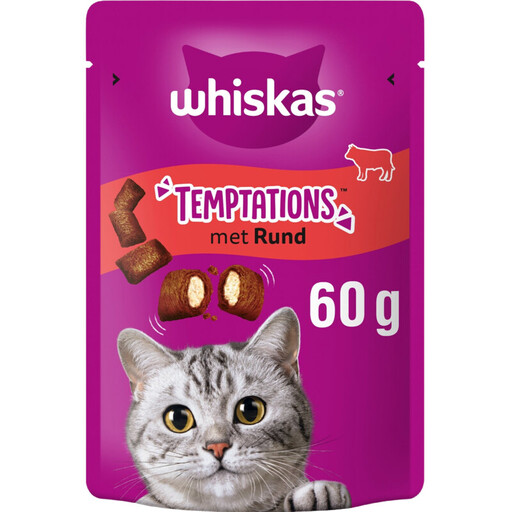
Why this fits the profile: The combination of a crunchy outside and soft filling is easy to portion out as a reward. According to the product information, this treat is intended for adult cats.
The packet states that it is complementary food. With 411 kcal per 100 grams, portion control is important; do not use it as a main meal.
60 gram content, soft filling and no artificial colours, preservatives or flavourings according to the product description.
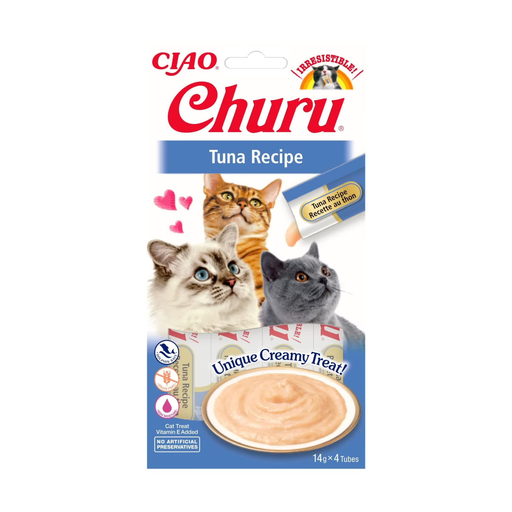
Why this fits the profile: This liquid cat treat suits cats that prefer a soft texture, or owners who want to use a treat as a topping.
The moisture content of 91% is stated in the product information. The treat is clearly listed as complementary food, so it remains an addition to the main meal.
6 calories per treat according to the product description, 91% moisture and can be given by hand or used as a topping.
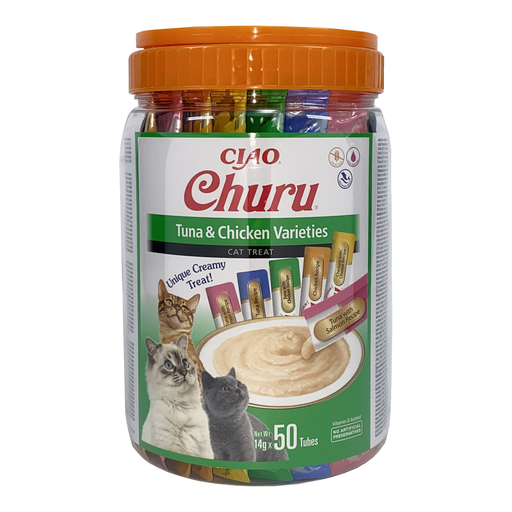
Why this fits the profile: With 50 tubes, this pack is practical for households that reward often, want to offer different flavours, or have multiple cats.
The pack contains individual portions, so unused treats don’t have to stay open for long. It remains complementary food and requires portioning alongside the main food.
50 tubes of 12 grams, 91% moisture according to the product information and combinations of chicken and tuna.
We’ve put together a full, up-to-date list of products that fully meet these strict selection criteria and comply with current European safety regulations.
That varies by product and cat. Use the guideline on the packet and take into account age, weight, activity level and the main food. Some products state that treats should make up no more than about 10% of daily calorie intake. If necessary, reduce the main meal and always ensure fresh drinking water is available.
A liquid cat treat generally contains more moisture than a dry treat. According to the product information for INABA Churu, the moisture content is around 90.5 to 91%. That can be a practical way to offer extra moisture, but it does not replace water and is not a treatment for health problems.
Follow the storage instructions from the brand. Tubes and other wet cat treats often need to be stored sealed in the fridge and used within 24 hours. Store dry treats in a cool, dry place, well sealed and out of reach of children and pets. When in doubt, always check the packet.
