
Vandaag of morgen in huis

Kwaliteit gegarandeerd

Welkomstaanbiedingen ontgrendelen: GRATIS bezorging | Tot 80% korting | Gratis 30 dagen JoyPlus-proefperiode
Download de app
Cat treats are useful as a reward, a snack or a way to strengthen your bond with your cat. However, the packaging does not always provide enough information to make a good choice. For example, a snack with “chicken”, “salmon” or “cheese” on the front may contain only a small amount of that flavour. Portions can also add up unnoticed, particularly with small, crunchy pieces.
This guide will help you compare cat treats based on verifiable information: age recommendation, ingredients, nutritional value, portion size and intended use.
“with salmon” does not automatically mean that salmon is the main ingredient. Check the ingredients list and the stated percentage. For example, Felix Crispies Salmon & Trout contains 0.4% salmon meal and 0.4% trout meal. This makes the snack suitable for owners looking for a fish variety, but the composition consists mainly of cereals, meat and animal derivatives, and vegetable protein extracts.
So, when choosing cat treats with chicken, salmon or cheese, it is wise not to rely on the front of the packaging as your only source of information.
Most cat treats are complementary pet food. They are intended as an extra and do not automatically provide all the nutrients your cat needs every day. Give treats in moderation and adjust the main meal when the packaging advises you to do so.
As a general practical guideline, you can limit treats to a small proportion of your cat’s daily calorie intake. The exact amount depends on your cat’s weight, age, activity level and health.
Dental treats for cats are sometimes presented as a solution for plaque or tartar. According to the brands’ own research, the shape and texture may help clean teeth or reduce tartar formation. This is a brand claim, not a substitute for veterinary checks and dental care.
The same applies to anti-hairball cat treats. A product such as G'woon Cat Treats Anti-hairball contains, according to the product information, 4% crude fibre and at least 4% lignocellulose, among other ingredients. This may be suitable as a treat for cats where hairballs are a concern, but persistent symptoms require professional advice.
Always check whether the treat is suitable for your cat:
Do not compare flavour alone. Also compare protein, fat, crude fibre and ash. A crunchy treat can contain a relatively high number of calories. For example, Catisfactions Chicken lists 416 kcal per 100 grams and fewer than 2 kcal per piece according to the product description. The individual portion matters more than the weight of the bag alone.
Also look out for ingredients your cat may be sensitive to, such as fish, milk derivatives, cereals or certain animal proteins. The statement “contains none of the 14 major EU allergens” does not mean that every cat will tolerate the product without problems.
The shape determines how you use the treat:
Store opened treats in a cool, dry place, seal the packaging properly and follow the shelf-life information on the label. Soft or liquid products often have shorter use-by periods after opening.
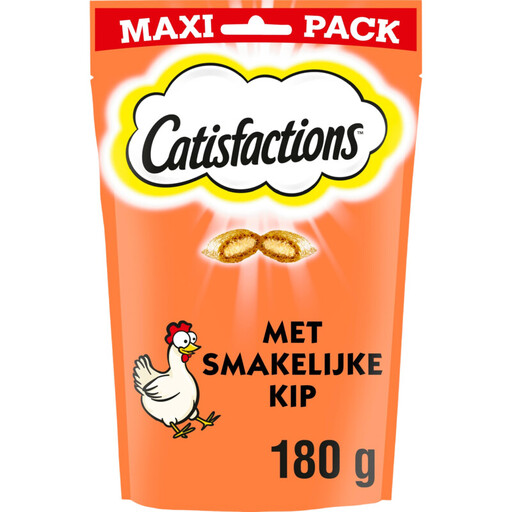
Why it suits this profile: The 180-gram pack is practical for regular use in a household with one or more cats. According to the product information, the snack is suitable for adult cats and kittens from 8 weeks old.
The product information states the portion guideline and energy value, so you can adjust the main meal instead of feeding unlimited extra treats.
Crunchy outside, soft filling, 180 grams and a stated maximum portion of 20 pieces per day for adult cats.

Why it suits this profile: This variety combines a crunchy coating with a soft filling. It is a good choice for cats that quickly tire of a single texture.
The ingredients list separately identifies fish and milk derivatives, including 4% salmon and 4% cheese, making the expected flavour easy to verify.
32% crude protein, 22% fat and a guideline of no more than 20 pieces per day.

Why it suits this profile: This treat is designed for daily dental care in adult cats and, according to the product description, has a crunchy, porous texture.
The packaging states the target group and daily amount, and advises monitoring your cat while it eats.
40 grams, salmon variety, 35% protein and 13.3% fat according to the stated analytical constituents.
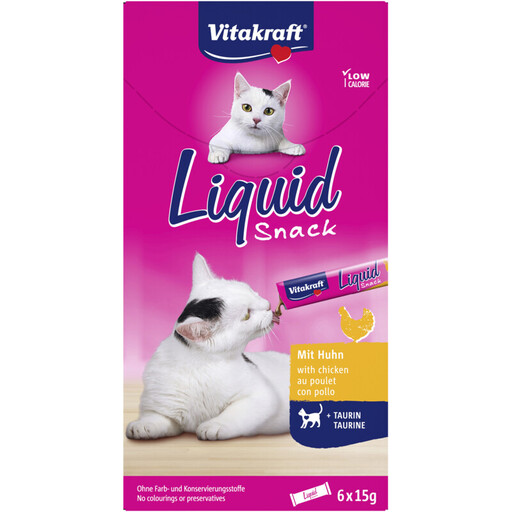
Why it suits this profile: The liquid texture can be served as a topping over your cat’s main food or as a chilled treat.
The instructions state a maximum of one portion per day and provide storage guidance for an opened sachet.
Six 15-gram portions, chicken variety and several serving options.
We have put together a complete, up-to-date list of products that fully meet these strict selection criteria and the applicable European safety regulations.
It varies depending on the product and the cat. Follow the portion guideline on the packaging and take the calorie content into account. Reduce the main meal if necessary. If your cat is overweight, has a medical condition or follows a special diet, it is advisable to consult your vet.
Not always. Check the minimum age on the packaging. Some Catisfactions varieties are suitable from 8 weeks old, while several sticks and treats are intended exclusively for adult cats.
Choose a product that clearly states it is intended for dental care and read the daily feeding guideline. According to brands’ own research, texture and shape may help reduce tartar, but dental treats do not replace dental checks or treatment by a vet.
