
Vandaag of morgen in huis

Kwaliteit gegarandeerd

Welkomstaanbiedingen ontgrendelen: GRATIS bezorging | Tot 80% korting | Gratis 30 dagen JoyPlus-proefperiode
Download de app
A bag of cat treats may seem simple to choose, but the differences can be significant. Some cats love soft cat treats, while others prefer crunchy bites or fish-based cat treats. Moisture content, calories and ingredients also determine whether a treat is suitable for your cat.
As a Joybuy Product Recommendation Officer, I filter product information based on practical points. This helps you see more quickly which cat treats match your goal: rewarding your cat, providing extra moisture, hiding medication or supporting daily dental care.
Packaging may mention vitamins, taurine or appealing ingredients. That does not automatically mean the product is a complete meal. Many cat treats are complementary pet food. They are intended as an extra and should not replace complete cat food.
Always check the legal product description and feeding advice. Treats should also be given in moderation. A practical guideline is that treats should make up no more than around 10% of your cat’s daily energy intake, unless the label states otherwise.
Soft Churu cat treats and other hydrating cat treats contain a relatively high proportion of water. This can be useful for cats that do not drink much, but it does not replace fresh drinking water. According to the product information, the INABA Churu Cat Tuna and Chicken variants contain 91% and 90.5% moisture respectively.
Always leave out a clean water bowl. If you have concerns about your cat’s fluid intake, appetite or health, consult a vet.
Crunchy treats can form part of your cat’s daily dental routine, but they do not automatically replace tooth brushing or professional checks. According to Purina, the porous texture of DentaLife has been tested for reducing tartar; follow the recommended number of treats and continue to supervise your cat while eating.
Pay attention to portion sizes too. A recommendation of 17 small treats per day may work out differently in terms of quantity and calories than a single soft treat from a pouch.
For cats that do not drink much, soft cat treats with a high moisture content can be practical. Do not just look for words such as “hydrating”; check the stated moisture percentage.
Soft treats can also be used as a topping for wet or dry food. A liquid texture may make it easier to hide medication, but first check that your cat eats the entire portion and that the medication can be given with food.
A low calorie count per portion is useful when you are monitoring your cat’s weight. According to the product information, the INABA Churu variants contain 6 calories per treat. This makes the portion easy to keep track of, but the daily feeding advice remains the key guide: for adult cats, these variants recommend 1 to 2 sticks per day.
For dry cat treats, check the nutritional value per 100 grams as well as the recommended number of pieces per day. For example, Whiskas Dental Treats states 325 kcal per 100 grams and recommends 17 pieces per day for adult cats. Adjust your cat’s main meals if you give treats every day.
Compare the first ingredients listed on the label. INABA Churu Cat Tuna lists tuna, water and tuna broth among its ingredients. Rosewood Deli Strips Salmon states 100% fish (salmon). This may suit cats that clearly enjoy fish, but not cats with a known fish intolerance.
Also check:
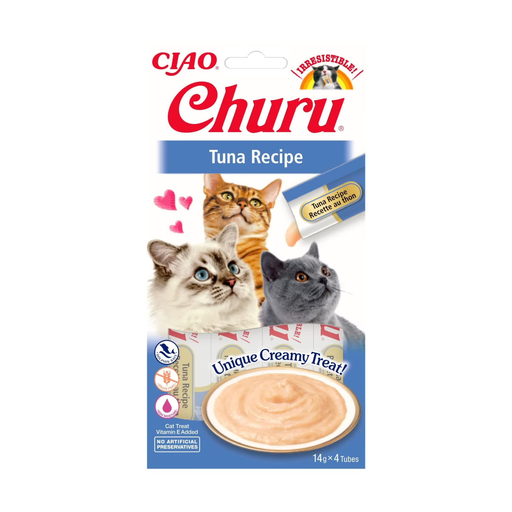
Why it suits this profile: A soft tuna treat with a clearly defined portion, suitable for feeding by hand, using as a topping or hiding medication.
The product information explicitly states that this is complementary pet food, with 91% moisture and 6 calories per treat.
Tuna as the stated animal protein source, 1–2 sticks per day for adult cats and refrigerated storage after opening.
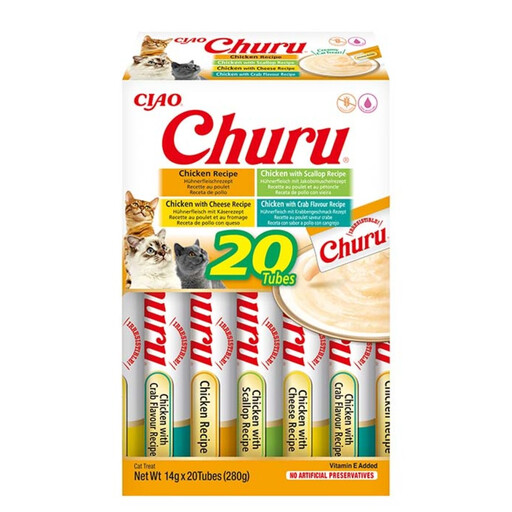
Why it suits this profile: A multipack with 20 sticks for households that want to offer variety regularly or have several cats.
The packaging and portion size are clearly stated in advance. According to the product information, this is complementary food and not a replacement for cat food.
91% moisture, 6 calories per stick, chicken as the main ingredient and suitable for hand-feeding, use as a topping or hiding medication.

Why it suits this profile: For owners who want to combine a crunchy treat with a consistent daily dental-care routine for their adult cat.
The product information specifies the target group, the daily maximum and the need to supervise your cat while eating.
Crunchy, porous texture, salmon variety, calcium and taurine; according to Purina, its ability to reduce tartar formation is supported by scientific research.
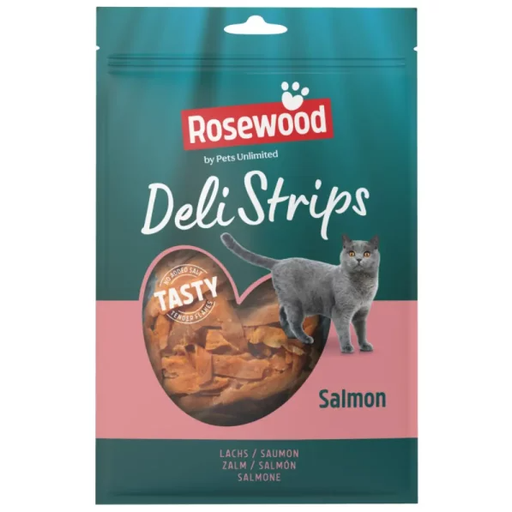
Why it suits this profile: A simple between-meal treat for adult cats that enjoy salmon or other fish-based cat treats.
The ingredients list states 100% fish (salmon), so you do not have to rely solely on the flavour name.
Strips made with salmon as stated, a 40-gram pack and clear advice to adjust the quantity according to age, weight and activity.
We have put together a complete, up-to-date list of products that fully meet these strict selection criteria and the applicable European safety regulations.
This depends on the product, your cat’s weight, age and activity level. Follow the feeding advice on the packaging and take the calories from cat food and treats together into account. If your cat is overweight or has a medical condition, seek advice from a vet first.
No. A treat containing 90% or more moisture can provide extra fluid, but fresh drinking water must always be available. Soft treats can also be mixed with wet or dry food, provided the total daily amount remains suitable.
No. Their effectiveness depends partly on the texture, the way your cat chews and the recommended quantity. Brand claims should be read as product information: according to Purina, DentaLife has been tested for tartar formation, but dental-care cat treats do not replace complete dental care or professional checks.
