
Vandaag of morgen in huis

Kwaliteit gegarandeerd

Welkomstaanbiedingen ontgrendelen: GRATIS bezorging | Tot 80% korting | Gratis 30 dagen JoyPlus-proefperiode
Download de app
A cat may loudly demand a treat, but that does not mean every packet is a suitable choice. When choosing cat treats, many owners focus mainly on the flavour name or attractive packaging. As a result, important factors such as age, portion size, moisture content and whether the product is complementary food can sometimes be overlooked.
Three common pitfalls are:
Most cat treats and cat snacks in this category are complementary pet food. They are intended as a reward or extra treat, not as a replacement for complete cat food. Therefore, do not give unlimited amounts alongside your cat’s main meal.
A practical guideline is to adjust the portion of your cat’s main food when you give treats every day. Some product information also states that treats should provide no more than around 10% of the daily calorie intake. Always follow the feeding instructions on the packaging, as the number of calories per treat can vary considerably.
The ideal texture depends on how you plan to use the treat:
Pay attention to the size of dry treats. Give a treat under supervision if your cat tends to gobble food quickly. A stick that breaks easily can be practical for smaller portions. For kittens, the age recommendation is particularly important: some products are suitable from 8 weeks, while others are intended only for adult cats.
If you mainly want to give your cat a flavour-based reward, look for its favourite source of protein, such as cat treats with chicken, cat treats with fish or cat treats with beef. Also check that the stated flavour appears in the ingredients list and see how much of it is included.
The following information is also useful for everyday use:
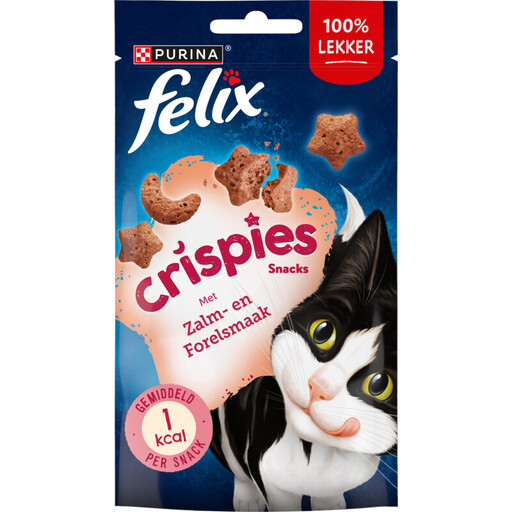
Why it suits this profile: A light, crunchy treat in a compact packet for owners who want to try a simple flavour variant first. The product information lists salmon and trout flavour, with a recommended maximum of 12 grams per day for a cat weighing around 4 kg.
The portion guidance makes it easier to control overfeeding. The ingredients also state that salmon meal and trout meal each account for 0.4%, so the flavour claim should not be interpreted as indicating a high percentage of fish.
Light, airy texture, star- and moon-shaped pieces, 31.5% protein and a clear daily maximum.
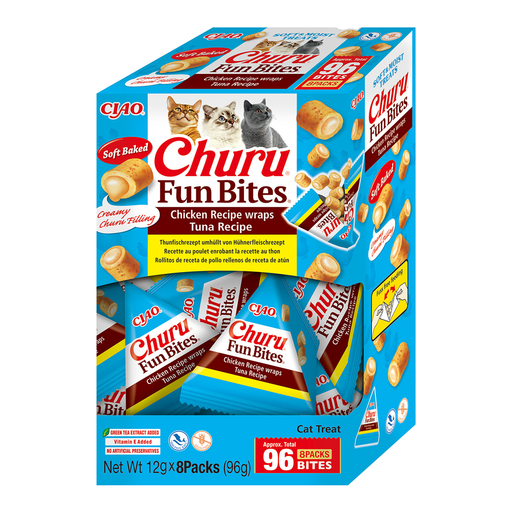
Why it suits this profile: For cats that find soft bites more appealing than dry pieces. According to the product specifications, this multipack contains four flavours and has a moisture content of 93%.
The high moisture content is clearly stated on the label. The treat can be given on its own, mixed with food or used as a topping, making it easier to adjust the portion.
93% moisture, four flavour varieties and suitable for cats of all breeds and ages according to the product information.

Why it suits this profile: Designed for owners who want to include a dental treat for cats in their daily routine alongside a tasty reward.
The manufacturer refers to a specially designed crunchy, porous texture and its own scientific evidence supporting a reduction in tartar formation. This remains a product claim; dental check-ups and care are still needed.
Crunchy texture, 35% protein, 13.3% fat and feeding guidance of no more than 17 treats per day for an adult cat weighing 2.5 kg.
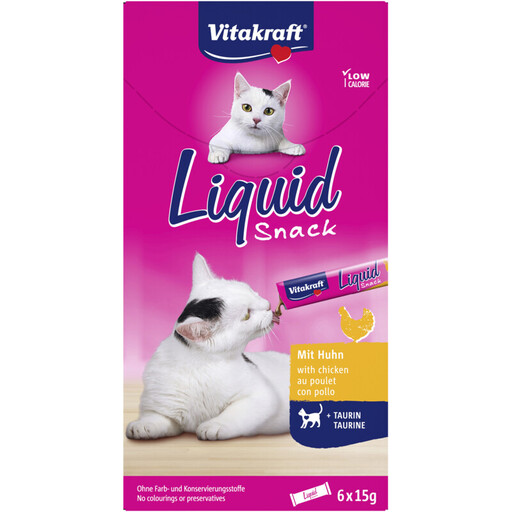
Why it suits this profile: This liquid cat treat can be used as a topping, an occasional treat on its own or a frozen reward. According to the product information, this variety is intended for cats from 3 months old.
The ways to use it and the maximum quantity are clearly stated: no more than one portion per day. After opening, any unused portion must be refrigerated and used immediately.
Soft liquid texture, chicken variety, 6 portions of 15 grams and several ways to serve it.
We have put together a complete, up-to-date list of products that fully meet these strict selection criteria and the applicable European safety regulations.
This varies depending on the product, weight, age and amount of main food. Use the recommended daily portion on the packaging and adjust the main meal if necessary. For cats that gain weight easily, pay particularly close attention to the calories per 100 grams or per treat.
Not every treat is suitable for young cats. Some cat treats are intended for adult cats, while other products are suitable for kittens from 8 weeks or cats from 3 months. Always check the age recommendation. For example, Whiskas Cat Sticks are listed as unsuitable for kittens.
According to the manufacturer’s own research, certain dental treats may help reduce tartar formation thanks to their texture. The effect is not the same for every cat, and a dental treat does not replace a professional dental check-up. Give the treat according to the instructions and continue to monitor your cat’s eating habits, breath and any visible plaque.
