
Vandaag of morgen in huis

Kwaliteit gegarandeerd

Welkomstaanbiedingen ontgrendelen: GRATIS bezorging | Tot 80% korting | Gratis 30 dagen JoyPlus-proefperiode
Download de app
A packet of cat treats might seem simple to choose, but the differences often come down to small details. Is it a complementary pet food or a complete food? Is it suitable for a kitten from 8 weeks old, or only for an adult cat? And does a flavour name such as chicken or salmon tell you how much of that ingredient the treat contains?
Use this practical checklist to avoid paying mainly for attractive packaging. You’ll also find recommendations for different situations, from a small reward treat to dental treats for cats.
Chicken, cheese or salmon is often highlighted on the packaging of cat treats. So check the ingredients. For example, the product information for Felix Crispies with beef and chicken lists at least 1% beef and 1% chicken. That’s different from a treat made mainly from meat.
The same applies to cat treats with salmon. According to the product information, Felix Crispies Salmon & Trout contains 0.4% salmon meal and 0.4% trout meal. So don’t just look at the picture or flavour name: check the ingredients list and analytical constituents.
Most cat treats are complementary pet food. They’re intended as a reward or extra alongside cat food, not as a replacement for complete dry cat food. If you give your cat lots of treats every day, adjust their main meal accordingly.
Some packs state a maximum daily amount. This is a guideline and depends on your cat’s weight, age and activity level. For Felix Crispies, the stated maximum for an adult cat weighing around 4 kg is 12 grams, or approximately 80 pieces. More pieces don’t automatically mean more nutritional value.
Dental treats for cats can be part of a daily routine, but they don’t replace checks or care if your cat has dental problems. Whiskas Dental Treats and Purina Dentalife make claims about reducing tartar. This information comes from the product descriptions and is based on claims made by the manufacturers. So don’t treat these claims as a general guarantee for every cat.
For kittens, age is the first thing to check. According to the product information, Catisfactions Cat Treats Cheese Flavor 60g is suitable for adult cats and kittens from 8 weeks old. Many dental treats, including Purina Dentalife, are intended for adult cats instead.
Also check the size and texture of the treat. Your kitten may need smaller pieces. Always stay nearby when giving your cat a new treat, and follow the instructions on the pack.
A small size doesn’t mean you can give your cat unlimited treats. Catisfactions states that each piece contains fewer than 2 calories. The larger Catisfactions Cheese Maxipack contains 416 kcal per 100 grams and recommends a maximum of 20 pieces a day for adult cats and 6 for kittens.
So compare calories per piece, grams per day and the recommended portion. Adjust your cat’s food if you give them treats every day. If your cat is overweight, has food sensitivities or has a medical condition, it’s best to ask your vet for advice.
Check that the treat doesn’t contain ingredients your cat can’t tolerate. Also check how the pack seals and how long the treats can be kept after opening. Catisfactions advises sealing the opened pack tightly and using it within four weeks. Felix Crispies also advises sealing the pack tightly after opening.
Store cat treats in a cool, dry place. A large multipack might seem like good value, but it’s less practical if your cat doesn’t like the flavour or the treats lose quality soon after opening.
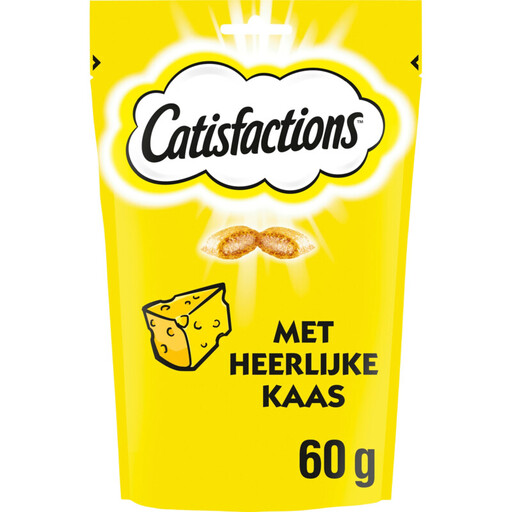
Why it suits this profile: A small pack with a clear portion per piece is handy if you’re buying cat treats for the first time or want to give your cat an occasional reward. According to the product information, this variety is suitable for adult cats and kittens from 8 weeks old.
The product description states that each piece contains fewer than 2 calories, making it easier to portion out as a reward. It’s still a complementary food, though.
A crunchy outside, soft cheese filling, and no artificial colourings, preservatives or flavourings, according to the product information.
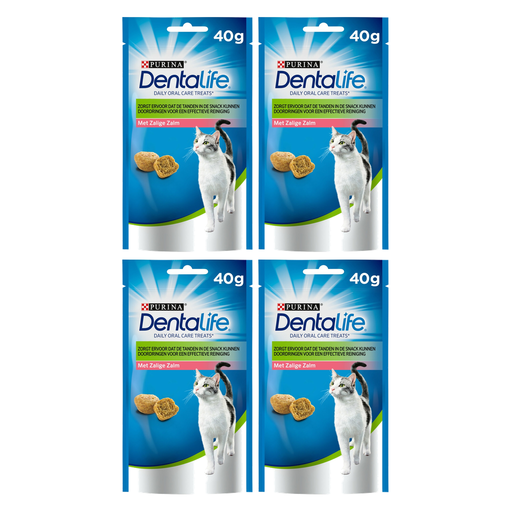
Why it suits this profile: This variety is aimed at owners of adult cats who want to combine flavour with a regular dental-care routine.
The packaging identifies adult cats as the intended audience and gives a specific daily amount. According to Purina’s product information, the effect is linked to the crunchy, porous texture; this is a manufacturer claim.
Salmon variety with calcium and taurine; the product information lists 35% protein and 13.3% fat.
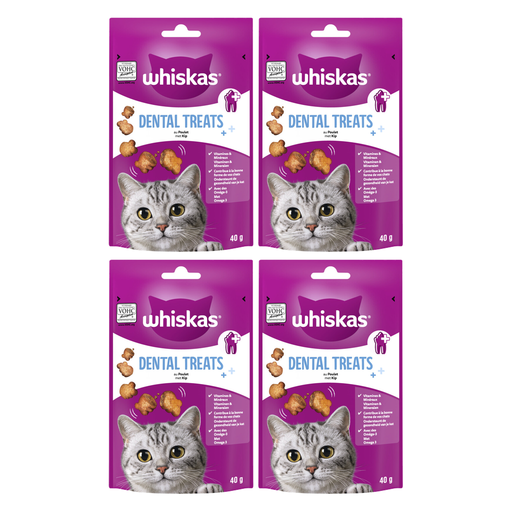
Why it suits this profile: A good choice for households looking to build a regular daily dental-treat routine for an adult cat.
The product information gives a clear guideline of no more than 17 pieces a day for adult cats. The claim about reducing tartar comes from the manufacturer’s communications.
Chicken flavour, 24% protein and a 240-gram pack containing six 40-gram boxes.
We’ve put together a complete, up-to-date list of products that meet these strict selection criteria and the applicable European safety regulations.
It depends on the product, your cat’s weight and their activity level. Follow the portion guidance on the pack and keep treats to a small part of your cat’s daily energy intake. Reduce the amount of cat food or dry cat food if needed.
Not necessarily. The product information provided describes Purina Dentalife and Whiskas Dental Treats as suitable for adult cats. For a kitten, choose only a treat that explicitly says it’s suitable from your kitten’s age.
Cat treats are usually a complementary food to give between meals. Kitten food is a complete food designed for your kitten’s growth stage. A treat, even if it contains vitamins or minerals, shouldn’t regularly replace kitten food.
