
Vandaag of morgen in huis

Kwaliteit gegarandeerd

Welkomstaanbiedingen ontgrendelen: GRATIS bezorging | Tot 80% korting | Gratis 30 dagen JoyPlus-proefperiode
Download de app
A litter tray that quickly starts to smell, clumps that fall apart, or a cloud of dust when you top it up – these are common reasons to buy new cat litter. The packaging often promises “fast clumping”, “strong odour control” or “almost dust-free”, but such terms only mean something when you also look at the material, the grain and the instructions for use.
In this buying guide, we explain what to look out for. That way, you can compare clumping cat litter, plant-based options and bentonite on practical features rather than just marketing claims.
Unscented cat litter contains no perfume, but that doesn’t automatically mean odours disappear completely. Odour control is linked to moisture absorption, clumping, ventilation and how often you scoop. Bentonite, tofu, cassava and activated charcoal all work in different ways.
So pay attention to the ingredients and the maintenance instructions. A product with baking soda, activated charcoal or a deodorising additive may help with odour management according to the product description, but the result varies depending on the litter tray, the cat and your cleaning routine.
A grain may produce little dust during use, but fine particles can still appear when pouring, scooping or when litter is scattered. Your cat’s behaviour also plays a part. So check whether the product information mentions low dust or reduced dust, and use a mat under the tray to limit spread.
For cats and household members who are sensitive to dust, a fine but firm grain can be a practical choice. Also place the tray in a well-ventilated area and pour new litter in gently.
A 2.5 kg bag may seem good value, but households with multiple cats will need to top up more often. Look at the total weight, the recommended depth and the amount you remove daily. A bulk cat litter pack can be more convenient for multiple cats, as long as you can store the bag in a dry place.
With fast-clumping cat litter, the litter binds moisture quickly into a compact mass. This makes daily scooping easier and prevents you from throwing away lots of clean litter. Pay attention to the recommended depth: many products advise around 5 to 8 cm.
Clumping cat litter only works well if the grains can absorb enough moisture. Too little litter can mean urine reaches the bottom. Too much litter, on the other hand, increases the chance of spillage.
Always check the full composition. “Natural” doesn’t mean every cat will like the texture or scent.
For a cat that reacts strongly to smells, an unscented cat litter may be more sensible than a variant with green tea or another added fragrance. Product names and descriptions can differ here, so always check the current product page and packaging.
It’s best to make the switch gradually: first mix a small amount of the new litter with the familiar type. That way, you’ll notice more quickly whether your cat accepts the grain.
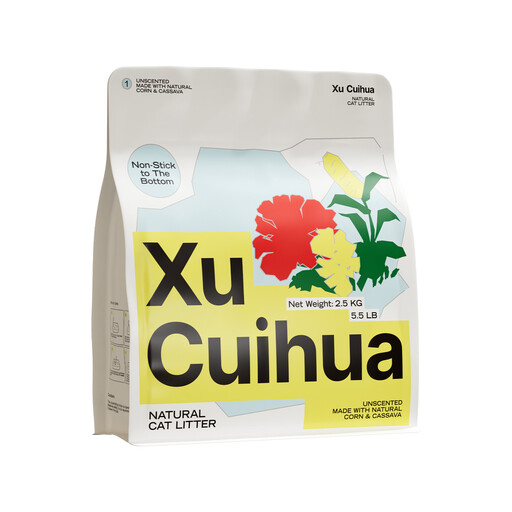
Why this fits the profile: This compact bag is practical for trying out a plant-based cassava and corn option without buying a large pack straight away.
The product description mentions cassava and corn as ingredients, a fine texture and clumps that are said to stay compact. Check the packaging for the exact net weight.
Plant-based composition according to the product information; no added fragrances according to the description; daily scooping is recommended.
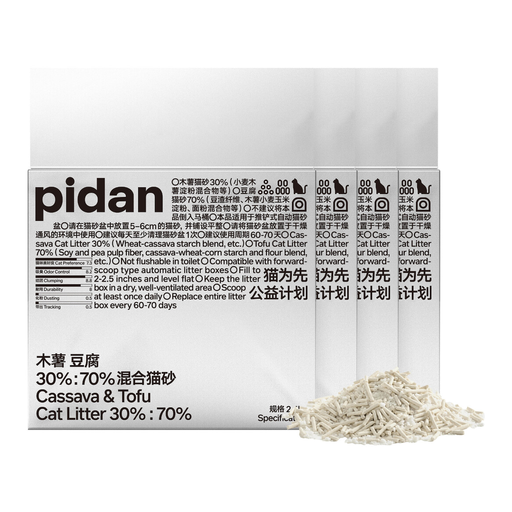
Why this fits the profile: The mix of 30% cassava and 70% tofu is designed for those who want to combine plant-based materials with clear product specifications.
The product page lists specific ratios, a recommended depth of 5–6 cm and daily scooping. The scores mentioned are brand information, not an independent measurement.
Mix of cassava and tofu; pack of four bags of approximately 2.4 kg each; suitable for manual use according to the product description.
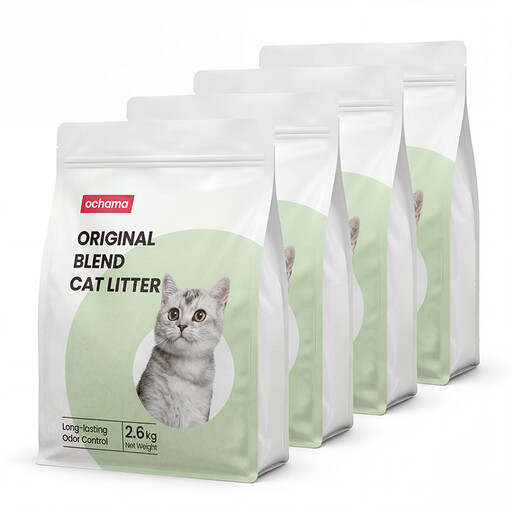
Why this fits the profile: The four bags are practical for households with multiple cats or for those who want to order cat litter less often.
The product information mentions a mix of bentonite and tofu, a moisture content of 8.4% and a depth of 5–8 cm. Claims about dust and odour come from the product description.
10.4 kg total; bentonite and tofu combination; unscented version according to the product specifications; daily scooping is advised.
Fill a clean, dry tray to the depth stated on the packaging. Scoop out faeces and urine clumps daily. Dispose of used litter with household waste, unless local regulations and the packaging explicitly state otherwise. Do not flush cat litter down the toilet; even small amounts can cause blockages.
Empty the tray completely on a regular basis and clean it with mild soapy water. Store unopened and opened bags in a cool, dry place. Moisture can affect clumping even before use.
We’ve put together a full, up-to-date list of products that fully meet these strict selection criteria and comply with current European safety regulations.
For many clumping varieties, a layer of around 5 to 8 cm is standard. Always follow the instructions for the specific product. Top up after removing clumps so the layer stays deep enough.
That depends on the number of cats, the number of trays, the depth and how often you scoop. A 2.5 kg bag may not last as long as expected for one cat. For multiple cats, a pack of 9.6 to 10.4 kg is often more practical, provided you store the supply in a dry place.
No. Plant-based material does not automatically mean it is safe for British plumbing. Follow the packaging and local waste disposal rules. For the products mentioned above, flushing is either not recommended or is strongly advised against.
