
Vandaag of morgen in huis

Kwaliteit gegarandeerd

Welkomstaanbiedingen ontgrendelen: GRATIS bezorging | Tot 80% korting | Gratis 30 dagen JoyPlus-proefperiode
Download de app
Buying cat food seems straightforward until you have to choose between wet food, dry food, grain-free recipes, multipacks and food for a specific life stage. Packaging often highlights words such as “natural”, “premium” or “with chicken”, but these terms do not always tell you how suitable the food is for your cat.
Pay particular attention to the information that can be checked on the label. The life stage, whether it is described as complete food, the ingredients, the analytical constituents and the recommended quantity are more important than eye-catching marketing claims.
“Cat food with lamb”, “cat food with fish” or “cat food with beef” does not automatically mean that this ingredient is the main component. Some products state the percentage of the named animal species, while others describe the ingredients in broader terms.
Check the ingredients list carefully. Gourmet Nature’s Creation Rich in Beef, for example, states that the product contains 14% beef. The ingredients also include meat and animal derivatives, vegetable protein extracts, fish and fish derivatives, vegetables, minerals and other constituents.
Grain-free cat food contains no grains, but that does not automatically make it suitable for every cat. A grain-free formula may still be high in energy or contain ingredients that your cat does not tolerate well. Always look at the full ingredients list and nutritional values.
Does your cat have a known food allergy, recurring gastrointestinal problems or another health condition? Discuss your choice with a vet. Product information is not a substitute for personalised nutritional advice.
Dry cat food remains practical to use for longer after opening, but its flavour and quality may deteriorate if the bag is frequently left open. A multipack of wet cat food may seem appealing, but check that your cat likes all the varieties and that you can use the portions within the stated time.
Do not just calculate the price per pack. Compare the price per 100 grams and take the daily amount shown on the label into account.
Look for the description complete petfood or complete food when the food is intended to replace your cat’s main meals. A complementary product, such as a broth or treat, is not automatically suitable for this purpose.
According to the product information, INABA Broth Chicken with Salmon Recipe contains 93% moisture and is intended as a hydrating treat. Its analytical values include 2% protein and 0.2% fat. Do not use a product like this as your cat’s only daily food unless the label explicitly says that you can.
Kitten food is formulated for kittens, while food for adult cats is intended for a different life stage. Kittens generally have different nutritional needs from adult cats. Also check whether the product is specifically intended for sterilised cats.
With cat food for sterilised cats, portion size is particularly important. Farmina N&D Prime Neutered Cat Chicken, for example, provides feeding guidelines with quantities based on body weight. Follow the instructions on the packaging and adjust the amount according to activity level, weight and body condition.
Wet food contains a lot of moisture and can be a practical way to increase your cat’s fluid intake through its meals. Dry food is more concentrated, so the portion can be smaller. Do not compare analytical values without taking the moisture content into account.
According to the product description, Farmina N&D Ocean Kitten Cod contains at least 44% crude protein, 20% fat and no more than 8% moisture. The product is described as complete food for kittens and for pregnant or nursing cats. The recommended daily amount is shown on the packaging and should be adjusted according to age, weight and activity level.
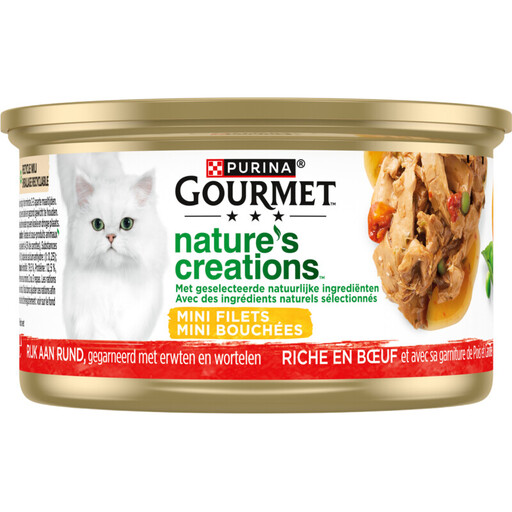
Why it suits this profile: This is wet food for adult cats, supplied in an 85-gram portion. The small pack is convenient when you want to try a flavour before buying a larger quantity.
The product information states that this is complete food, identifies adult cats as the target group and gives a moisture content of 79.5%. This allows you to assess the choice based on concrete information rather than just the flavour name.
85 grams per tin; complete food for adult cats; 12.5% protein and 79.5% moisture according to the label.
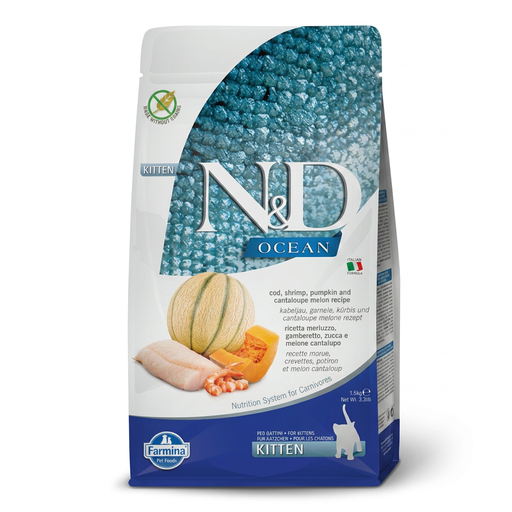
Why it suits this profile: This dry food is designed for kittens and lists cod as its named protein source. The 1.5 kg bag is suitable for households that use kitten food every day.
The packaging states the life stage, ingredients and analytical values. According to the product instructions, the changeover should take place gradually over approximately one week.
1.5 kg pack; grain-free ingredients according to the product information; at least 44% crude protein and no more than 8% moisture.
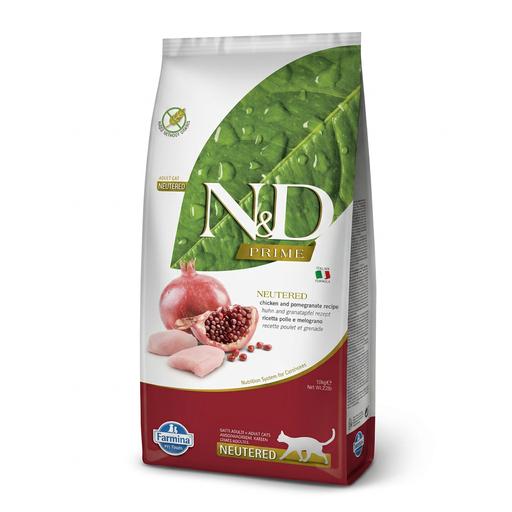
Why it suits this profile: The large pack is practical for households with a regular food choice or several cats. The product is specifically labelled for sterilised cats.
The feeding guidelines give portions based on body weight. This helps prevent overfeeding without realising it when using a large bag.
10 kg pack; chicken and herring in the ingredients; 36% crude protein, 14% fat and 9% moisture according to the product information.
Would you like to compare different types of natural cat food? Use the category page to filter by product type, life stage and pack size.
We have put together a complete, up-to-date list of products that fully meet these strict selection criteria and the applicable European safety regulations.
Not necessarily. Wet food generally contains more moisture, while dry food is easy to portion and store. Look at whether it is described as complete food, the life stage and the feeding guidelines. Many owners combine both types, provided that the total amount is suitable for the cat.
This varies from product to product. Store opened wet food according to the label, usually sealed in the fridge. Dry food should be kept cool, dry and tightly sealed. Always check the best-before date and the instructions on the packaging.
Monthly costs depend on your cat’s weight, the daily portion, the type of food and the pack size. Dry food often requires a smaller daily quantity, while wet food contains more moisture but is more often served in portions. Compare the price per 100 grams and the recommended daily portion before buying cat food.
