
Vandaag of morgen in huis

Kwaliteit gegarandeerd

Welkomstaanbiedingen ontgrendelen: GRATIS bezorging | Tot 80% korting | Gratis 30 dagen JoyPlus-proefperiode
Download de app
A well-stocked cupboard full of cat food may seem convenient, but a large pack is not automatically better value. Your cat may refuse a flavour, the food may not be suitable for its life stage, or an opened pouch may be left standing for too long. Use these practical checks to compare cat food based on its ingredients, how it is used and its pack size.
The front of the pack may say chicken, fish or salmon, while the proportion of those named ingredients may be limited. Always check the full ingredients list. For example, a Felix variety may contain 4% of the named animal species. That is not the same as food made mainly from chicken or fish.
Complete cat food is intended to provide a full diet when you follow the feeding guidelines. A treat or complementary food is not. Liquid treats such as Felix Deli Moments are intended as a reward and must not replace the main meal. Cat treats, sticks and other snacks should also be limited as part of your cat’s daily energy intake.
A cat food multipack containing 44 or 60 pouches may seem financially attractive, but consider the shelf life, storage space and your cat’s preferences. Opened wet food will generally need to be kept refrigerated and used within the time stated on the packaging. Small portions are useful for cats that eat several times a day, while larger packs are a better fit for a cat that accepts one regular flavour.
Kittens have different nutritional needs from adult or senior cats. Choose kitten food that clearly states it is intended for kittens. Products such as Whiskas Junior and Farmina N&D Kitten are formulated for young cats according to the product information. For adult animals, look for cat food intended for adult cats. Also check whether the packaging states that the food is suitable for a sterilised cat, where relevant.
Wet cat food contains a high proportion of moisture and is often supplied in 50 or 85 gram pouches. This makes portions easy to measure. Gourmet Mon Petit, for example, comes in 50 gram portions, while Felix pouches contain 85 grams.
Dry cat food, such as cat biscuits, has a longer shelf life after opening when stored in a properly sealed container. As well as the flavour, check the protein, fat, fibre and moisture content. Nutritional values cannot be compared directly between wet and dry food because wet food contains considerably more moisture.
Pay attention to these parts of the label:
Grain-free cat food is not automatically suitable for every cat. The absence of grains says nothing by itself about the overall nutritional value. Always check the full ingredients list and the life stage for which the product is intended. If you suspect a food intolerance or medical condition, consulting a vet is wiser than putting together a diet yourself.
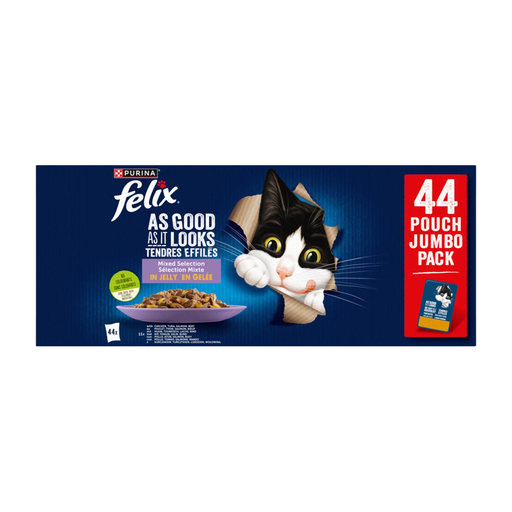
Why it suits this profile: The pack contains 44 85-gram pouches in several flavours. This is practical for households that want to buy in bulk and enjoy variety in wet cat food.
The label states that this is complete food for adult cats. This makes it easier to distinguish from complementary food and treats.
44 individual portions, four named flavours and nutritional information for adult cats. After opening, check the storage period on the packaging.
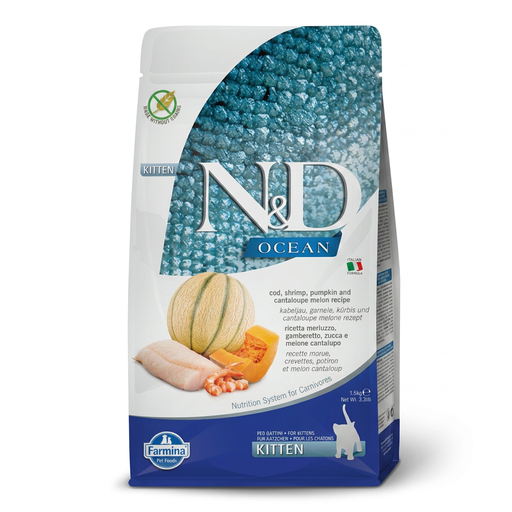
Why it suits this profile: Ideal for kitten owners who want to compare the ingredients and analytical figures in detail. According to the product information, this is grain-free dry food for kittens and pregnant or nursing cats.
The product information identifies it as a complete food and specifies the life stage, along with concrete values such as at least 44% crude protein and 20% fat. This lets you compare marketing claims with the figures.
1.5 kg of dry food, cod as the named protein source, and DHA and EPA listed in the product specifications. Introduce new food gradually over approximately seven days.
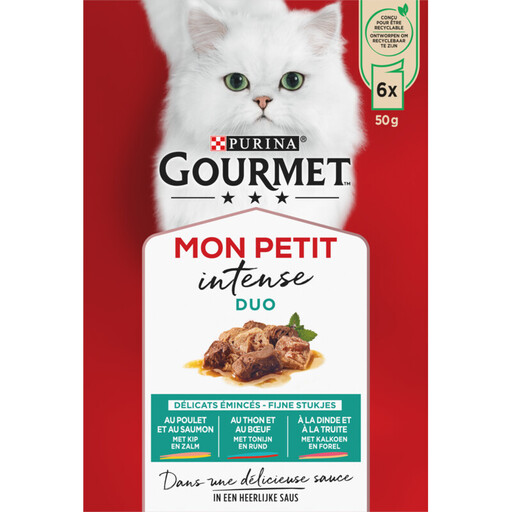
Why it suits this profile: Handy for adult cats that prefer several small meals or quickly become full after a large portion.
The 50-gram pouches help limit leftovers once opened. The product information also states that this is complete food for adult cats.
Six portions, a combination of meat and fish flavours, and a portion size suited to smaller meals.
We have compiled a complete, up-to-date list of products that fully meet these strict selection criteria and the applicable European safety regulations.
It depends on your cat’s preferences, your feeding routine and the product’s ingredients. Wet food contains more moisture and is easy to serve in individual portions. Dry food is generally more practical to store sealed for longer. You can combine both, but adjust the quantities so that your cat does not consistently consume too much energy.
Always follow the label instructions. Opened wet food should generally be covered, stored in the fridge and used within 24 hours to two days, depending on the product. Dry food remains usable for longer after opening if you seal the bag properly and store the food in a cool, dry place.
Gradually mix the new food with the familiar food. Start with a small proportion of new food and increase it over approximately seven days. Keep an eye on your cat’s appetite, stools and weight. If problems persist or you are unsure which food is right, ask a vet for advice.
