
Vandaag of morgen in huis

Kwaliteit gegarandeerd

Welkomstaanbiedingen ontgrendelen: GRATIS bezorging | Tot 80% korting | Gratis 30 dagen JoyPlus-proefperiode
Download de app
Cat food with fish is available as mousse, pâté, pieces in sauce, soup and kibble. This wide range can make choosing not always straightforward. A striking picture of salmon or tuna, for example, does not necessarily mean that fish is the main ingredient. Also, an appealing multipack may be intended as a supplement rather than a complete daily diet.
So watch out for three common pitfalls:
An adult cat has different nutritional needs to a kitten. So choose preferably:
The age indication is on the packaging. A product labelled as "adult" is not automatically suitable as kitten food. Also follow the manufacturer's feeding guidelines and adjust the portion according to weight, activity and body condition.
With cat food with salmon or cat food with tuna, the percentage of fish is more important than the large picture on the packaging. A recipe might be called "with tuna" while the composition states 4% tuna. That's not wrong, but it is relevant information when comparing.
With Farmina N&D Ocean Cod, the product information lists fresh cod at 27% and dehydrated cod at 26%. With Felix Double the Tasty Salmon, Sea Fish & Beetroot, the composition states 1.7% salmon and 1.7% sea fish in the total product. These products are therefore not directly comparable based on the product name alone.
Also look out for:
A cat can have a clear preference for pâté, mousse, pieces in jelly or soup. A cat food multipack with several flavours is practical for discovering preferences, but check that all variants are complete food.
Small portions of 50g or 85g help to limit waste when your cat eats several small meals. Larger packs, such as 400g or 800g, can be handy for households with multiple cats. Store opened wet food in the fridge and use it within the time stated on the packaging.
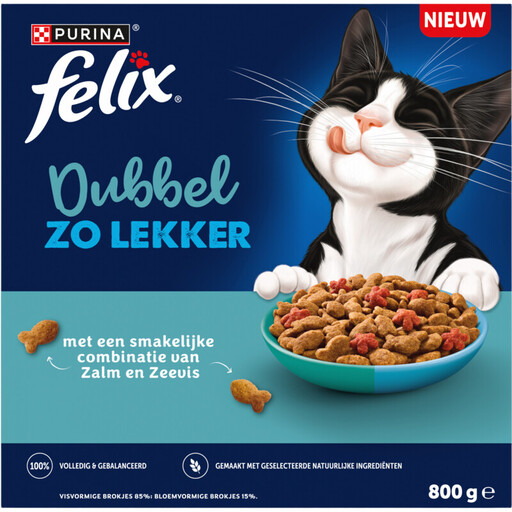
Why this fits the profile: The 800g pack is practical for anyone looking to stock up on cat food with fish for an adult cat. According to the specification, the product is complete food for adult cats.
The product information clearly states that it is complete food. However, do check the relatively limited stated proportion of salmon and sea fish if you are specifically looking for a high fish percentage.
800g, 30% protein, 11% fat and added taurine according to the product specification.
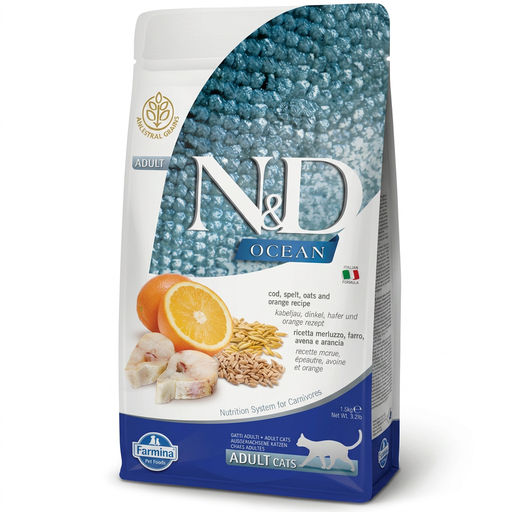
Why this fits the profile: This dry food is aimed at adult cats and contains fresh and dehydrated cod as key ingredients according to the product composition.
The ingredients list makes the cod content clear. The recipe is not grain-free: it contains spelt and oats, so you should not choose this if grain-free cat food is a firm requirement.
1.5kg dry food, with 27% fresh and 26% dehydrated cod according to the stated composition.

Why this fits the profile: Handy for cats that enjoy wet textures and small portions. The pack contains soup varieties with cod, tuna and plaice.
The product information states this is complementary food for adult cats. So do not use it as a replacement for complete cat food.
Six pouches of 48g and three fish varieties; one pouch per 4kg of body weight per day as a supplement according to the product information.
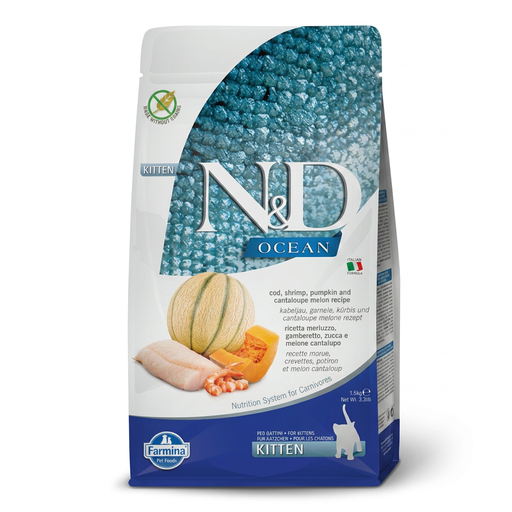
Why this fits the profile: The product information states complete food for kittens and cod as the main animal protein source. The portion should be adjusted according to age, weight and activity.
The life stage is clearly stated as kitten. According to the product specification, the recipe is grain-free; always check the current packaging at the time of purchase.
1.5kg dry food, 44% crude protein and 20% fat according to the stated analytical values.
We have put together a full, up-to-date list of products that fully meet these strict selection criteria and comply with current European safety regulations.
Not automatically. Check the life stage, nutritional status and ingredients. An adult cat needs cat food for adults; a kitten needs kitten food. If you know your cat has food sensitivities, it is wise to discuss the composition carefully with a vet.
Both forms have a different composition and texture. Wet food generally contains more moisture, while dry food is more concentrated and easier to store. The choice depends on your cat's preference, the feeding schedule and the instructions on the packaging. Always provide fresh drinking water.
Gradually mix the new food with the familiar food, for example over about seven days. Start with a small amount of new food and increase it step by step. Stop or slow down the transition if digestive problems persist and, if necessary, ask a vet for advice.
