
Vandaag of morgen in huis

Kwaliteit gegarandeerd

Welkomstaanbiedingen ontgrendelen: GRATIS bezorging | Tot 80% korting | Gratis 30 dagen JoyPlus-proefperiode
Download de app
Cat food and treat packaging is often covered in terms such as “natural”, “grain-free” and “high in meat”. On their own, these words say very little about whether a product is suitable for your cat. The right choice depends mainly on age, life stage, nutritional status and intended use.
Incorrect portions or an unsuitable composition can lead to unnecessary expense, particularly with kittens and neutered cats. Treats can also quickly become part of a cat’s daily diet, even though they are generally not intended to be a complete meal.
A snack with chicken, fish or a high moisture content may sound appealing, but that does not automatically make it a complete food. Check the label for “complete pet food” or “complementary pet food”.
Cat food with chicken and cat food with fish differ in more than just flavour. The ingredients list, analytical constituents and life stage are more important than the front of the packaging. A kitten has different nutritional needs from an adult cat. When choosing kitten food, look for a clear indication that it is intended for kittens, for example from weaning to 12 months.
Cat treats often contain fewer calories per piece than a meal, but several treats a day soon add up. For example, Whiskas Dental Treats Chicken Flavor gives a guideline of no more than 17 pieces per day for adult cats. The main meal should be adjusted accordingly.
Extra care is needed with cats that gain weight easily, get little exercise or have been neutered. The feeding guidelines on the packaging remain the starting point.
Choose kitten food or dry food for kittens while your cat is still growing. Check that the product is labelled as complete food for kittens. Examples in the range include Purina One Junior for kittens from weaning to 12 months and various Farmina N&D Kitten formulas.
For an adult or neutered cat, you can look for cat food for neutered cats. The Farmina N&D Prime formula for neutered cats lists, among other things, 38% crude protein and 16% fat. These are verifiable product details, but the correct portion also depends on weight, activity levels and body condition.
Always read the legal product description. Wet food in tubs or pouches may be complete food, while a creamy treat is usually complementary.
Examples:
This classification helps prevent you from feeding your cat only treats on a regular basis.
Do not look only at the percentage of meat shown on the front. Also check:
For Farmina N&D Ocean Kitten Cod 1.5 kg, the product information lists at least 44% crude protein, 20% fat and a maximum of 8% moisture, among other details. The product is described as grain-free complete food for kittens. However, “grain-free cat food” is not automatically necessary for every cat. Use it as a selection criterion when it suits your preference or your cat’s nutritional situation, rather than simply because of the marketing term.

Why it suits this profile: Clear, straightforward packaging for anyone looking for kitten food with an obvious age indication and chicken listed as a protein source.
The product information describes it as complete food for kittens from weaning to 12 months. This makes its purpose clearer than that of a standalone treat.
800 g pack; 17% chicken in the ingredients list; can be served dry or with a little water.
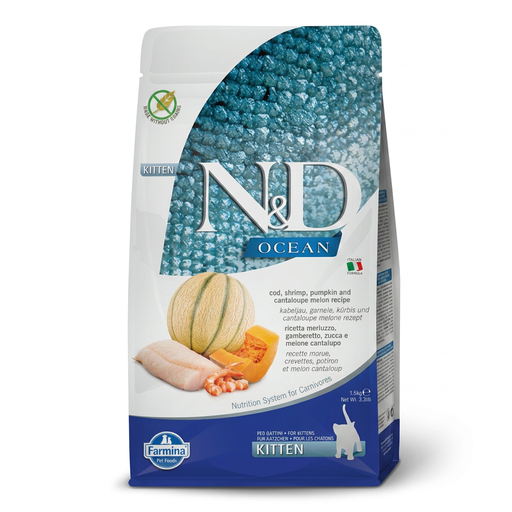
Why it suits this profile: For kitten owners looking for a grain-free formula with cod, fish oil and specified nutritional values.
The packaging and product information specify the life stage, grain-free recipe and seven-day transition period.
At least 44% crude protein; cod listed as the main ingredient; 1.5 kg pack.

Why it suits this profile: For owners of adult cats looking for a measured complementary treat for everyday use.
The snack provides a daily guideline and is clearly labelled as complementary food for adult cats.
18% chicken; 9% crude fibre; 240 g divided across six boxes.
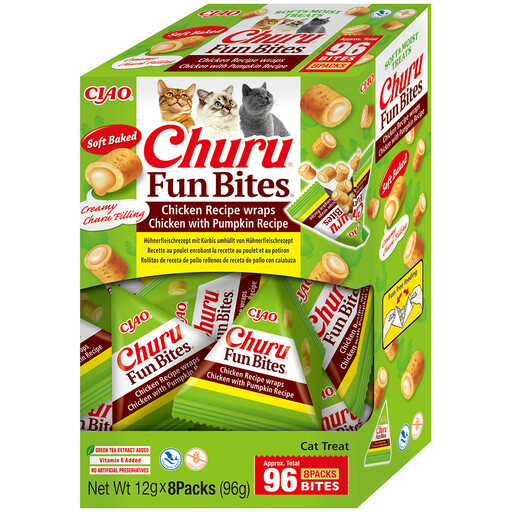
Why it suits this profile: A soft complementary treat for cats that can benefit from taking in extra moisture through a snack or topper.
The product information states that it contains 93% moisture and identifies it as a complementary treat, not a complete food.
93% moisture; chicken and pumpkin; refrigerate after opening and use within 24 hours.
When introducing new cat food, switch over gradually, for example over about a week. Start by mixing a small amount with your cat’s familiar food, then slowly increase it. This makes it easier to see how your cat responds to the change.
For dental care cat treats, remember that a treat is not a replacement for daily oral care or check-ups. The claim that Whiskas reduces tartar is a product claim made by the brand; do not regard it as a guarantee for every cat.
Cat treats for hairballs are also complementary food. The product information for G’woon Hairball Control Treats states that they contain 4% crude fibre and recommends approximately 5 to 10 treats per day, depending on the cat’s weight. Keep an eye on your cat’s total calorie intake.
If you are looking for an alternative to ordinary milk, lactose-free cat milk such as Whiskas Cat Milk may be an option. According to the product information, this drink contains less than 0.1% lactose. It remains a treat, not a replacement for water or complete food.
We have put together a complete, up-to-date list of products that fully meet these strict selection criteria and the applicable European safety regulations.
Not necessarily. Wet food generally contains more moisture, while dry food is practical to portion and store. Above all, check whether the product is complete food and adjust the portion to your cat’s needs. A combination may be suitable provided the total daily amount is correct.
This varies depending on the product, weight and activity levels. Follow the guideline on the packaging and reduce the main meal if necessary. Treats should make up only a limited part of your cat’s daily diet. Always make sure fresh drinking water is available too.
Kitten food is formulated for growth and often has a higher energy density. It should therefore not be given routinely to an adult cat unless there is a specific reason to do so. Ideally, choose food that matches the cat’s age and nutritional status as stated on the label. If you are unsure about your cat’s weight, food sensitivities or persistent symptoms, it is advisable to consult a vet.
