
Vandaag of morgen in huis

Kwaliteit gegarandeerd

Welkomstaanbiedingen ontgrendelen: GRATIS bezorging | Tot 80% korting | Gratis 30 dagen JoyPlus-proefperiode
Download de app
A cat may react enthusiastically to almost any packet featuring fish, chicken or a creamy filling. That can make choosing difficult. An eye-catching flavour name says little about nutritional value, suitability or everyday cost. When choosing cat food and cat treats, Dutch cat owners are therefore better off paying attention to the label rather than marketing claims.
Not every product is intended as a complete meal. Complete cat food contains, according to the product designation, the nutrients required for the relevant animal species and life stage. A product labelled complementary cat food is intended as an extra, topper or reward.
Liquid products such as Churu cat treats, soups and other hydrating cat treats may contain a lot of moisture, but they do not replace a complete meal. Give them in limited quantities alongside their usual food.
“Chicken”, “tuna” or “salmon” on the front does not automatically mean that this ingredient makes up the largest proportion. Check the composition. For example, Felix Double the Tasty Salmon, Sea Fish & Beetroot contains 1.7% salmon and 1.7% sea fish in the total product, among other ingredients. The name therefore mainly indicates the variety, rather than necessarily identifying the main ingredient.
The same applies to cat treats with fish and cat treats with tuna. A tuna recipe may be suitable for adding variety, while a product with a more clearly defined protein source may be a better fit for owners who want to monitor ingredients closely.
Grain-free cat food may suit a specific dietary preference, but the term alone does not indicate whether a product is complete, low in calories or suitable for your cat. Also consider the life stage, energy content, protein levels and feeding guidelines.
For a sensitive animal, it is wise to check the full ingredients list. A single protein source, as in INABA Bisque Cat Tuna Recipe, makes the contents easier to assess, but it does not guarantee that every cat will tolerate the product.
For your cat’s daily staple, choose a product labelled complete food for cats, suitable for the correct life stage. For adult cats, Gourmet Mon Petit Intense Tuna, Salmon & Trout, Gourmet Mon Petit Intense Poultry and Felix Double the Tasty Salmon, Sea Fish & Beetroot are described as complete wet food for adult cats, for example.
Treats, toppings and liquid snacks are complementary. Keep the quantity limited. For INABA Churu Multipack Chicken, for example, the recommendation is a maximum of 3 to 4 sticks per day for adult cats, with treats making up no more than around 10% of their daily food intake in total.
Wet cat food generally contains more moisture than dry cat food. This can be useful for cats that do not drink much from their bowl, but a high moisture content does not make a snack a complete food.
INABA Bisque Cat Tuna Recipe contains 86% moisture, while the INABA Churu varieties contain 91% moisture. INABA Fun Bites Chicken Wraps list 93% moisture. These products can be used as hydration-focused treats or toppers. However, check the storage instructions after opening: some packs need to be refrigerated and used within 24 hours or the following day.
Size also matters. Small 50-gram Gourmet Mon Petit portions are convenient when your cat has several small meals and you want to minimise leftovers.
Do not just compare percentages; consider what you are using the product for:
For weight management, calories per portion are more important than terms such as “light” or “natural”. According to the product information, one INABA Churu stick contains 6 calories. This makes portioning easier, but the product is still complementary food.
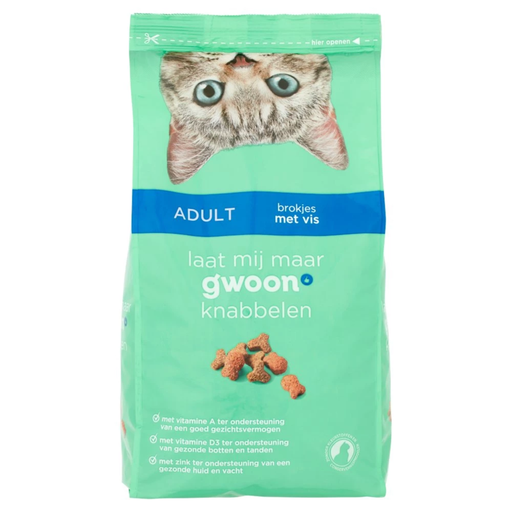
Why it suits this profile: A 2 kg bag is practical for a household that uses dry cat food every day and wants to weigh out portions themselves.
The product information lists the composition and target group: adult cats. This allows you to compare staple foods without focusing solely on the fish flavour.
2 kg pack, fish variety and intended as complete dry food for adult cats according to the product description.
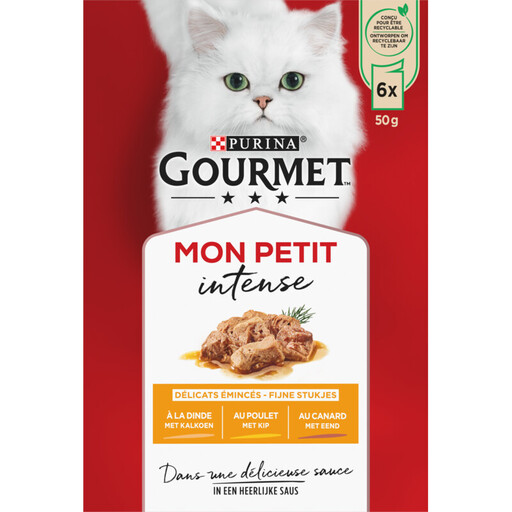
Why it suits this profile: Suitable for owners who want to combine small portions, variety and wet cat food in gravy.
Each pouch contains a 50-gram portion. This means you do not have to open a large pack every time your cat has smaller meals.
Complete food for adult cats, varieties with chicken, duck and turkey, plus a 50-gram portion size.
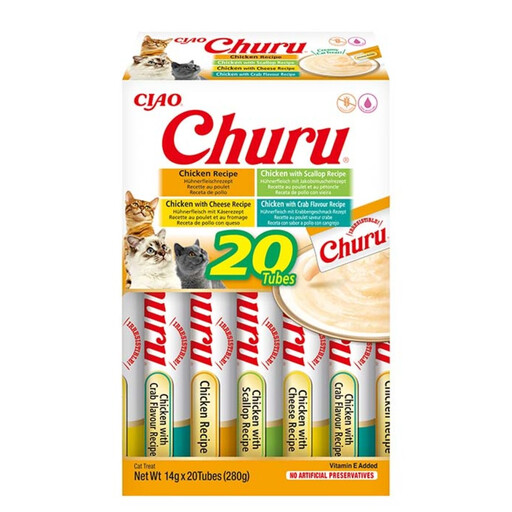
Why it suits this profile: Ideal for cats that enjoy extra moisture, or for owners who want to use a treat as a topper or reward.
The packaging clearly states that this is complementary food. With 91% moisture and 6 calories per stick, you can easily include the portion in your cat’s daily routine.
20 sticks, 91% moisture, chicken as the main ingredient and several ways to use them: by hand, as a topper or with medication.

Why it suits this profile: A complementary treat for adult cats where the owner considers texture and purpose as well as flavour.
According to Whiskas’ own research, there is scientific evidence that it reduces tartar. Treat this as a brand claim, not as a replacement for regular care or veterinary advice.
Crunchy treat, 18% chicken according to the composition and a distinct product position focused on cat dental care.
We have compiled a complete, up-to-date list of products that fully meet these strict selection criteria and the applicable European safety regulations.
Complete cat food is intended as daily nutrition for the specified animal species and life stage. Complementary cat food, such as many cat treats and liquid snacks, is an extra. It does not automatically provide all the nutrients required for a complete meal.
That depends on your cat’s preferences, condition and nutritional needs. Wet food usually contains more moisture, while dry food is easy to portion and store. Many owners combine both, provided the total amount is appropriate for the daily feeding guidelines.
Follow the guidance on the packaging and take the main food into account. As a practical rule, treats should generally make up no more than around 10% of the total daily food intake. If you are unsure about your cat’s weight, allergies or tailored diet, discuss their food choices with a vet.
