
Vandaag of morgen in huis

Kwaliteit gegarandeerd

Welkomstaanbiedingen ontgrendelen: GRATIS bezorging | Tot 80% korting | Gratis 30 dagen JoyPlus-proefperiode
Download de app
The range of cat food and cat treats is vast. A colourful packet, terms like “premium” and an appealing flavour alone don’t tell you enough about whether it’s right for your cat. Instead, look at the type of food, the ingredients, the moisture content and the recommended portion size.
Three common pitfalls to watch out for:
For the daily main meal, look for the label complete cat food. This means the product is intended, according to its labelling, to be given as a full diet for the stated species and life stage.
Complementary cat food is intended as an extra. This applies to many cat treats, liquid snacks, cat sauces and cat soups. Give these products according to the feeding instructions on the packet and take the main meal into account.
Also pay attention to the age. A product for adult cats isn’t automatically suitable for kittens or seniors. Some packets explicitly state “adult”, “senior” or “all life stages”.
Wet cat food typically contains significantly more moisture than dry cat food. Among the products in this selection, the stated moisture content ranges, for example, from 81.5% for Gourmet Mon Petit to 91–93% for various INABA treats.
A higher moisture content doesn’t automatically make a product suitable as a complete diet. So first check whether it’s complete or complementary food. A liquid cat treat can be a handy way to add variety, but it remains a reward if the label says so.
Small portions can help reduce waste. Gourmet Mon Petit comes in pouches of 50 grams, while a 415-gram tin is better suited to households that use larger portions at once. Once opened, wet products should be sealed and stored in the fridge according to the product information. Always follow the instructions on the packet.
With cat food containing chicken or cat food containing fish, the proportion of the named ingredient is often listed separately. For example, the Gourmet poultry variety contains 7% chicken, duck or turkey per recipe, according to the product description. The fish variety states 4% tuna, salmon or trout, depending on the pouch.
With dry food too, the full ingredients list is important. G'woon Adult Crunchy Meat and Fish lists, among other things, cereals, meat and animal derivatives, fish and fish derivatives, vegetable protein extracts, oils and fats, and minerals. If your cat has a known sensitivity, check the full composition carefully and, if in doubt, ask your vet for advice.
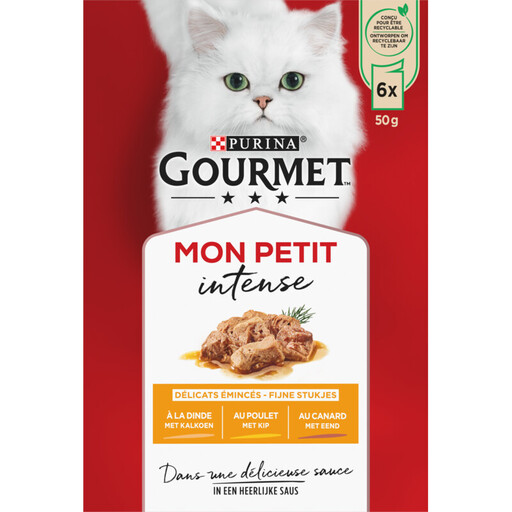
Why this fits the profile: The 50-gram portions are easy to manage and ideal for cats that prefer several small meals a day.
The product description clearly states that it is complete wet food for adult cats. The recommended amount is linked to body weight.
6 pouches of 50 grams; 81.5% moisture; varieties with chicken, duck and turkey.
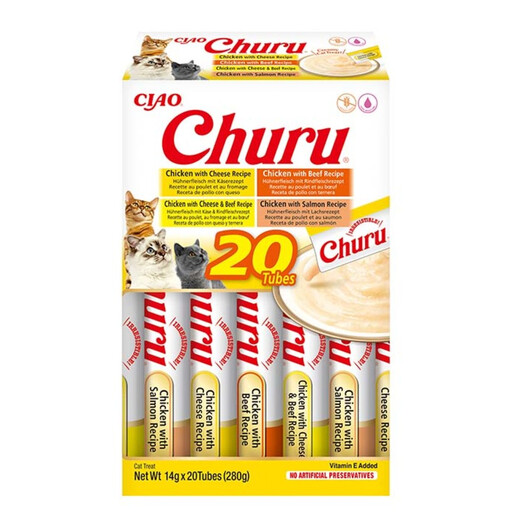
Why this fits the profile: For those looking for a soft, liquid treat that can be given by hand, as a topping or when administering food.
The product information explicitly states that it is complementary food. This makes it clear that you shouldn’t use the treat as a daily main meal.
20 tubes; 91% moisture; according to the product information, 6 calories per tube.

Why this fits the profile: An option for adult cats where you want to use a crunchy treat as a consistent reward.
The label states that this is complementary food for adult cats. According to Whiskas’ own information, the product is designed to help reduce tartar build-up; this does not replace a dental check-up.
240 grams; 18% chicken according to the product information; recommended amount of up to 17 pieces per day.
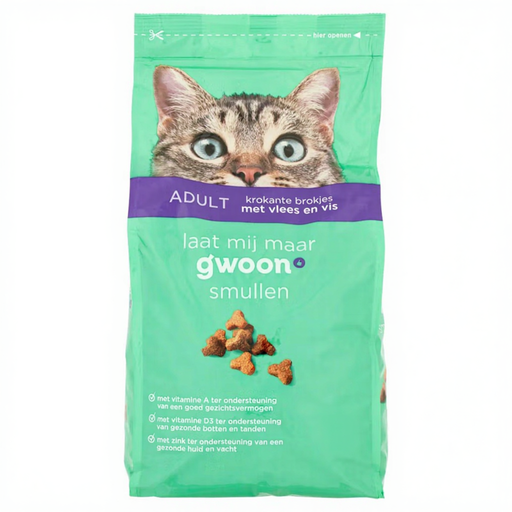
Why this fits the profile: The 2-kilogram bag is practical for multiple cats or a household that uses dry food daily.
The product description states that this is dry food for adult cats. Do check the full analysis table and individual nutritional needs before purchasing.
2 kilogram contents; crunchy kibble; combination of meat and fish.
We’ve put together a full, up-to-date list of products that fully meet these strict selection criteria and comply with current European safety regulations.
That depends on your cat’s preference, the ingredients and the intended use. Wet food usually contains more moisture, while dry food is easy to portion and store. With both types, check whether the product is complete and suitable for your cat’s age. Also make sure fresh drinking water is always available.
Follow the feeding guidelines on the packet and adjust the main meal if necessary. As a general rule of thumb, treats are often limited to a small part of the daily diet. The right amount depends on the product, your cat’s weight, age and activity level.
Store unopened food according to the instructions on the label, usually in a cool, dry place. Opened wet food, cat soup and liquid cat treats should generally be sealed and kept in the fridge. Check the specific shelf life after opening and discard any leftovers if the packet advises it.
