
Vandaag of morgen in huis

Kwaliteit gegarandeerd

Welkomstaanbiedingen ontgrendelen: GRATIS bezorging | Tot 80% korting | Gratis 30 dagen JoyPlus-proefperiode
Download de app
Cats can be fussy, but packaging can also be misleading. A striking flavour name, for example, says little about nutritional value. And a large bag may seem like good value until your cat refuses to eat it or the food quickly loses its freshness after opening.
When choosing cat food and treats, watch out for these three common pitfalls:
First choose between kitten food, adult cat food and food for senior cats. Kittens have different nutritional needs from adult cats. The packaging should clearly state which life stage the product is intended for.
Also check whether it is complete food or complementary food. Wet food such as Whiskas Adult Wet Cat 1+ and Felix Delicious Fish Strips in Sauce is described in the product information as complete food for adult cats. Felix Crispies, Catisfactions and DentaLife, on the other hand, are treats or complementary food. Give these products alongside the main meal and adjust the amount of main food accordingly.
Wet cat food generally contains a high proportion of moisture. This can suit cats that do not drink much by themselves, but moisture content alone does not indicate quality. Compare the protein, fat and energy content as well.
For example, according to the product information, Whiskas Adult in sauce contains 84,5% moisture and 61 kcal per 85-gram portion. The recommended amount for your cat will then depend on its weight, age and activity level. A neutered cat may need a different portion from an active outdoor cat.
Dry cat food is easy to measure out and store. A 2 kg bag, such as g'woon Adult Cat Bites with Fish, can be convenient for everyday use. Store dry food in an airtight container and check that the nutritional analysis on the packaging suits your cat.
A product name containing “chicken”, “salmon” or “beef” may sometimes refer to only a small percentage of that ingredient. For example, Felix Crispies Salmon & Trout lists 0,4% salmon meal and 0,4% trout meal. This makes it suitable as a snack with that flavour, but not as a replacement for a complete fish-based meal.
Also pay attention to:
After opening, store wet food in sauce in the fridge and keep it sealed, following the label instructions. Several products recommend using leftovers within around two days. With treats, resealing the packaging is important for maintaining texture and flavour.
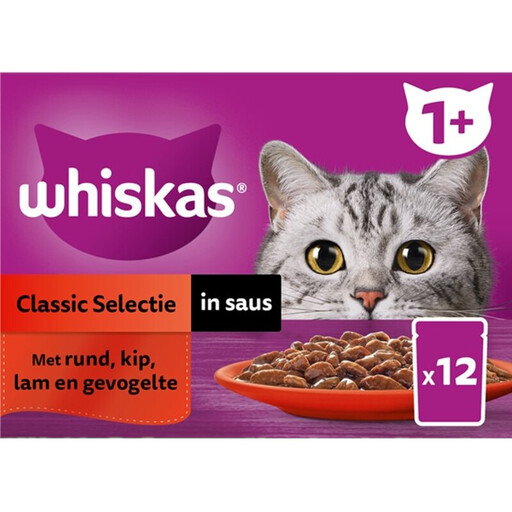
Why it suits this profile: A multipack with different flavours and 85-gram portions is a straightforward choice for anyone looking to buy their first supply of adult cat food.
The product information states that this is complete food for cats over one year old. The portions make leftovers and overfeeding easier to manage.
12 pouches of 85 grams, several meat flavours and 84,5% moisture according to the product details.
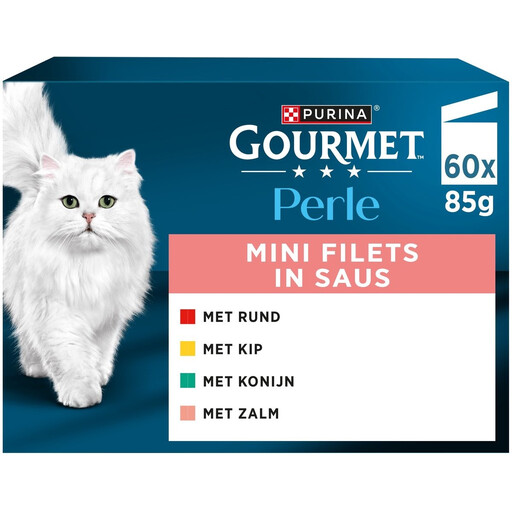
Why it suits this profile: For cat owners who value variety in texture and flavour and want to order a larger supply.
The multipack contains individual 85-gram pouches, so you do not have to keep a large opened pack in storage each time.
60 pouches, four varieties and, according to the product information, 80% moisture, 12,5% protein and 2,5% fat.

Why it suits this profile: For adult cat owners who want to combine a regular treat routine with attention to chewing.
According to Purina’s own research, a reduction in tartar is listed as a product claim. Do not regard this as a replacement for veterinary checks or care.
Salmon variety, 35% protein, 13,3% fat and a recommended maximum amount based on body weight.
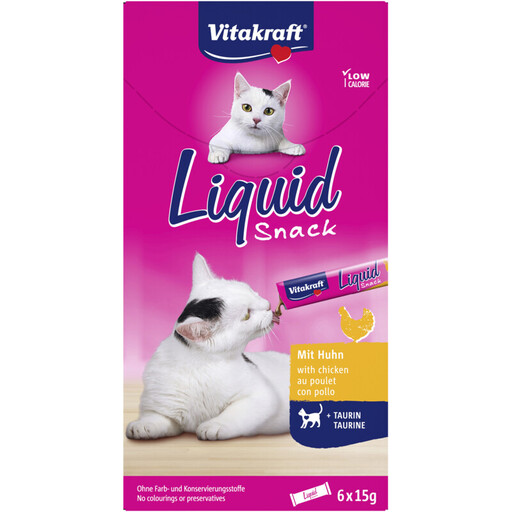
Why it suits this profile: A liquid cat treat is suitable as a topping, a separate reward or a chilled treat.
Each portion is individually packaged, and the product information recommends a maximum of one piece per day. It remains complementary food, not a main meal.
Six 15-gram portions, suitable from three months of age and ideal as a topping or frozen treat.
We have put together a complete, up-to-date list of products that fully meet these strict selection criteria and the applicable European safety regulations.
Not automatically. Wet food generally contains more moisture and is often available in small portions. Dry food is practical to store and measure out. The right choice depends on your cat’s age, condition, preferences and nutritional needs. Always check whether the product is complete food.
Follow the feeding guidelines on the packaging and adjust the main meal accordingly. As a general practical guideline, treats are often considered best kept to a maximum of around 10% of the daily energy intake. For kittens, overweight cats or animals with a medical condition, it is sensible to consult a vet.
Keep opened wet food sealed in the fridge and use it within the period stated on the label, often within two days. Dry food and cat treats stay usable for longer when you close the packaging properly after each use and store it somewhere cool and dry. Throw food away if its smell, colour or texture changes noticeably.
