
Vandaag of morgen in huis

Kwaliteit gegarandeerd

Welkomstaanbiedingen ontgrendelen: GRATIS bezorging | Tot 80% korting | Gratis 30 dagen JoyPlus-proefperiode
Download de app
Cat food with salmon is popular because of its recognisable fishy flavour and the wide choice of wet food, dry food and treats. Yet a picture of a salmon fillet on the packaging doesn't automatically tell you how much salmon is actually in it, or what the product is suitable for. If you only go by flavour or a flashy claim, you could end up paying more than necessary or choosing a product that doesn't fit your cat's daily diet.
Watch out for these common pitfalls:
Look on the packaging for terms like complete food for adult cats or complementary food. Complete cat food is formulated to provide nutrients according to the stated guidelines when used daily. A treat, topping or liquid snack doesn't have that function.
Examples of complete products include:
If you're mixing wet and dry food, you'll need to adjust the portions. The manufacturer of Sheba, for example, recommends three trays a day for a 4kg cat, or a combination of two trays and 20g of dry food. Individual needs vary depending on weight, age and activity level.
A product name with “salmon”, “zalm” or “fish” indicates the flavour or an ingredient, but not always the percentage. So look at the ingredients list. Iams Naturally states 4.1% salmon and 4.1% rice. Perfect Fit Adult Cat Food Salmon states 14% salmon, alongside dried poultry protein, wheat and soya protein.
Words like “natural”, “omega 3” and “no artificial colours” also deserve scrutiny. Perfect Fit lists no added artificial colours. Felix Double the Tasty mentions natural ingredients and no added colours. That tells you nothing about the overall nutritional suitability without checking the rest of the label.
According to some brands' own research, omega-3 or omega-6 fatty acids may contribute to certain product benefits. Treat this as a brand claim and compare the stated ingredients instead. A cat food with omega 3 isn't automatically right for every cat.
Wet food typically contains a lot of moisture. Sheba Alu Cat Food Salmon, for example, states 83% moisture and comes in an 85g portion. That can be handy if you want to serve small portions and limit leftovers. Once opened, any remaining food should be kept refrigerated for a maximum of two days, according to the product information.
Dry food is easier to portion and store. Pay attention to the bag size: a 2kg or 3kg pack may work out cheaper per gram, but it needs a well-sealed, dry storage space. Treats in small pouches or individual portions are convenient for rewards, but they often have a higher price per gram.
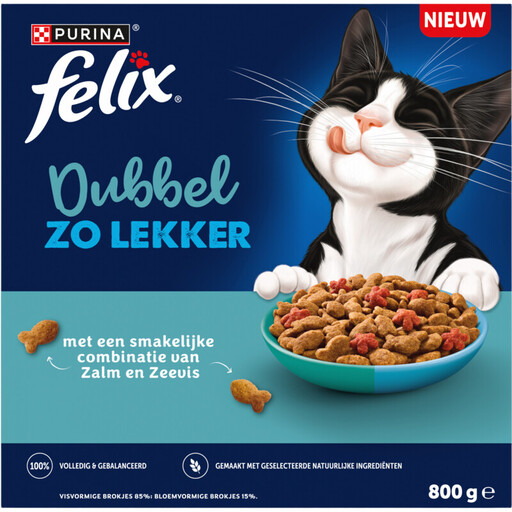
Why this fits the profile: This 800g pack is a practical option for anyone looking for daily cat food for adult cats and wanting to store multiple portions.
The product information clearly states it is complete food for adult cats and lists the total percentage of salmon and sea fish.
800g, added vitamins, minerals and taurine; no added colours according to the product description.
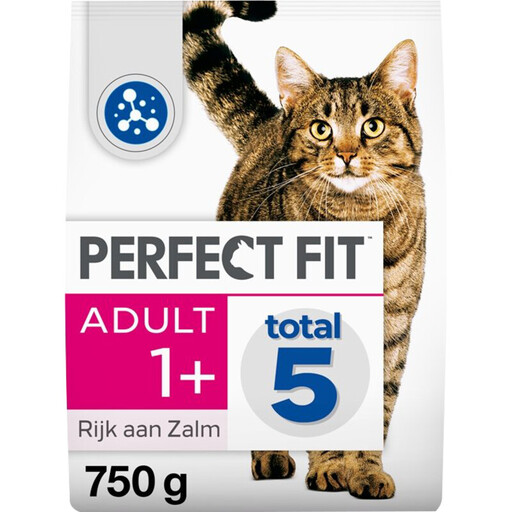
Why this fits the profile: Suitable for adult cats from one year old that mainly eat dry food and for those who want to compare a clearly stated salmon percentage.
The label states 14% salmon and provides the analytical values for protein, fat, crude fibre and crude ash.
Complete dry food, 34% protein according to the stated analysis and no added artificial colours.
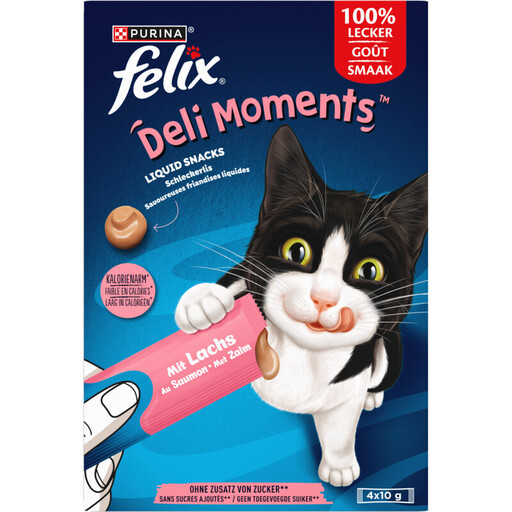
Why this fits the profile: Handy for cat owners looking for a liquid treat for bonding moments, without serving an extra main meal.
The description explicitly states it is complementary food for adult and senior cats and recommends one 10g pouch per day.
Salmon variety, creamy texture, 10g per sachet, no added colours and no added sugar according to the product information.
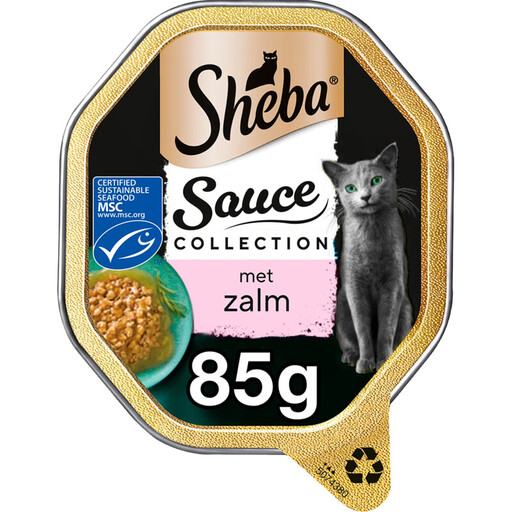
Why this fits the profile: The 85g portion is ideal for anyone who wants to serve wet food in small amounts and keep leftovers to a minimum.
The product is labelled as complete wet food for adult cats and states 83% moisture.
Pieces of salmon in sauce, individual meal tray, no artificial colours, preservatives or flavourings according to the product information.
We've put together a full, up-to-date list of products that fully meet these strict selection criteria and comply with current European safety regulations.
Not automatically. Check the ingredients for fish and other potential allergens, and look at the life stage. If your cat has a known food sensitivity, a medical condition, or if you're unsure, it's wise to consult a vet. When introducing new food, switch gradually and watch how your cat reacts.
Wet food typically contains more moisture and is often sold in small portions. Dry food keeps longer after opening and is easy to weigh out, but fresh drinking water must always be available. The choice depends on your cat's preference, your feeding routine and how it fits with other food.
Follow the portion on the packaging and adjust the main meal if needed. Felix Deli Moments recommends one 10g pouch per day. For Catisfactions, fewer than two calories per piece are stated, but this still counts as supplementary food. Only give kittens treats that are explicitly suitable for their age; Catisfactions lists kittens from eight weeks as the target audience.
