
Vandaag of morgen in huis

Kwaliteit gegarandeerd

Welkomstaanbiedingen ontgrendelen: GRATIS bezorging | Tot 80% korting | Gratis 30 dagen JoyPlus-proefperiode
Download de app
A bag of cat food featuring words such as “natural”, “premium” or “grain-free” can quickly seem like a safe choice. Yet these terms do not always tell you enough about whether the food is suitable for your cat. An eight-year-old indoor cat has different nutritional needs from a growing kitten. Age, activity levels, neutering and digestion also play a part.
As a Joybuy Product Recommendation Officer, I focus mainly on verifiable information: the target group stated on the label, the ingredients, the analytical constituents, the pack size and the feeding instructions. This helps you avoid paying mainly for marketing language.
Does the packaging say “cat food with chicken” or “cat food with fish”? If so, check the percentage. According to the product information, Felix Double the Tasty Beef and Chicken contains 2% beef and 2% chicken in the relevant kibbles. So you should not interpret the claim “with beef and chicken” as meaning “mainly beef and chicken”.
Always check the full ingredients list. Ingredients are generally listed in descending order by weight. Also pay attention to the difference between fresh meat, dried animal proteins, grains, vegetable protein extracts and fats.
Grain-free cat food may suit owners who want to avoid grains, but on its own it does not mean that the food will be easier for every cat to digest. Grain-free recipes often contain other carbohydrate sources, such as peas, chickpeas, potato or quinoa.
For a cat with a sensitive stomach, the overall composition matters more than one term on the front of the pack. Change food gradually as well. Switching over approximately seven days can help limit sudden digestive problems caused by an abrupt change.
A 5 or 10 kg pack often has a lower price per kilogram, but dry cat food loses its aroma more quickly after opening. Store the bag in a cool, dry place and keep it tightly sealed. Only buy in bulk if your cat already accepts the food well and there is plenty of time left before the best-before date.
Do not compare only the price of the bag. Also consider the recommended daily amount, your cat’s weight and the amount of food that may go to waste.
For kitten food, it should be clearly stated that the product is suitable from weaning to, for example, 12 months. Kittens have different nutritional needs from adult cats. According to the product description, Purina One Junior is intended for kittens from weaning to 12 months, as well as pregnant or nursing cats.
Cat food for adult cats is generally formulated for cats from around one year old. There are also varieties such as senior cat food for cats aged seven and over. Always check the age guidance on the packaging, and adjust the portion according to your cat’s growth, activity levels and body condition.
Indoor cats often get less exercise than cats that go outside. An indoor formula may therefore contain a different balance of protein and fat. According to the product information, the Purina One Bifensis Indoor Adult variety contains turkey, whole grains, chicory and fibre. According to Purina’s own research, these fibres may help move hair through the digestive system and out in the faeces; this is a brand claim and is not a guarantee for every cat.
With cat food for neutered cats, portion control and energy intake are particularly important. Purina One Sterilcat states that it has an adjusted protein-to-fat ratio and balanced minerals. This makes it suitable for comparison with other recipes, but it does not replace an individual assessment of your cat’s weight or urinary tract issues.
For a main diet, choose a product labelled as complete and balanced cat food or as complete food. This indicates that the product is intended to be fed as a daily diet, according to the feeding instructions.
Also check:
A “sensitive stomach” is not a diagnosis. If your cat has persistent vomiting, diarrhoea, weight loss or a noticeable change in eating habits, consulting a vet is wiser than repeatedly changing its food.
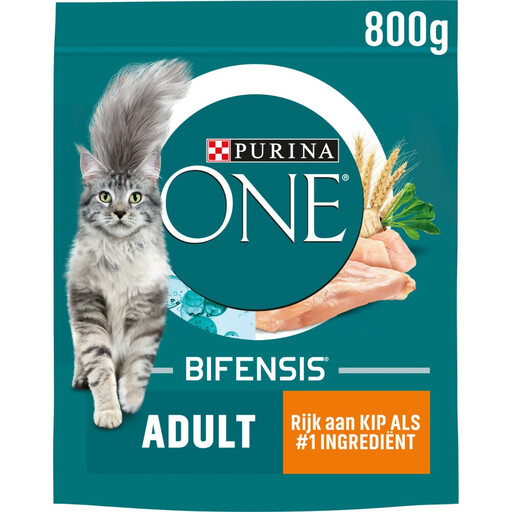
Why it suits this profile: An easy-to-manage 800 g pack for anyone choosing dry cat food for an adult cat for the first time.
The product information states the target group, ingredients and feeding guidelines, so you do not have to rely solely on the flavour name.
Complete food for adult cats; chicken is listed as a 17% ingredient; 34% protein content according to the product specification.
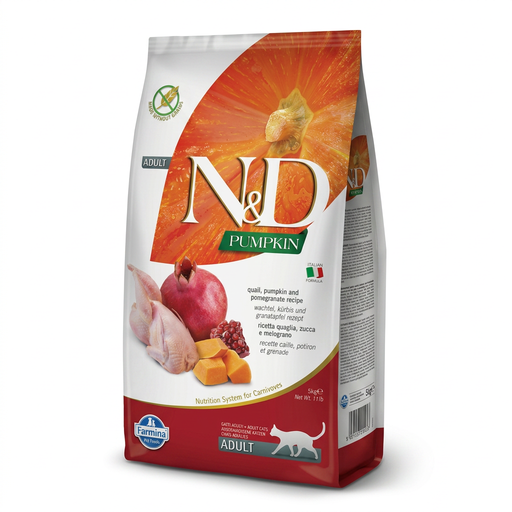
Why it suits this profile: For anyone wanting to compare a grain-free recipe and a larger pack containing quail and fish.
The ingredients list specifically names quail, herring, pumpkin, peas and chickpeas. This allows you to check the grain-free claim.
5 kg contents; complete food; recipe containing quail and fish as animal ingredients.
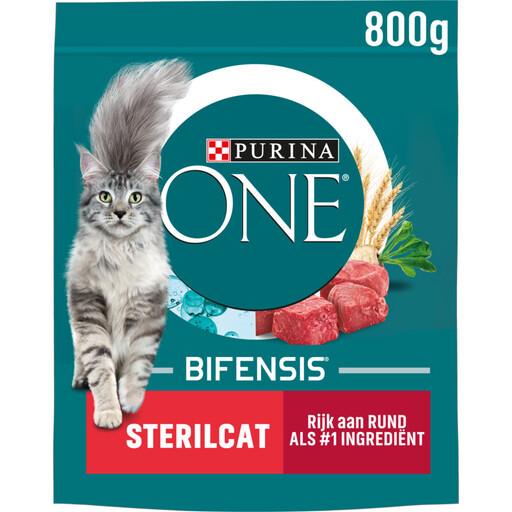
Why it suits this profile: Designed for adult neutered or spayed cats where portion control is important.
The product specification gives feeding amounts for different weight ranges and an adjusted protein-to-fat ratio.
Complete food for neutered adult cats; 37% crude protein and 13% fat according to the stated analysis.
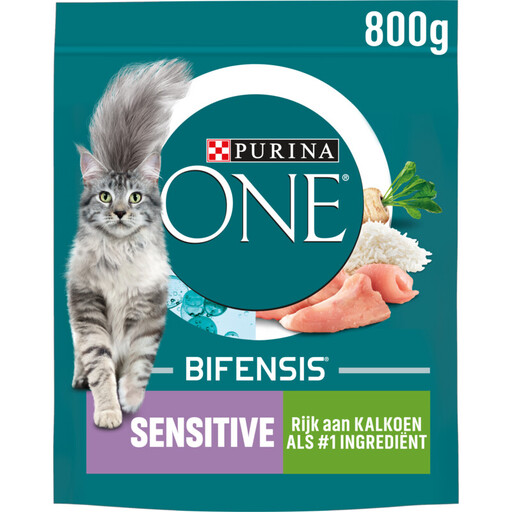
Why it suits this profile: A variety for adult cats where the owner wants to consider a recipe without added wheat.
The product information names turkey as the first ingredient and states that no wheat is added. The claim of 24% less odour is based on Purina’s own research.
800 g pack; complete food for adult cats; turkey listed as the first ingredient.
We have put together a complete, up-to-date list of products that fully meet these strict selection criteria and the applicable European safety regulations.
Choose kitten food that clearly states it is suitable from weaning to 12 months. Food for adult cats does not automatically contain the nutritional ratios needed for growth. Follow the portion guidance on the bag and, if necessary, divide the food into several meals.
This varies by brand and packaging. Keep dry food tightly sealed in a cool, dry place. The exact information on how long it remains suitable after opening can be found on the label. If the food smells unusual, has become damp or your cat suddenly refuses it, check its quality before feeding it.
Not always. Compare the price per kilogram with the recommended daily amount. Food with a higher price per bag may last longer because the portion is smaller, while a large pack may seem good value but be less practical if your cat does not like the food. So look at the price per day, not just the checkout price.
